
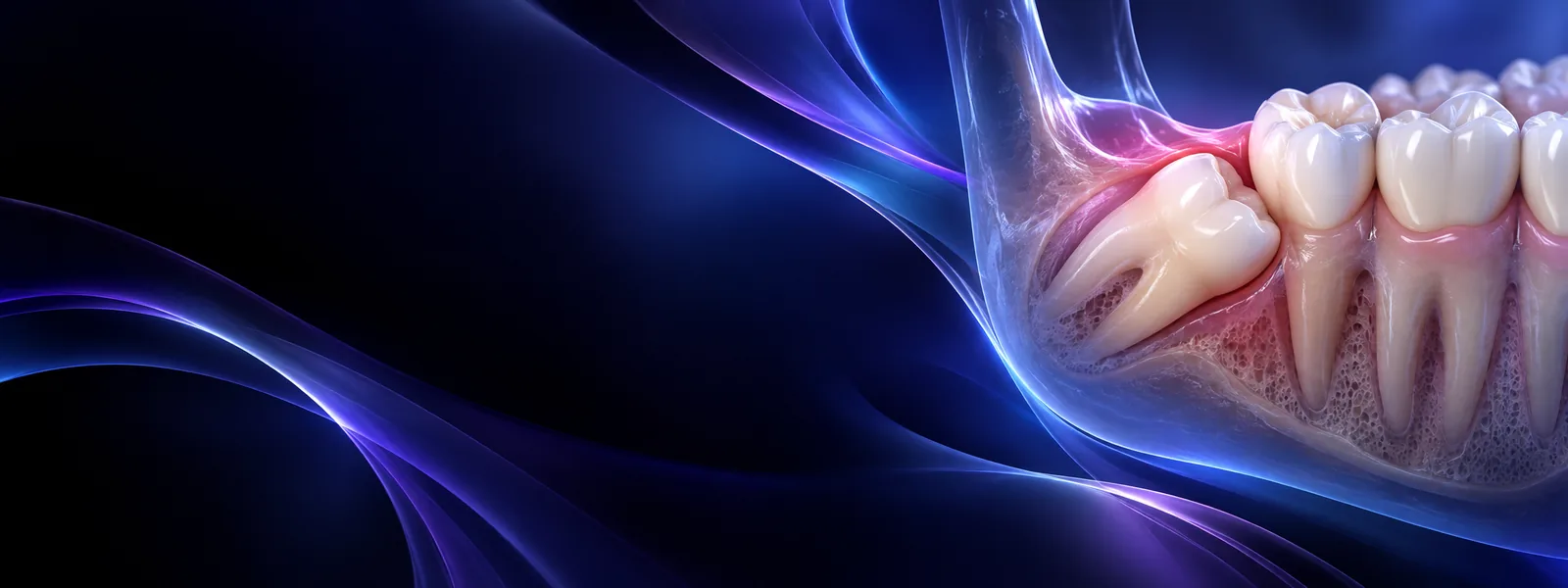
Wisdom Tooth Removal in Gajularamaram
- 14+Years of experience
- 50,000+Patients treated
- 4.9Google rating
- 20–45 minutes per tooth
- single visit, with a review after a week
- Mon – Sun: 9:30 AM – 9:00 PM
What Is Wisdom Tooth Removal?
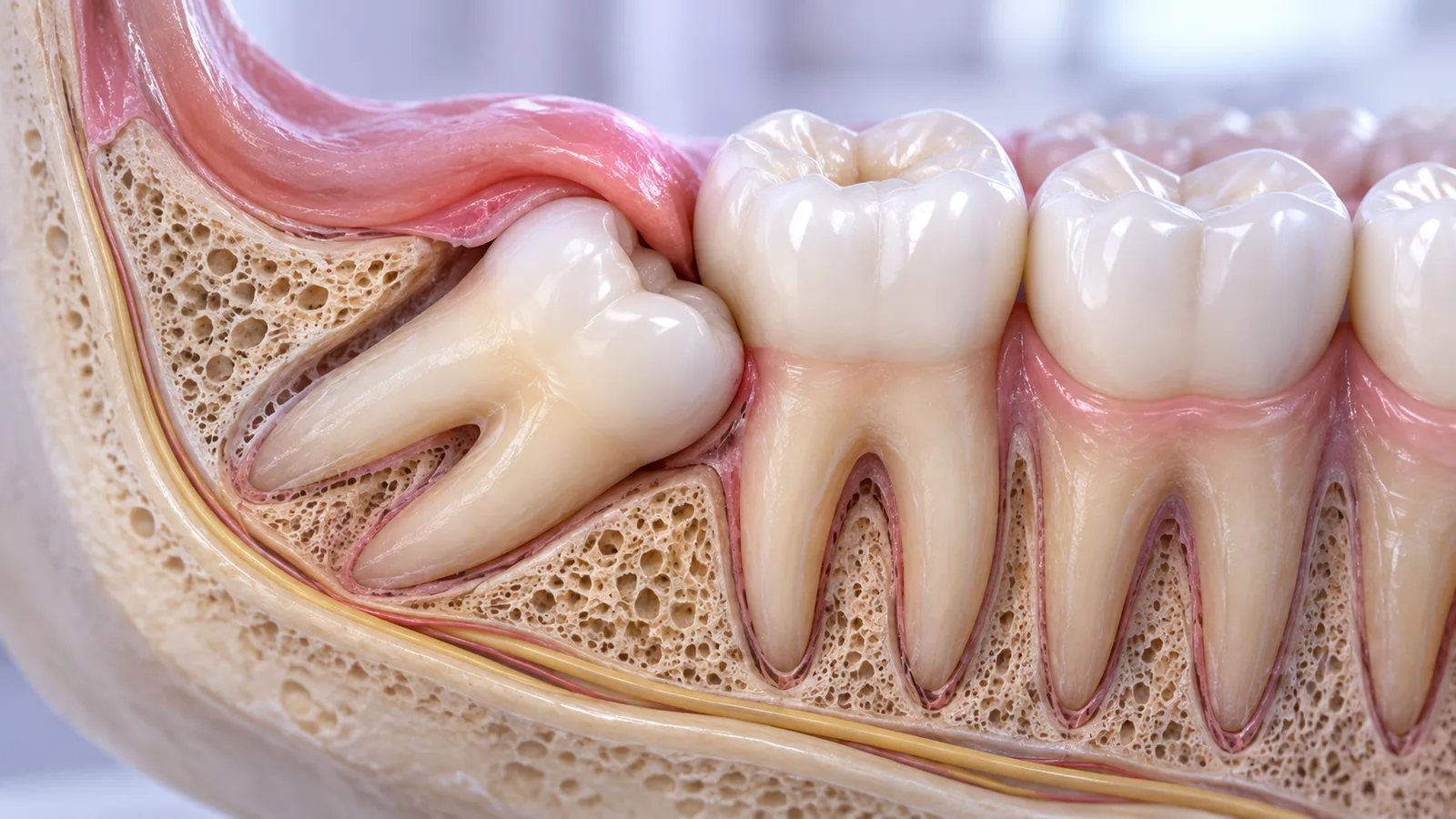
Wisdom tooth removal is the extraction of the third molars — the last four teeth to arrive, usually somewhere between seventeen and twenty-five. They are removed when there is not enough room at the back of the jaw for them to come through properly, which is more often than not, because the modern jaw is smaller than the teeth it was designed to hold.
A tooth with nowhere to go does not simply stop. It comes through at an angle, or stays half-buried under a flap of gum that food gets under and a brush cannot clean. What follows is predictable: the gum around it flares up, settles with antibiotics, and flares up again; or decay starts in the narrow gap it has created against the healthy tooth in front. Neither of those resolves on its own, because the cause is the position of the tooth.
Not every wisdom tooth is a problem, and this is worth saying plainly: one that has come through straight, meets the tooth above it and can be reached with a brush should be left where it is. The decision to remove is made from an X-ray and what the tooth is actually doing — not from the fact that it is a wisdom tooth.
Two Ways a Wisdom Tooth Comes Out
Simple Extraction
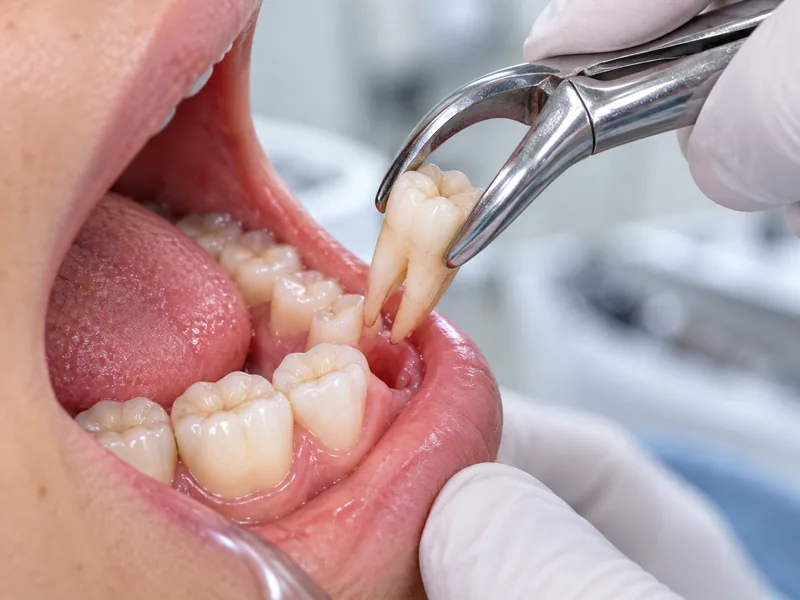
For a tooth that has come through the gum and can be gripped. It is loosened in its socket and lifted out whole. No cutting, usually no stitches, and most people are surprised how quick it is — the numbing takes longer than the extraction.
Surgical Extraction
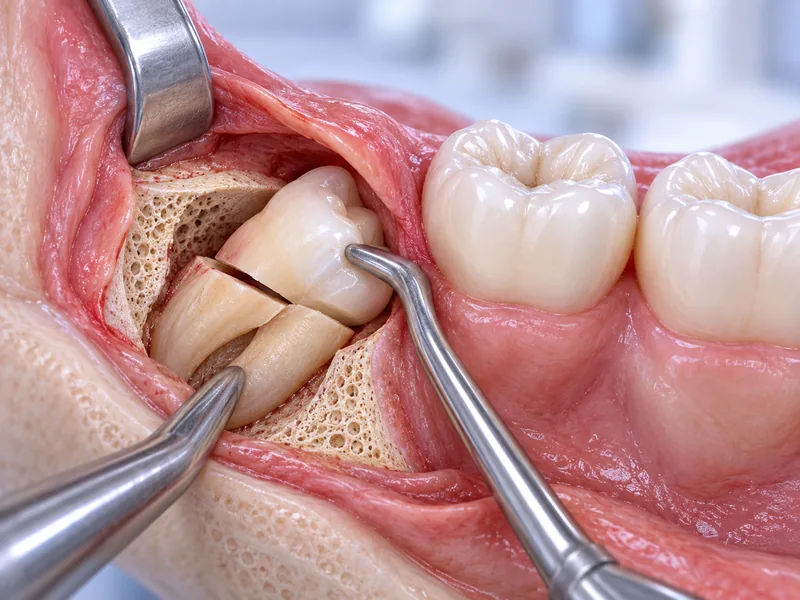
For a tooth still under gum or bone, or angled so it cannot come out in one piece. The gum is lifted, a little bone may be removed, and the tooth is divided and taken out in sections. The gum is then stitched back. Still done under local anaesthetic, in one visit.
When Does a Wisdom Tooth Need to Come Out?
A wisdom tooth that has come through straight, bites properly and can be cleaned is left alone. These are the signs of one that cannot — any of them is worth an X-ray before it becomes an emergency.
- Pain at the back of the jawA deep ache behind the last tooth, often worse at night or when you are run down.
- A swollen flap of gumGum half covering the tooth, red and tender, sometimes with a bad taste underneath.
- Food trapping behind the last toothA pocket behind the second molar that packs at every meal and cannot be brushed clean.
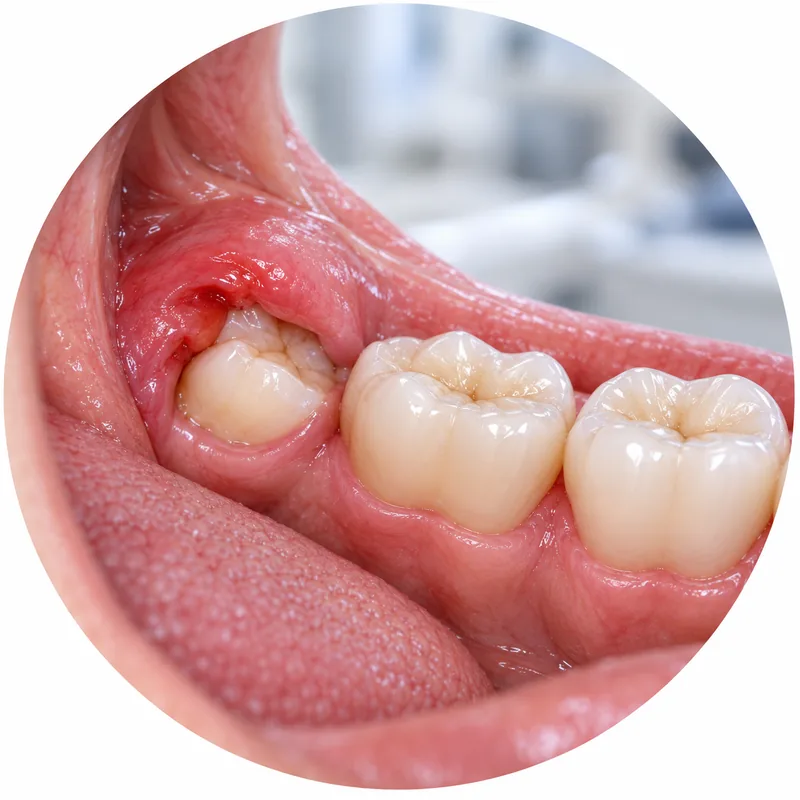
- A jaw that will not open fullyStiffness on one side, so opening wide or chewing on that side becomes difficult.
- Decay you cannot reachA cavity in the wisdom tooth or the tooth in front of it, in a spot no brush gets to.
- Pain when you bite on that sideCatching the swollen gum between your teeth, which keeps the area inflamed.
Options
The Four Ways a Wisdom Tooth Gets Stuck
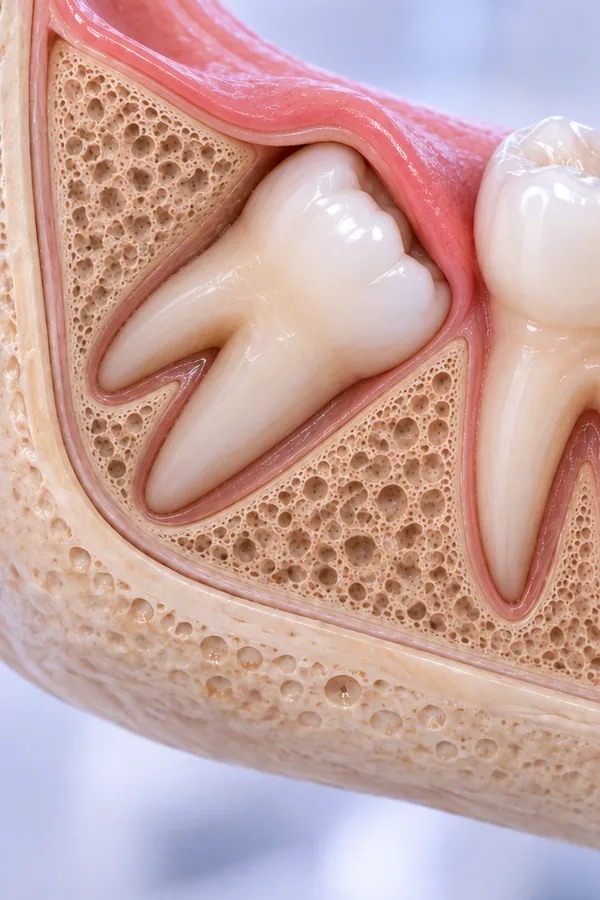
Impaction describes which direction the tooth is pointing when it runs out of room. It is what the X-ray is read for, and it decides whether the removal is simple or surgical.
 1
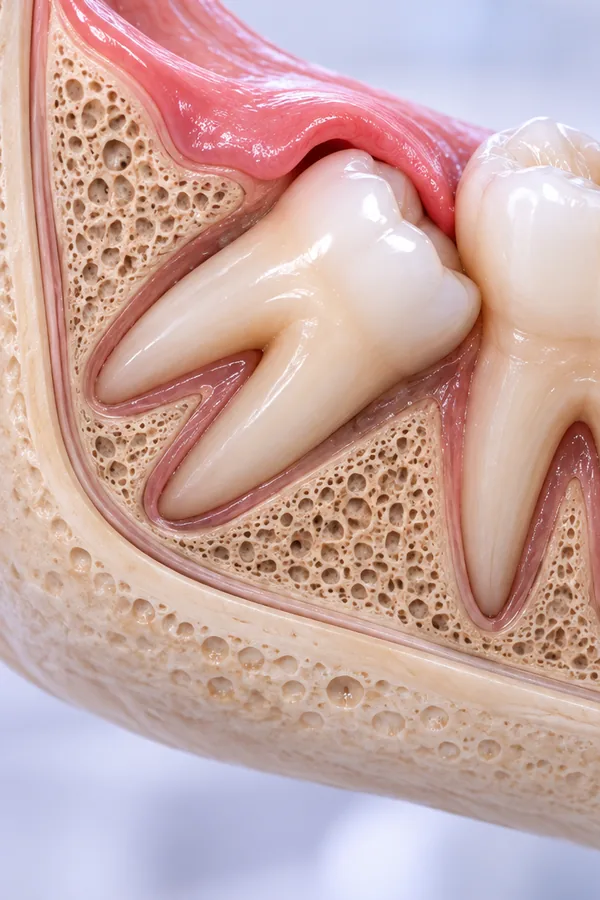
1Angled forward
Mesial impaction — the tooth leans towards the tooth in front. The most common of the four, and the one that traps food against its neighbour.
 2
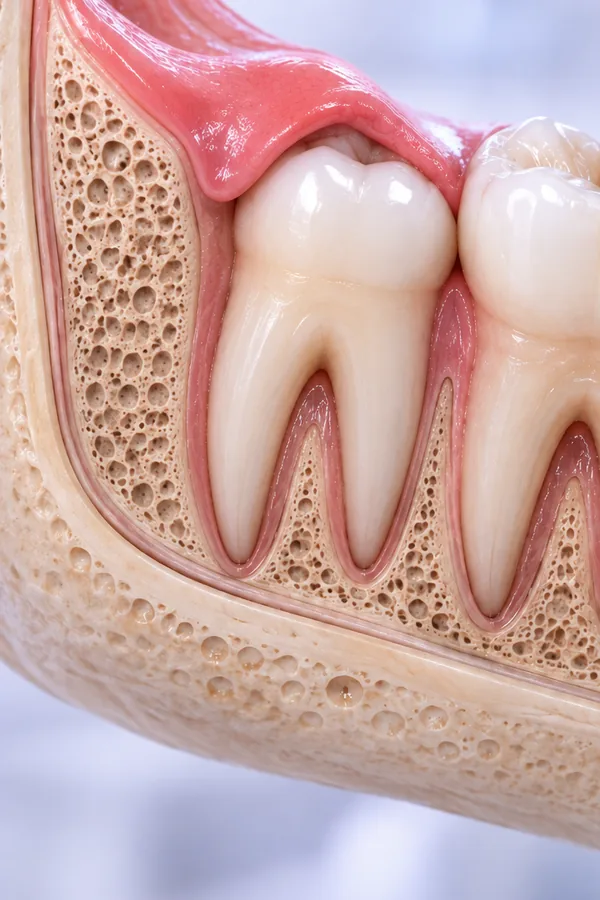
2Straight but trapped
Vertical impaction — the tooth points the right way but has no room to finish coming through, so it stays part-way, under a flap of gum.
 3
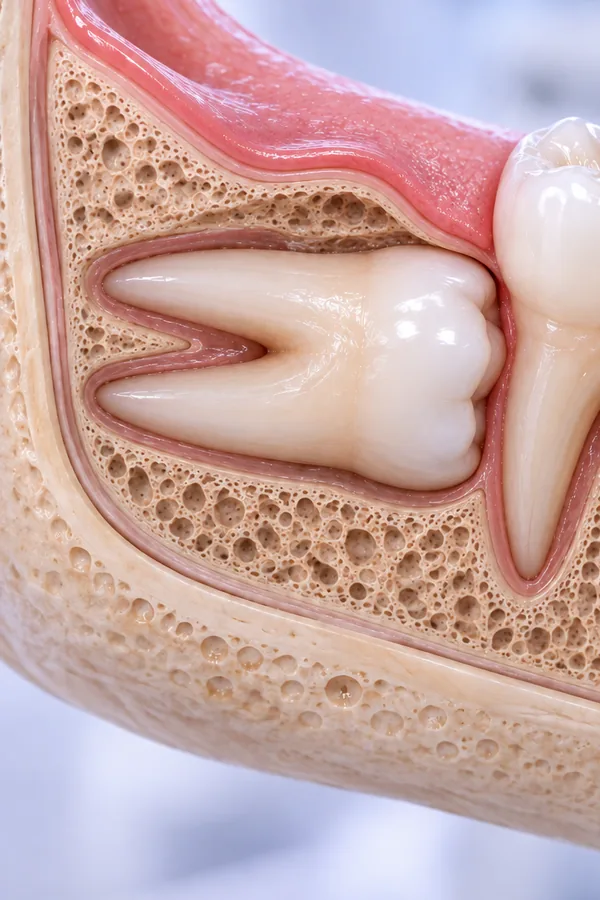
3Lying on its side
Horizontal impaction — the tooth is lying flat in the jaw, pressing sideways into the roots of the tooth in front. Always a surgical removal.
 4
4Angled backward
Distal impaction — the tooth leans away from the others, towards the back of the jaw. Less common, and usually the trickiest to reach.
How Is a Wisdom Tooth Removed?
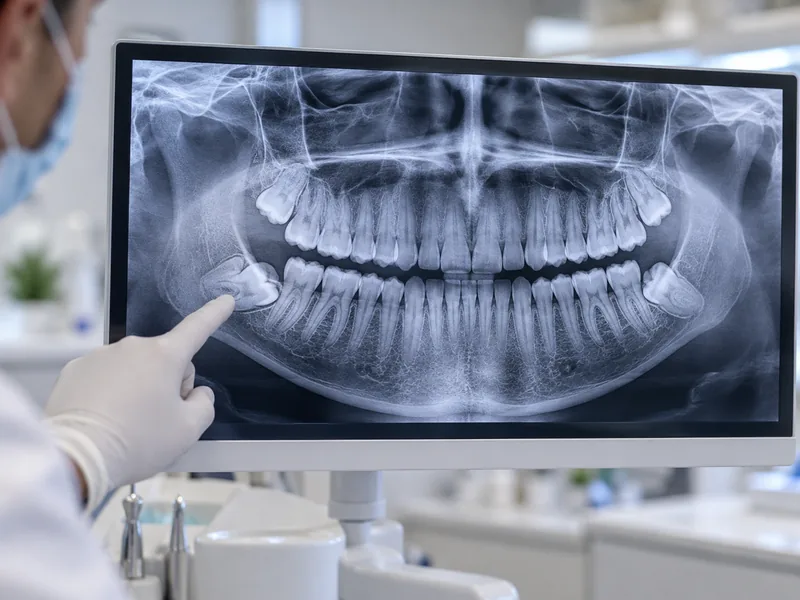
The X-ray that decides everything
A wide X-ray of the whole jaw shows which way the tooth is pointing, how many roots it has and what shape they are, and — the part that matters most — how close those roots sit to the nerve running through the lower jaw. Where they sit close, a 3D scan may be taken as well. Everything about the appointment is decided here: simple or surgical, how long it will take, and what to expect afterwards.
Numbing, loosening and lifting
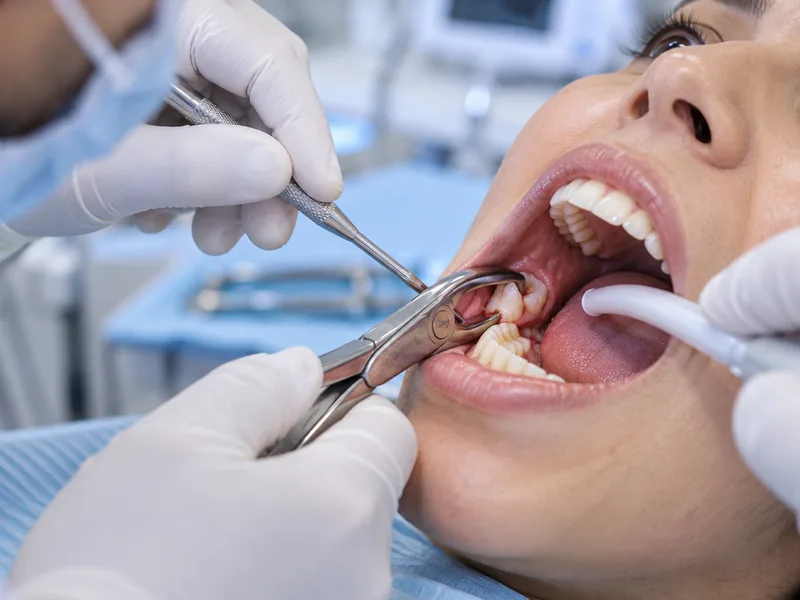
The area is fully numbed, and you should feel pressure and movement but not pain. A tooth that is through the gum is loosened in its socket and lifted out. One that is buried or badly angled has the gum eased back and is divided into sections, so each piece comes out through the space available rather than the socket being widened to fit the whole tooth.
Stitches, gauze and the clot
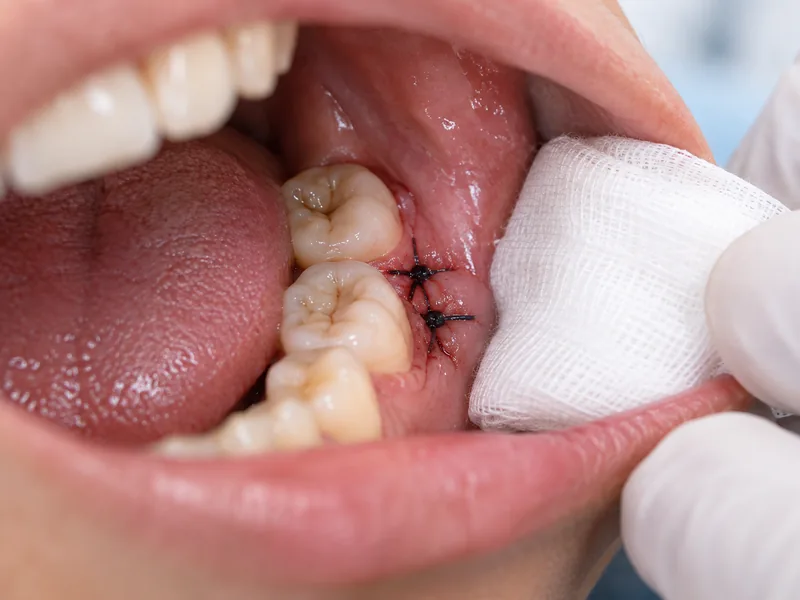
The socket is cleaned and the gum stitched where it was lifted — usually with stitches that dissolve on their own. You then bite on gauze for around half an hour, which is how the blood clot forms. That clot is the dressing over the bone underneath, and nearly everything in the aftercare below exists to protect it for the first day.
Recovery
Recovery After Wisdom Tooth Removal
The first day is about protecting the clot in the socket. The week after is about keeping the area clean while it heals underneath. Most people are back to normal within three to five days.
- 1
Bite on the gauze
Firm, steady pressure for 30 to 45 minutes. Some oozing for the rest of the day is normal; replace the pad rather than checking it every few minutes.
- 2
No rinsing on day one
No swilling, spitting, straws or smoking for 24 hours. All of them pull the clot out of the socket, which is what causes dry socket.
- 3
Ice, then rest
A cold pack against the cheek for the first few hours reduces swelling. Keep your head propped up, and leave exercise for a couple of days.
- 4
Take the painkillers early
Start them before the numbness wears off rather than waiting for pain to arrive. Take any antibiotics you are given to the end of the course.
- 5
Swelling peaks on day two or three
It gets worse before it gets better, and that is normal. Bruising along the jaw can appear later and fades over a week or so.
- 6
Warm salt rinses from day two
Gently, after meals, to keep food out of the socket. Warm water with a little salt — not mouthwash, which stings a fresh socket.
- 7
Soft food and the other side
Anything you do not have to chew hard, nothing very hot, and nothing with small seeds or grains that can lodge in the socket.
- 8
When to call us
A deep ache starting three to four days later that painkillers barely touch, a bad taste with an empty-feeling socket, bleeding that will not settle, or fever. Dry socket is treatable and quick to settle once dressed.
Does it have to come out
Removing It vs Leaving It Alone
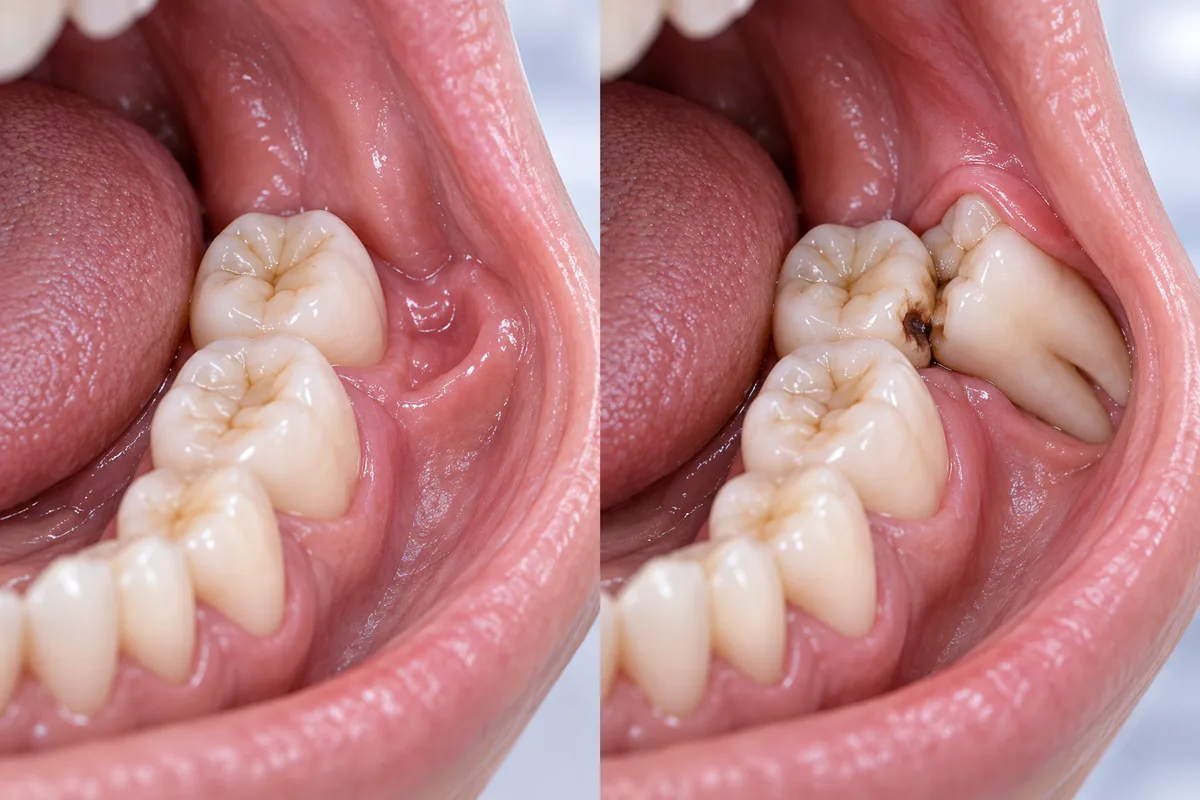
Not every wisdom tooth needs removing, and any dentist who says otherwise is not looking at the X-ray. A wisdom tooth that has come through straight, meets the tooth above it and can be reached with a brush is a working tooth. It gets checked like any other and left where it is.
The case for removing one is about what it is doing to the tooth in front. A tooth angled forward traps food and plaque against its neighbour in a spot no brush reaches, and that neighbour — a healthy second molar with decades of work left in it — decays where it is hardest to repair. The same applies to a flap of gum that keeps getting infected: each episode settles with antibiotics and comes back, usually at the worst possible time.
Age is the other half of it. Roots are shorter and bone is more forgiving in your twenties than in your forties, so the same tooth is a simpler removal and a faster recovery the earlier it is dealt with. That is the argument for not waiting once removal is agreed — not an argument for removing teeth that are doing no harm.
What Happens at Your First Consultation
- 1ExaminationThe dentist checks how far the tooth has come through, the gum over it and how wide you can open.
- 2X-rayA wide view of the jaw shows the angle, the roots and how close they sit to the nerve.
- 3DifficultyHow hard this particular tooth will be, and what that means for the appointment.
- 4PlanSimple or surgical, how long it takes, and how many days to keep clear afterwards.
- 5AftercareWhat to buy beforehand, what to do on the day, and what to watch for that week.
Why us
Why Choose Us for Wisdom Tooth Removal
- An oral and maxillofacial surgeon, Dr. Tejdeep (MDS), is part of our team for difficult and impacted wisdom teeth.
- An X-ray first, so you know how the tooth lies and what removing it involves.
- We check on your recovery in the days after the extraction.
- Instruments sterilised and sealed for every patient, under a strict protocol.
- Open every day, 9:30 AM to 9 PM, at two branches in Gajularamaram: Ushodaya Colony and Mallareddy Nagar.
Tooth Pain & Repair
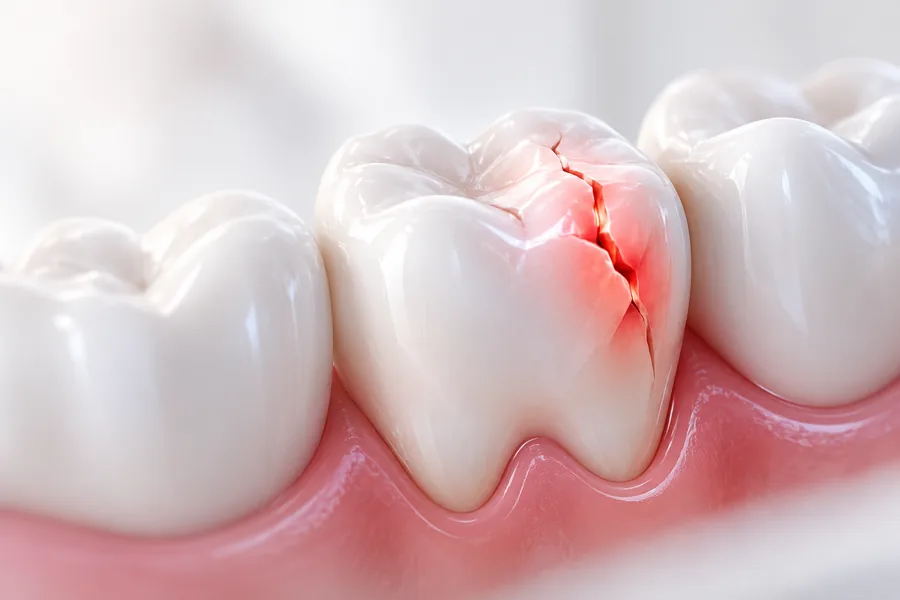
Relief from toothache and repair for decayed, cracked or broken teeth, from fillings and root canals to crowns.
- Root Canal Treatment
- Tooth Sensitivity Treatment
- Cavity Treatment
- Tooth Fillings
- Dental Crowns & Caps
- Wisdom Tooth Removal
- Emergency Dental Care
 learn more
Missing Teeth
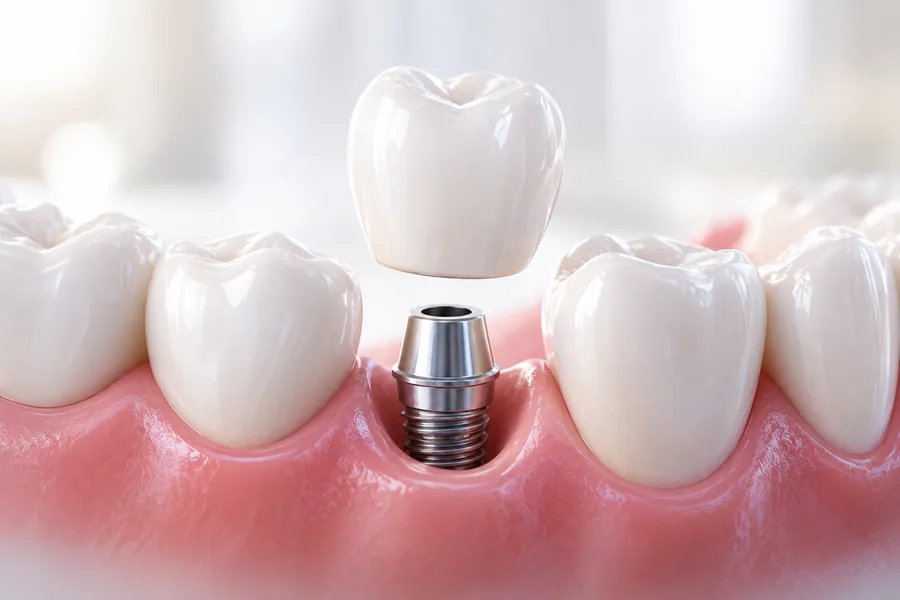
Implants, bridges and dentures to replace missing teeth, planned by our implantologist and prosthodontist.
 learn more
Straightening
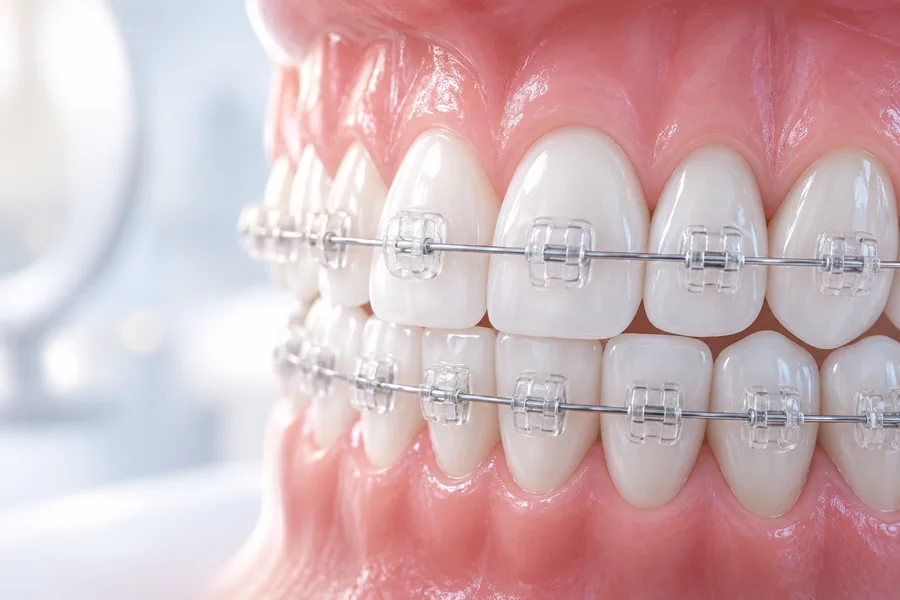
Braces and Illusion clear aligners for crooked or gapped teeth, planned by our orthodontist for children and adults.
 learn more
Cosmetic
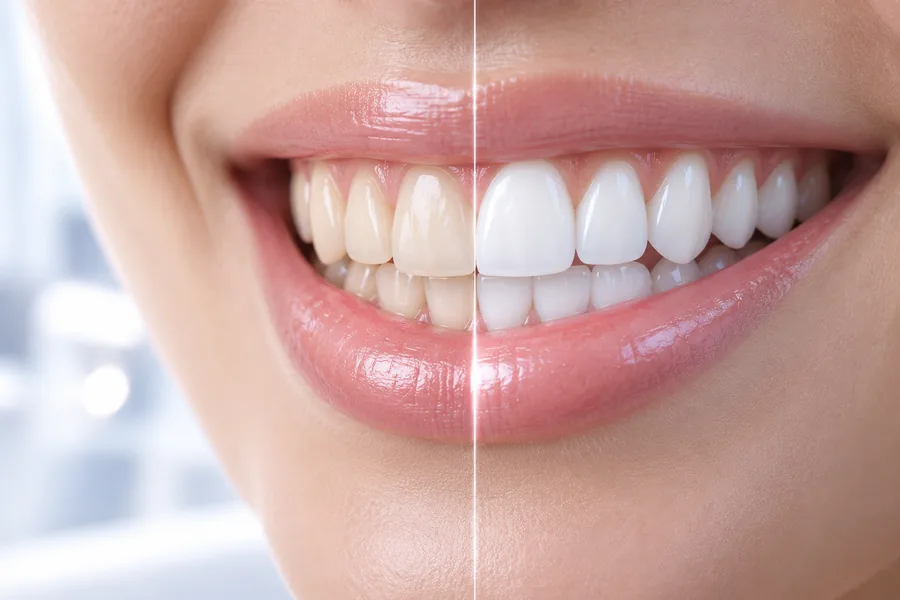
Whitening, veneers, bonding and smile makeovers to improve the colour and shape of your smile, led by our cosmetic dentist.
 learn more
Gums & Cleaning
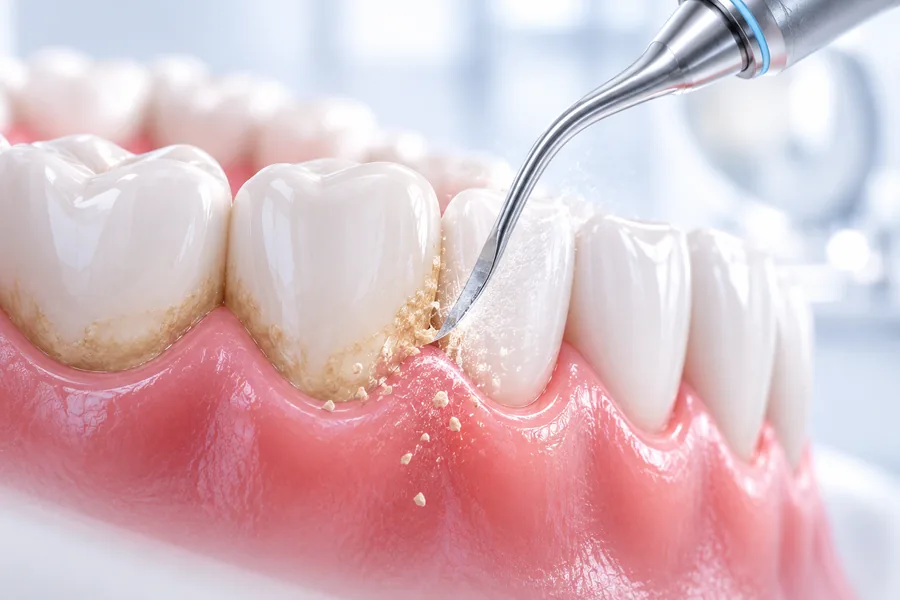
Cleaning, gum treatment and laser care for bleeding gums and bad breath, from our periodontist.
 learn more
Kids & Family
Gentle check-ups, fluoride and sealants for children with our pedodontist, and routine check-ups for the whole family.






Verified Google Reviews
Excellent
Based on 238 reviews
Harsha Vardhini
2026 · Google
I highly recommend Dr. Roja! She is incredibly kind, patient, and caring. I’ve had a root canal and multiple fillings done by her, and every procedure was completely painless. She explains everything clearly, makes you feel comfortable, and ensures you’re at ease throughout the treatment. Her gentle approach and professionalism make every visit a great experience. If you’re looking for a skilled dentist who truly cares about her patients, Dr. Roja is an excellent choice!
akk reddy
2026 · Google
I had a great experience with Dr. Roja madam. She is a very good doctor and extremely patient-friendly. I was suffering from a tooth cavity, and she suggested a root canal treatment. After starting the treatment, my tooth pain completely disappeared. The cap fitting was also very comfortable and flexible. Overall, I am very satisfied with the treatment and care provided. Thank you so much
Mamidisetti Siva
2026 · Google
I had a very good experience at this dental clinic. The treatment was excellent, and the staff were very friendly and supportive. Even after the treatment, they took great care by calling me, checking on my recovery, and asking me to come for follow-up visits. I really appreciate their concern and professionalism. Highly recommended.
BHARATH GUNDEBOINA
2026 · Google
Had a great experience with teeth replacement treatment. Dr. Roja mom explained everything clearly and the procedure was smooth and painless. The results look very natural and I’m extremely happy with my new smile. Highly recommended..thank you….
venkannababuk venki
2026 · Google
Madam provides very good dental treatment. She explains everything clearly and patiently whenever I have any doubts. I am very satisfied with the treatment and the way she cares for patients. Thank you, SR Dental.
Near you
Wisdom Tooth Removal Near You in Gajularamaram
If you have been searching for wisdom tooth removal near you, the appointment that matters first is the X-ray. Until someone has seen the angle of the tooth and where its roots sit, nobody can honestly tell you whether it is a twenty-minute extraction or a surgical one.
If the gum is swollen and the side of your jaw is stiff right now, say so when you call. An acute flare-up is usually settled first and the tooth removed once the infection is down, and that is a different appointment from the one you would otherwise book.
77020 95262Gajularamaram
Contact
Reach out to schedule your next dental visit
Whether you have a question, need expert advice, or are ready to book your next appointment, our team is here to help.
Reach out to us on
- Phone Number 77020 95262
- Email address srdentalcare48@gmail.com
- Location Hospital Phase 2, Plot No:100/N, behind UMCC Road, Chandragiri Nagar, Ushodaya Colony, Indira Nagar, Gajularamaram, Hyderabad, Telangana, 500055
Working Hours
- Mon – Sun:
- 9:30 AM – 9:00 PM
FAQs
Frequently asked questions about wisdom tooth removal
Still have a dental question?
Send us a message and our dental team will help.
Is wisdom tooth removal painful?
The removal itself should not be. The area is fully numbed and what you feel is firm pressure and movement rather than pain — most people say the injection was the worst part. Afterwards there is soreness for a few days, which ordinary painkillers handle if you start them before the numbness wears off.
How long does recovery take?
Most people are comfortable within three to five days and back to normal within a week. A simple extraction of a tooth that was already through often settles in a couple of days. A surgical removal of a buried tooth swells more, peaks on day two or three, and then improves steadily.
What is dry socket, and how do I avoid it?
It is what happens when the blood clot is lost from the socket and the bone underneath is left exposed. It shows up three to four days later as a deep ache that painkillers barely touch, often with a bad taste. Avoiding it is mostly about the first 24 hours: no rinsing, no spitting, no straws and no smoking. If it does happen it is treated quickly by cleaning and dressing the socket.
Do all wisdom teeth have to be removed?
No. A wisdom tooth that has come through straight, bites against the tooth above it and can be cleaned properly is left alone and checked like any other tooth. Removal is for teeth that are causing damage, repeated infection, or decay that cannot be repaired.
Can I have both sides done at once?
Often yes, and many people prefer one recovery to two. The trade-off is that chewing is more awkward for a few days with both sides sore. Where the teeth are straightforward it is usually offered; where they are surgical, one side at a time is easier to live through.
What can I eat afterwards?
Anything soft and not too hot for the first day or two — dal, curd rice, khichdi, soup once it has cooled, mashed vegetables, eggs, smoothies eaten with a spoon rather than a straw. Avoid anything with small seeds or grains that can lodge in the socket, and go back to normal food as the side becomes comfortable.