
Dental Implants in Gajularamaram
- 14+Years of experience
- 50,000+Patients treated
- 4.9Google rating
- 45–90 minutes to place
- two stages, three to six months apart
- Mon – Sun: 9:30 AM – 9:00 PM
What Is a Dental Implant?
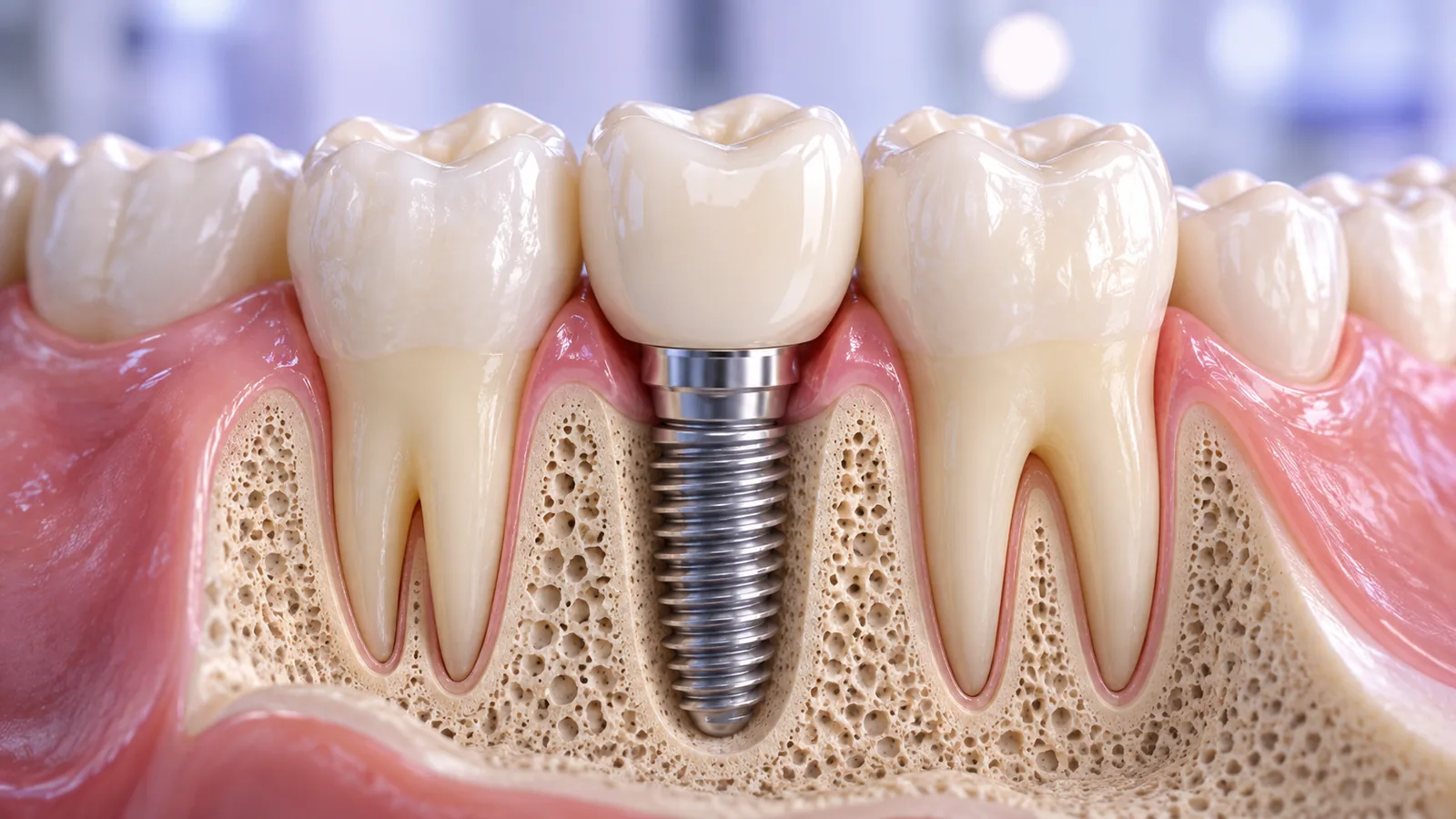
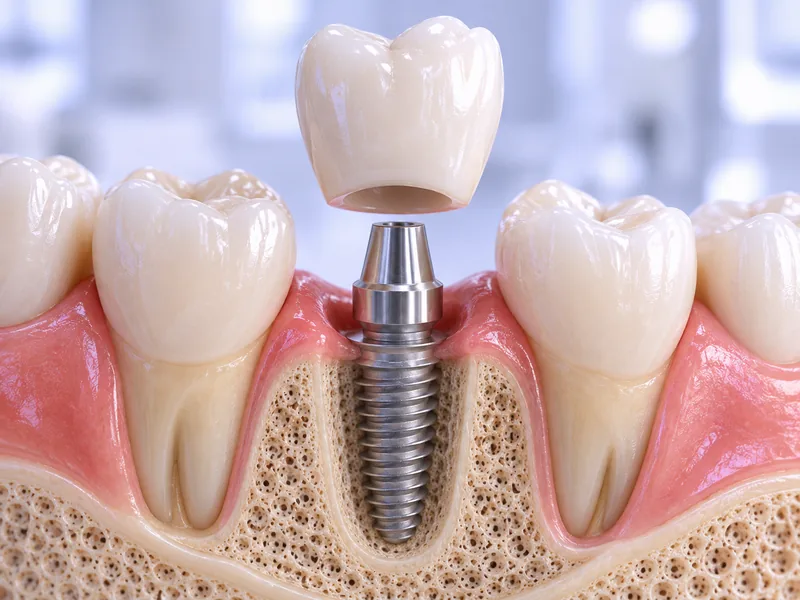
A dental implant is a small titanium screw placed into the jawbone to take the place of a missing tooth’s root, with a crown built on top of it. That is the whole idea, and it is what separates an implant from every other way of replacing a tooth: a bridge and a denture replace what you can see, while an implant replaces what you cannot.
The root matters more than it sounds. Bone is living tissue and it keeps only what it uses. A tooth root loads the bone around it every time you bite, and that load is the signal to maintain it. Take the root away and the bone under the gap starts to shrink — measurably within a year, and visibly over a decade, which is why a long-standing gap changes the shape of the face around it. An implant puts the load back.
What it costs is time. Titanium does not simply sit in a hole: bone has to grow onto its surface and lock it in place, and that takes three to six months. Nothing is happening that you can feel, and you are not without a tooth meanwhile — but it cannot be hurried, and the appointments are spread across it. What you get for the wait is the one replacement that touches no other tooth.
Two Routes to the Finished Tooth
The Two-Stage Route
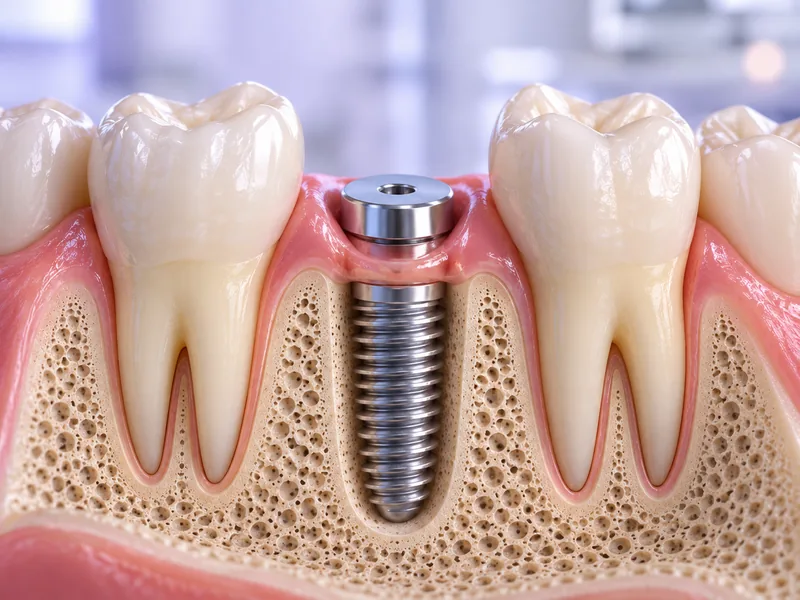
The standard, and the one with the longest track record. The implant is placed and then left undisturbed for three to six months while bone grows onto its surface. Only once it is solid is the tooth built on top. You are not without a tooth meanwhile — a temporary fills the gap throughout.
Immediate Placement
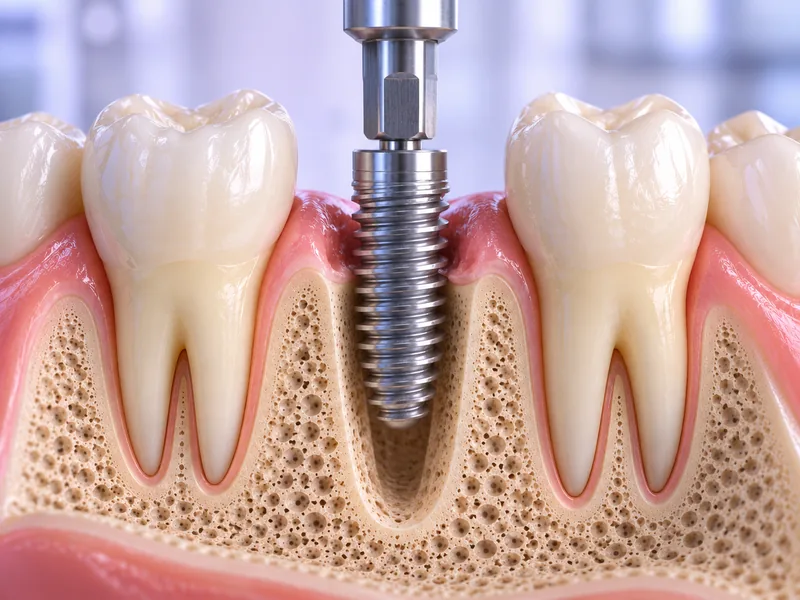
Where the bone is dense enough and there is no infection at the site, the implant can go in at the same appointment the old tooth comes out, sometimes with a temporary crown the same day. It saves months — but the scan and the bone decide whether it is safe, not preference.
When Is an Implant the Right Answer?
An implant replaces the root as well as the tooth, and that is what separates it from every other option. These are the situations where the difference matters.
- A gap from a lost toothOne tooth missing, with healthy teeth either side that you would rather not touch.
- A denture that will not stay putA plate that lifts or rocks while you eat, or that you have stopped wearing altogether.
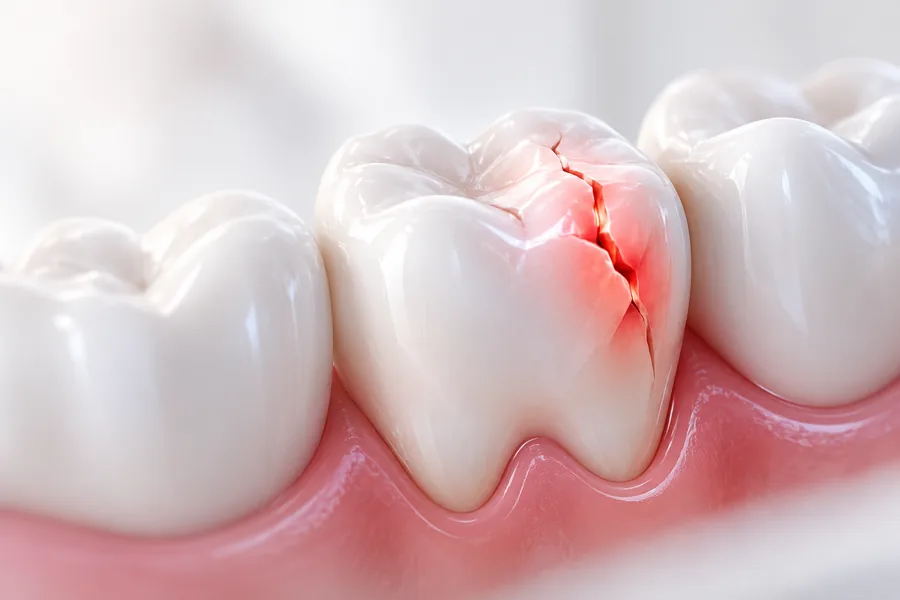
- A tooth that cannot be savedA tooth cracked below the gum or too broken down to restore, planned for before it comes out.
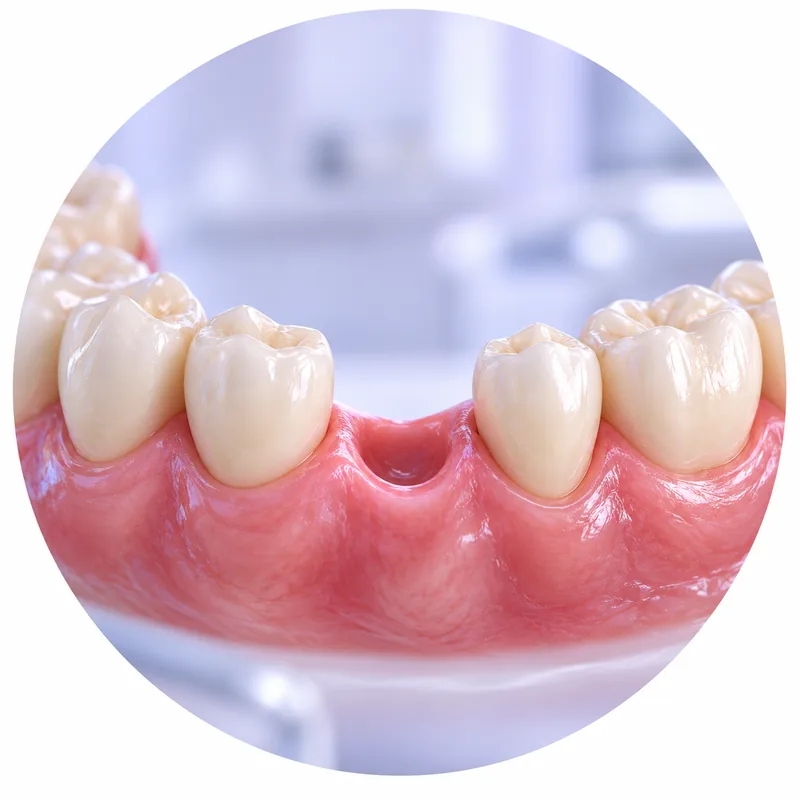
- A bridge or crown that has failedDecay under an old bridge, or an abutment tooth that has given way underneath it.
- Chewing only on one sideGaps on one side that have quietly changed how you eat, and loaded the other side twice as hard.
- A gap you have had for yearsStill worth assessing. The bone will have shrunk, but that is usually something that can be built back.
Options
Types of Implant Treatment
The implant itself is much the same piece of titanium each time. What changes is how many go in and what they carry — one tooth, a bridge, or a whole arch.
 1
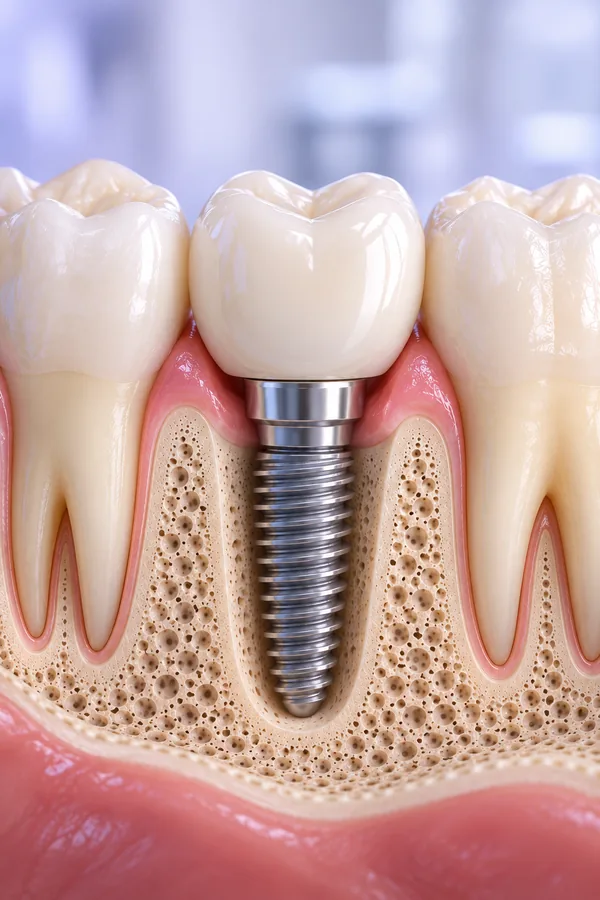
1A single tooth
One implant, one crown. Nothing is done to the teeth either side, which is the main reason it gets chosen over a bridge.
 2
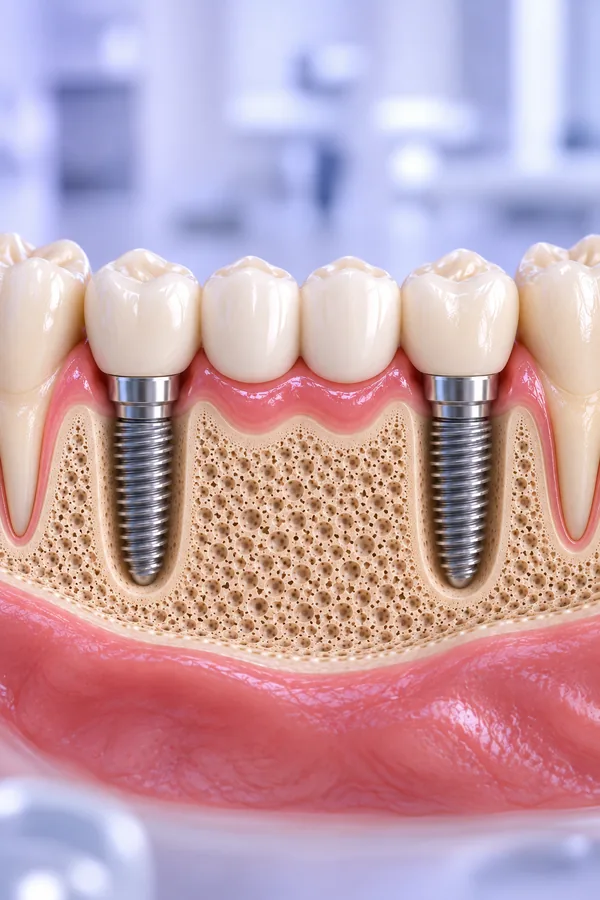
2An implant bridge
Two implants carrying three or four teeth between them. Fewer implants than teeth, fixed in place, and nothing removable.
 3
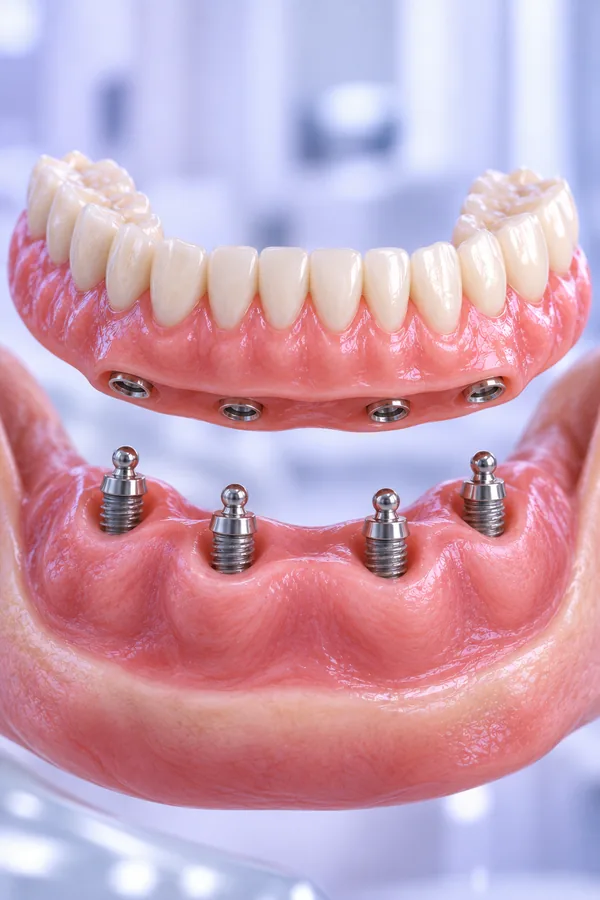
3Implant-supported denture
Two to four implants with clips, so a full denture snaps down onto them. It comes out for cleaning but does not move while you eat.
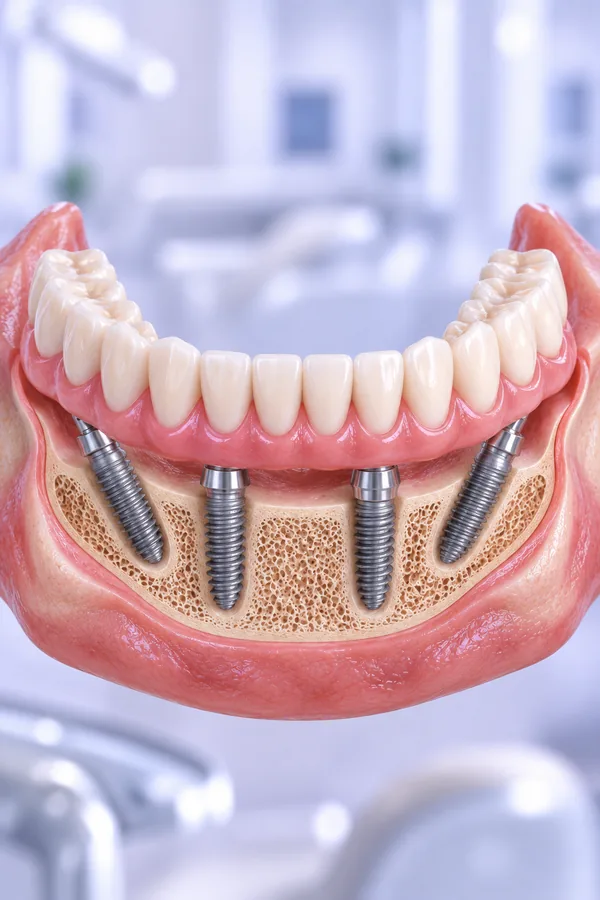 4
4A full arch on four
A fixed full arch carried on four implants, angled to use the bone that is there. Not removable, and often fitted with a temporary bridge on the day.
How Does an Implant Work, Step by Step?
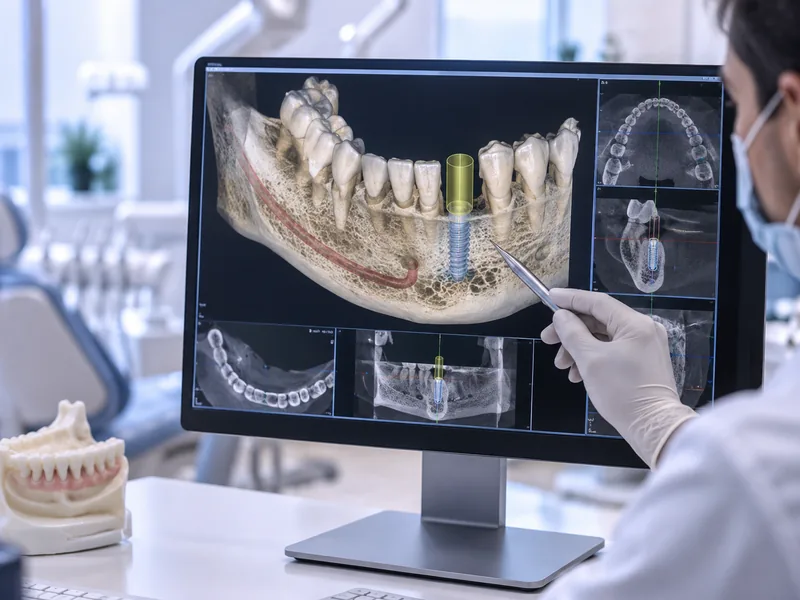
The scan that decides everything
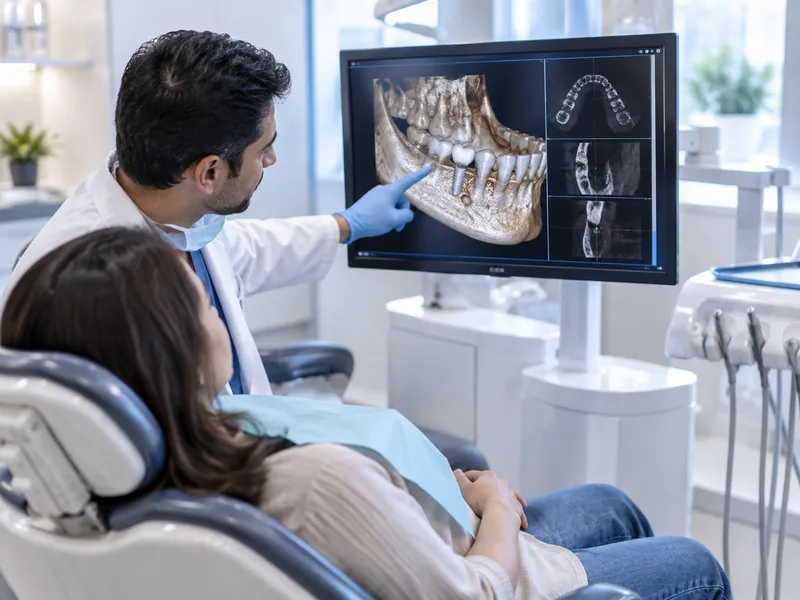
A 3D scan measures the height and width of bone at the site and shows exactly where the nerve in the lower jaw and the sinus above the upper teeth are sitting. The implant position is planned on that scan before anything is done in the mouth. This stage also answers the question everything else depends on: whether there is enough bone, or whether it has to be built up first.
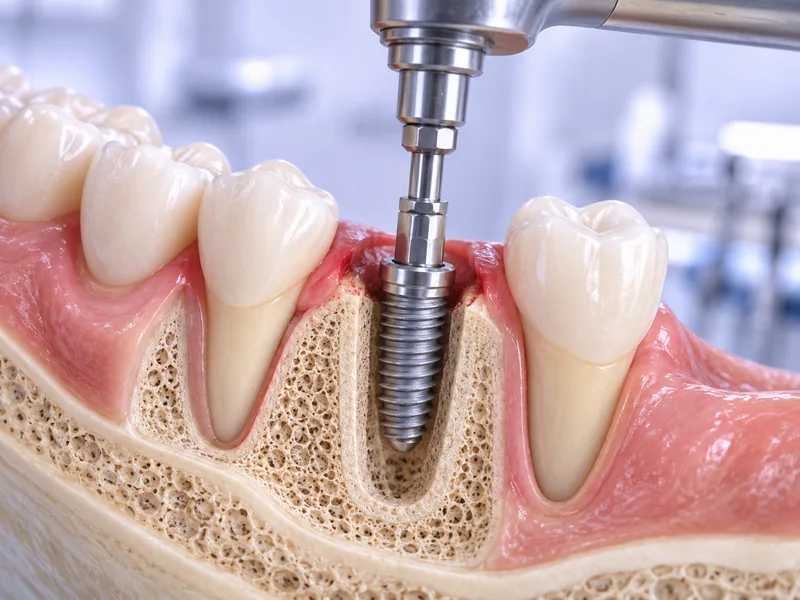
The appointment itself
Under local anaesthetic the gum is opened and a channel prepared in the bone to the exact width and depth planned. The implant is threaded into it and the gum closed over or around it. Most people describe this as easier than having a tooth out — bone does not carry the kind of nerve endings that feel drilling, so what you notice is pressure rather than pain.
The months that do the real work
This is the part that cannot be hurried. Bone grows onto the titanium surface and locks it in place — osseointegration — and it takes three to six months depending on the site and the quality of the bone. Nothing is visible and nothing hurts. You wear a temporary tooth right through this period, so the gap is never on show.
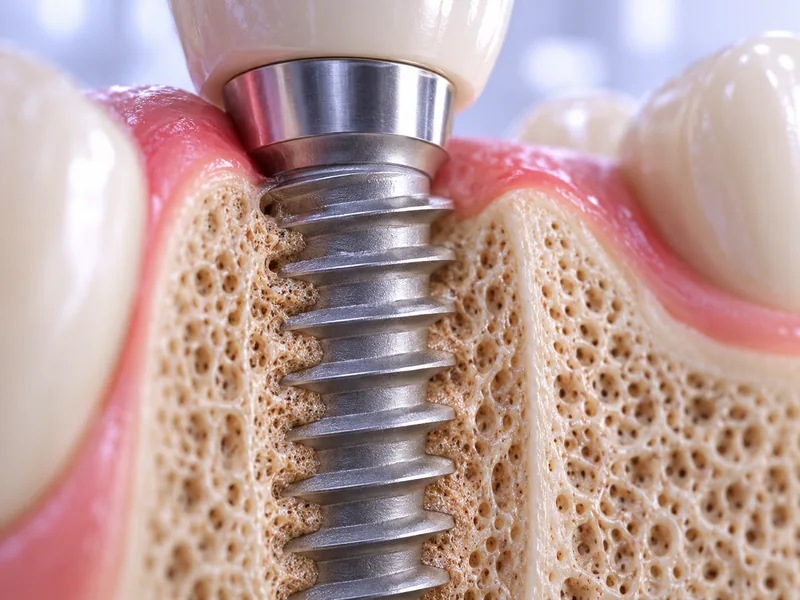
Fitting the crown
Once the implant is solid, a small connector called an abutment is fitted and a scan or impression taken. The crown is made to match your own teeth in shape and shade, then screwed or cemented into place and checked against your bite. From this point it is brushed, flossed and checked like any other tooth.
Recovery
After Implant Surgery
The surgical part is usually far easier than people expect. These four cover the first week and the years after it.
- 1
The first 24 hours
Bite on the gauze, no rinsing, no straws and no smoking. Smoking is the single biggest risk to an implant, both before and after it is placed.
- 2
Swelling and soreness
Mild, peaking around day two, and settled within the week. Ordinary painkillers are enough for most people. Finish any antibiotics you are given.
- 3
Eating through the healing months
Soft on that side for the first week, then normal. The temporary tooth is a placeholder rather than a working tooth — keep heavy chewing off it.
- 4
Cleaning around it, for life
An implant cannot decay, but the gum and bone around it can become infected, and that is what loses implants. Cleaning between and regular checks are not optional extras here.
Which to choose
An Implant vs a Bridge
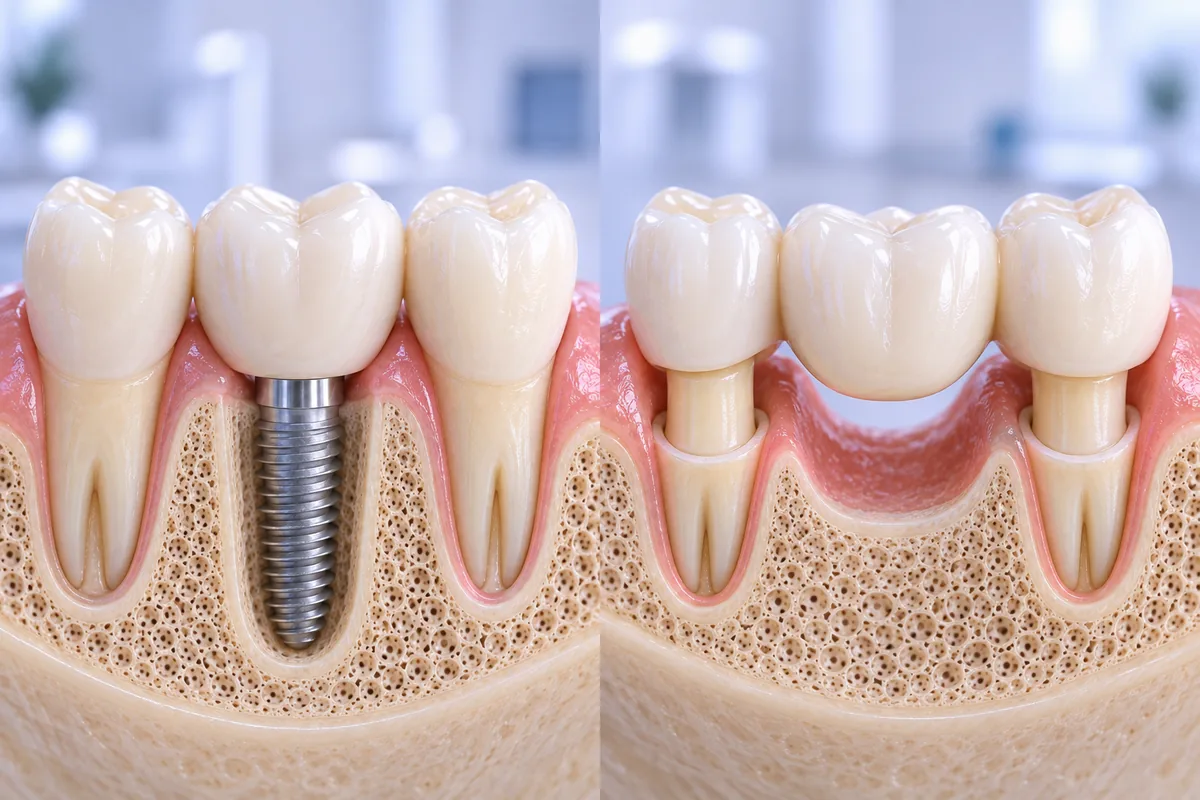
For a single missing tooth with healthy teeth either side, these are the two real options — and the difference between them is what each one costs you in other teeth.
A bridge is quicker, usually two visits across a couple of weeks. But it is carried by the teeth on each side, and those teeth have to be cut down to crowns to carry it. If they were untouched and healthy, that is two sound teeth reduced in order to replace one missing one. A bridge also leaves the bone under the gap unloaded, so it carries on shrinking underneath.
An implant takes months and a small operation, and it touches nothing else. The bone stays loaded and keeps its shape, and the teeth either side are left exactly as they are. Where those neighbours already need crowns for their own reasons, a bridge can be the more sensible use of the same work — that is the honest exception, and it is worth asking about.
What Happens at Your First Consultation
- 1ExaminationThe gap, the teeth either side, the gum over it and how your teeth meet.
- 23D scanThe height and width of bone, and where the nerve and the sinus actually sit.
- 3Bone checkWhether there is enough to place into, or whether it has to be built up first.
- 4PlanHow many implants, how long it will take, and what you wear in the meantime.
- 5AftercareWhat the healing months involve, and how the finished tooth is looked after.
Why us
Why Choose Us for Your Implant
- A periodontist and implantologist, Dr. A. Rithesh Kumar (MDS), and a prosthodontist, Dr. Sai Krishna (MDS), for the crown on top, are part of our team.
- You are told honestly whether an implant suits you, and what the alternatives are.
- We follow up while the implant heals, before the final crown is fitted.
- Instruments sterilised and sealed for every patient, under a strict protocol.
- Open every day, 9:30 AM to 9 PM, at two branches in Gajularamaram: Ushodaya Colony and Mallareddy Nagar.
Tooth Pain & Repair
Relief from toothache and repair for decayed, cracked or broken teeth, from fillings and root canals to crowns.
- Root Canal Treatment
- Tooth Sensitivity Treatment
- Cavity Treatment
- Tooth Fillings
- Dental Crowns & Caps
- Wisdom Tooth Removal
- Emergency Dental Care
 learn more
Missing Teeth
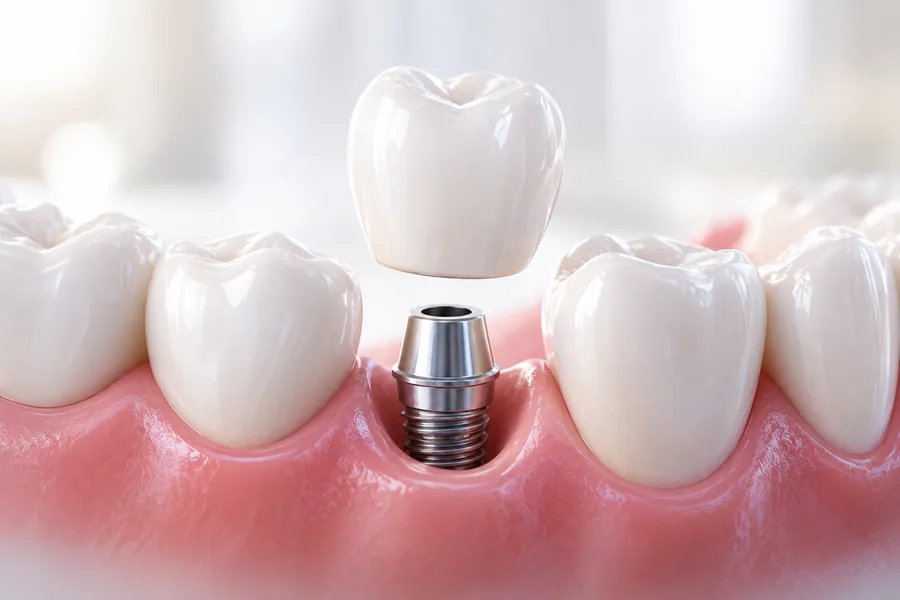
Implants, bridges and dentures to replace missing teeth, planned by our implantologist and prosthodontist.
 learn more
Straightening
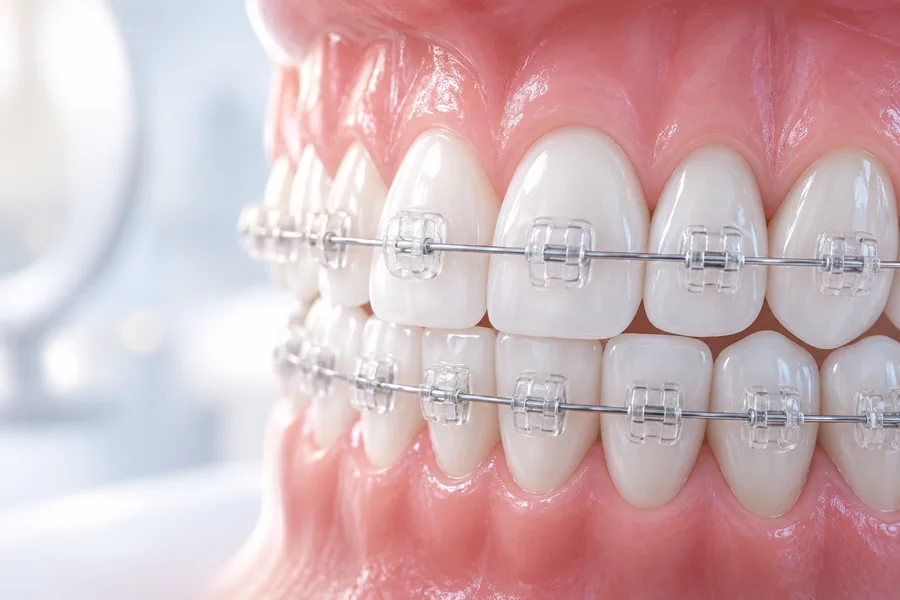
Braces and Illusion clear aligners for crooked or gapped teeth, planned by our orthodontist for children and adults.
 learn more
Cosmetic
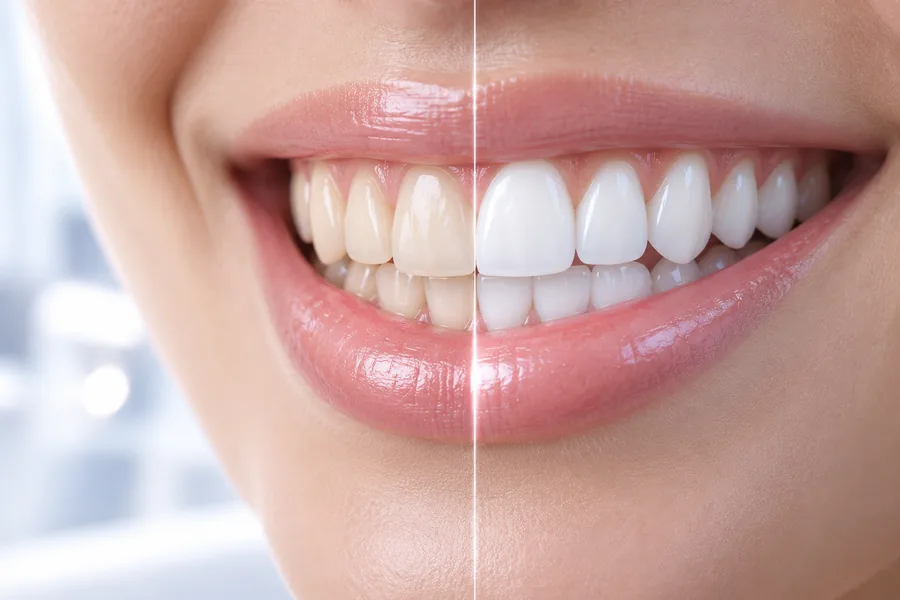
Whitening, veneers, bonding and smile makeovers to improve the colour and shape of your smile, led by our cosmetic dentist.
 learn more
Gums & Cleaning
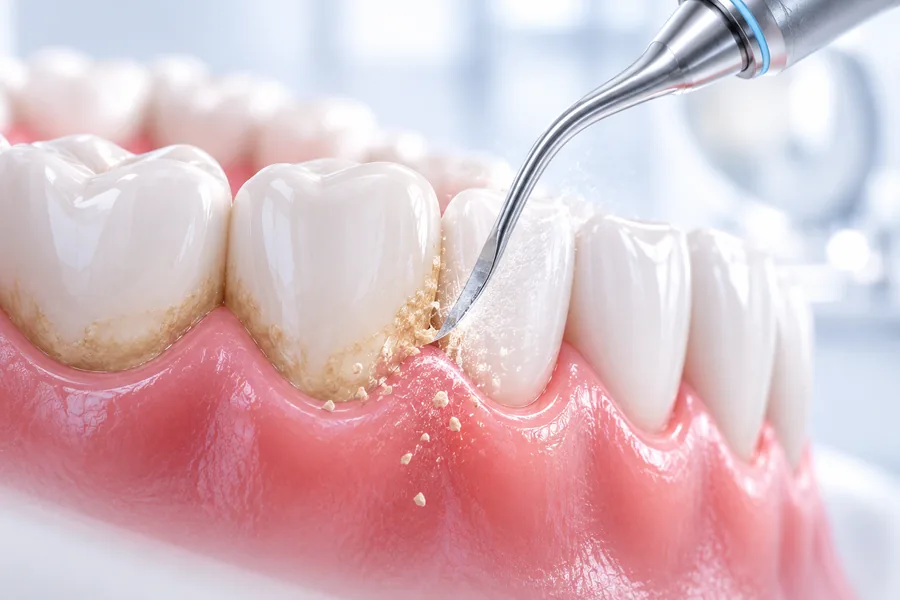
Cleaning, gum treatment and laser care for bleeding gums and bad breath, from our periodontist.
 learn more
Kids & Family
Gentle check-ups, fluoride and sealants for children with our pedodontist, and routine check-ups for the whole family.






Verified Google Reviews
Excellent
Based on 238 reviews
Harsha Vardhini
2026 · Google
I highly recommend Dr. Roja! She is incredibly kind, patient, and caring. I’ve had a root canal and multiple fillings done by her, and every procedure was completely painless. She explains everything clearly, makes you feel comfortable, and ensures you’re at ease throughout the treatment. Her gentle approach and professionalism make every visit a great experience. If you’re looking for a skilled dentist who truly cares about her patients, Dr. Roja is an excellent choice!
akk reddy
2026 · Google
I had a great experience with Dr. Roja madam. She is a very good doctor and extremely patient-friendly. I was suffering from a tooth cavity, and she suggested a root canal treatment. After starting the treatment, my tooth pain completely disappeared. The cap fitting was also very comfortable and flexible. Overall, I am very satisfied with the treatment and care provided. Thank you so much
Mamidisetti Siva
2026 · Google
I had a very good experience at this dental clinic. The treatment was excellent, and the staff were very friendly and supportive. Even after the treatment, they took great care by calling me, checking on my recovery, and asking me to come for follow-up visits. I really appreciate their concern and professionalism. Highly recommended.
BHARATH GUNDEBOINA
2026 · Google
Had a great experience with teeth replacement treatment. Dr. Roja mom explained everything clearly and the procedure was smooth and painless. The results look very natural and I’m extremely happy with my new smile. Highly recommended..thank you….
venkannababuk venki
2026 · Google
Madam provides very good dental treatment. She explains everything clearly and patiently whenever I have any doubts. I am very satisfied with the treatment and the way she cares for patients. Thank you, SR Dental.
Near you
Dental Implants Near You in Gajularamaram
If you have been searching for dental implants near you, the appointment that matters is the scan. Whether an implant is straightforward, needs bone built up first, or is not the right answer at all is decided by the height and width of bone at that particular site — and nobody can tell you which without looking.
It is also worth coming in before a tooth is taken out rather than after. Planning the replacement while the tooth is still there gives more options, and sometimes lets the implant go in at the same appointment.
77020 95262Gajularamaram
Contact
Reach out to schedule your next dental visit
Whether you have a question, need expert advice, or are ready to book your next appointment, our team is here to help.
Reach out to us on
- Phone Number 77020 95262
- Email address srdentalcare48@gmail.com
- Location Hospital Phase 2, Plot No:100/N, behind UMCC Road, Chandragiri Nagar, Ushodaya Colony, Indira Nagar, Gajularamaram, Hyderabad, Telangana, 500055
Working Hours
- Mon – Sun:
- 9:30 AM – 9:00 PM
FAQs
Frequently asked questions about dental implants
Still have a dental question?
Send us a message and our dental team will help.
Does getting an implant hurt?
Less than most people expect. The site is fully numbed, and bone does not carry the kind of nerve endings that feel drilling, so what you notice is pressure and vibration. Most patients say it was easier than having a tooth taken out. Soreness afterwards is mild and usually settled within a few days.
How long does the whole thing take?
Three to six months from placement to finished tooth in most cases, because bone has to grow onto the implant before it can carry a bite. Where the bone is dense and there is no infection, an implant can sometimes be placed and temporarily crowned on the same day — but the scan decides that, not preference.
Will I be without a tooth while it heals?
No. A temporary tooth fills the gap through the healing months, either a removable one or a bridge-style temporary bonded to the teeth either side. It is not made for heavy chewing, but the gap is never on show.
How long do implants last?
Ten-year success rates are consistently above 95%, and many implants last for decades. What loses them is not the titanium — it is infection of the gum and bone around it, driven mostly by smoking and by poor cleaning. An implant cannot decay, which is why maintenance matters more here than material does.
What if there is not enough bone?
It is common, particularly where a tooth has been missing for years, and it is usually solvable. Bone can be grafted at the same appointment as the implant where the shortfall is small, or built up first and left to heal for a few months where it is larger. The 3D scan is what tells you which of those you are looking at.
Can I have an implant if I smoke or have diabetes?
Both raise the risk of failure rather than ruling it out. Smoking is by far the bigger of the two, and stopping across the healing period genuinely changes the odds. Well-controlled diabetes is not a barrier; poorly controlled diabetes slows healing and is worth getting in order first. You should expect a straight answer about the risk in your own case.