
Emergency Dentist in Gajularamaram
- 14+Years of experience
- 50,000+Patients treated
- 4.9Google rating
- 30–60 minutes
- relief today, the repair booked after
- Mon – Sun: 9:30 AM – 9:00 PM
Right now
What to Do Before You Get Here
Call us first. What you do in the next few minutes matters, and it is different for each of these — none of it replaces being seen, but it buys you time.
- 1
A knocked-out adult tooth
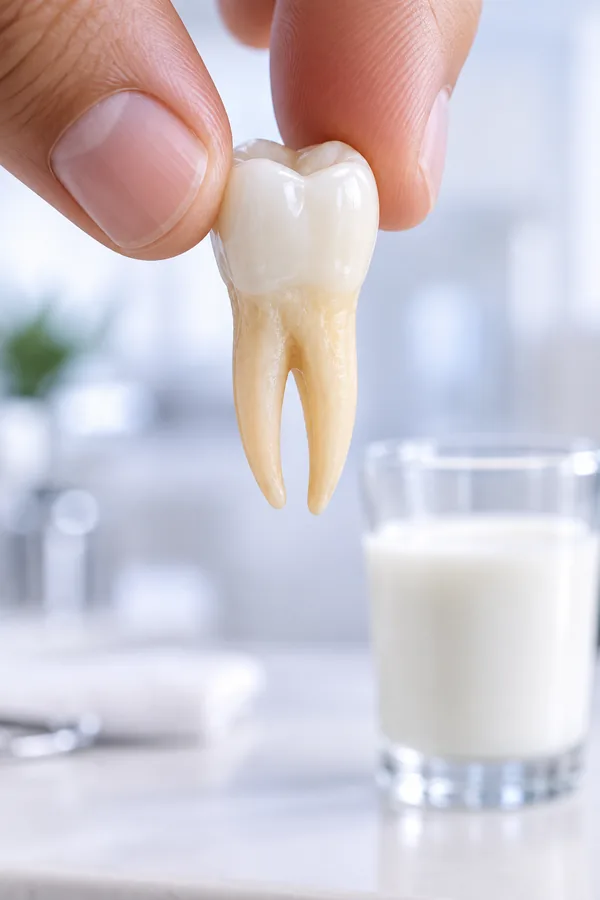
Hold it by the crown, never the root. If it is dirty, rinse it briefly in milk — do not scrub it. Put it back in the socket if you can, or keep it in milk. Best chance is within the hour.
- 2
A broken or chipped tooth
Save any pieces in milk. Rinse your mouth with warm water, and cover a sharp edge with sugar-free gum so it does not cut your tongue or cheek.
- 3
Severe toothache
Take the painkiller you would normally take, and keep your head raised — lying flat makes it throb. Never hold an aspirin against the gum; it burns the tissue.
- 4
Swelling in the face or gum
A cold pack against the cheek, and call today. Swelling means the infection has spread beyond the tooth, and it will not settle on its own.
- 5
Bleeding that will not stop
Bite firmly on clean gauze or a folded handkerchief for a full 15 minutes without lifting it to check. If it soaks through twice over, call us.
- 6
A lost crown or filling
Keep the crown. Do not try to glue it back with household glue. Keep the area clean and stay off that side until it can be re-cemented.
- 7
Something stuck between teeth
Floss gently. Never use a pin, a needle or anything metal — that is how a small problem turns into a damaged gum or a split tooth.
- 8
When to go to hospital instead
Swelling closing your eye, spreading down your neck, or making it hard to swallow or breathe — with or without a fever — go to a hospital emergency department now, not to a dental clinic.
What Counts as a Dental Emergency?
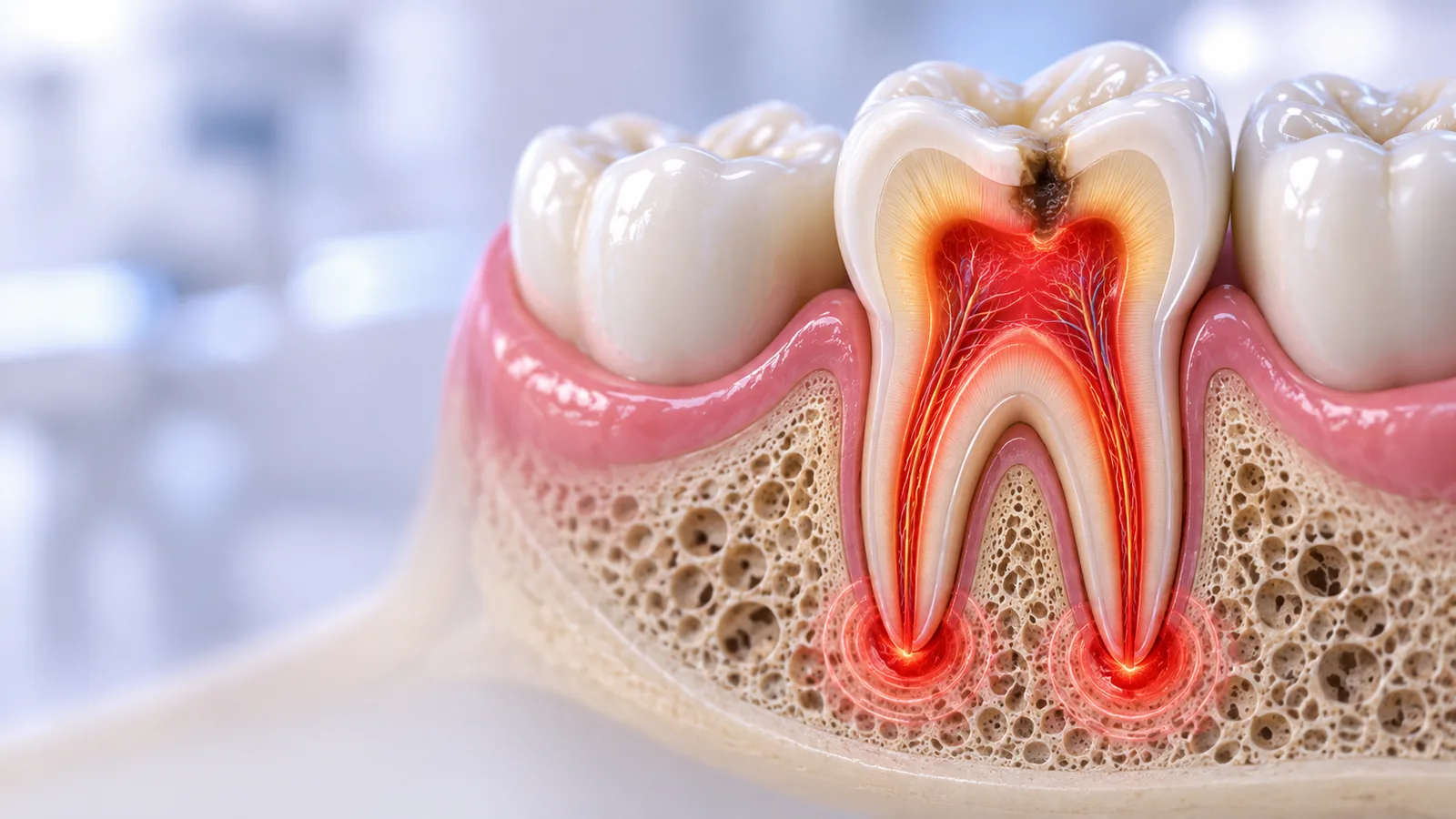
A dental emergency is any problem getting worse by the hour rather than by the month. Most dental disease is slow: a cavity takes a year, gum disease takes a decade. An emergency is what happens when something crosses a line — infection escapes a tooth into the tissue around it, a tooth is knocked out of its socket, or a crack finally runs deep enough to reach the nerve.
The thing that matters most in that first appointment is pressure. Almost all severe dental pain is pressure with nowhere to go: inflamed pulp trapped inside a rigid tooth, or pus building under the gum. Relief comes from opening a path for it, and it usually works within minutes. That is why the appointment people dread is so often the one they end up wishing they had come to sooner.
Almost nothing is finished on the day, and that is deliberate. The visit stops the pain and makes the situation safe; the real repair — a root canal, a crown, a splint reviewed — is planned once you are comfortable and the infection is down. Pain that has stopped is not the same as a problem that has, and it is the appointment afterwards that actually saves the tooth.
How an Emergency Visit Works

Relief First
The first appointment has one job: stop the pain or drain the infection. That may mean opening a tooth to release the pressure inside it, draining a swelling, dressing an exposed nerve, or splinting a tooth that has been knocked loose. You leave comfortable.

The Repair After
Almost nothing is finished on the day, and that is deliberate — a throbbing tooth is not the moment to be deciding about a crown. Once the pain has gone and the infection is down, the proper repair is planned and booked.
Is This an Emergency?
If you are not sure, call and ask. Some of these need seeing within the hour and some can wait until tomorrow morning, and that is exactly the sort of thing worth asking rather than guessing at midnight.
- Pain that stops you sleepingThrobbing that wakes you, builds when you lie down, and does not settle with painkillers.
- Swelling in the face or jawAny swelling you can see or feel from outside. Infection has spread, and it is seen the same day.
- A tooth knocked out or looseDealt with within the hour, an adult tooth can often be put back. After that the odds fall fast.
- A tooth broken with a sharp edgeA piece gone, the inside of the tooth exposed, or an edge cutting your tongue.
- A crown or filling that has come outRarely painful at first, but the tooth underneath is unprotected and breaks easily.
- Pain you cannot bite on at allA tooth that will not take any pressure usually means infection at the tip of the root.
Options
The Four We See Most
Different problems run on different clocks. These are the four that come through the door most often, and how urgent each one genuinely is.
 1
1A knocked-out tooth
The most time-critical of all. An adult tooth kept moist and replanted within the hour often survives. A baby tooth is never put back — it can damage the adult tooth forming above it.
 2
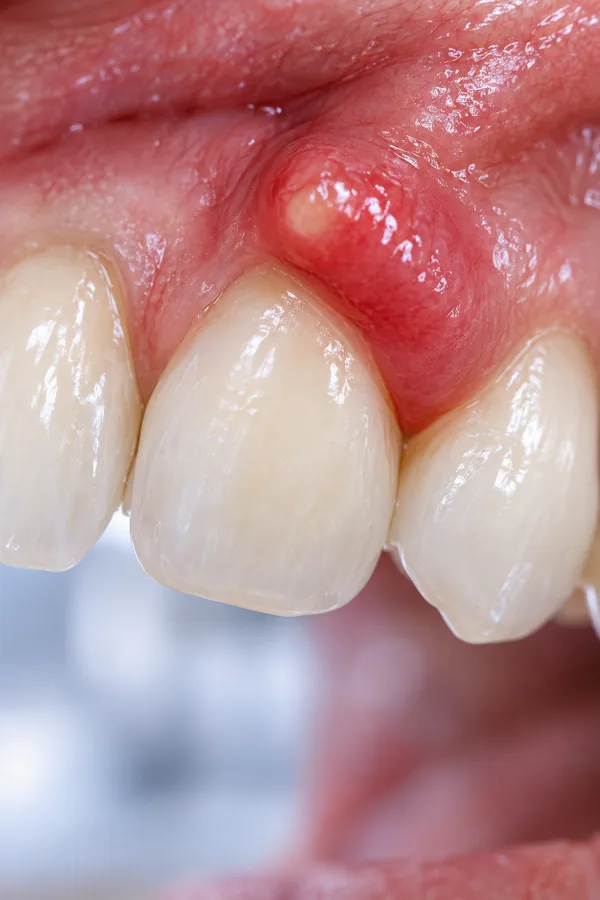
2An abscess with swelling
Infection that has escaped the tooth into the tissue around it. Seen the same day, because it spreads along the paths of least resistance and those run towards the eye and the neck.
 3
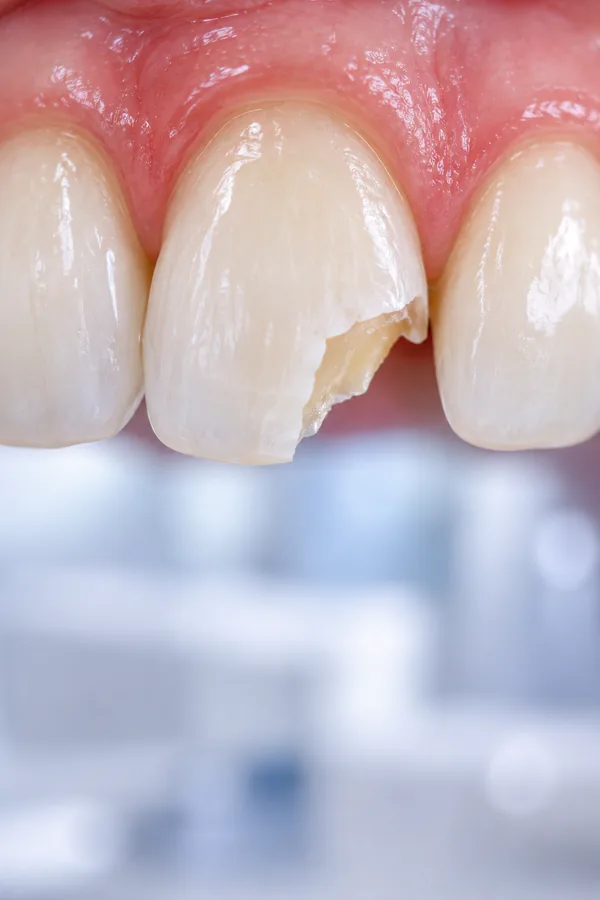
3A cracked or broken tooth
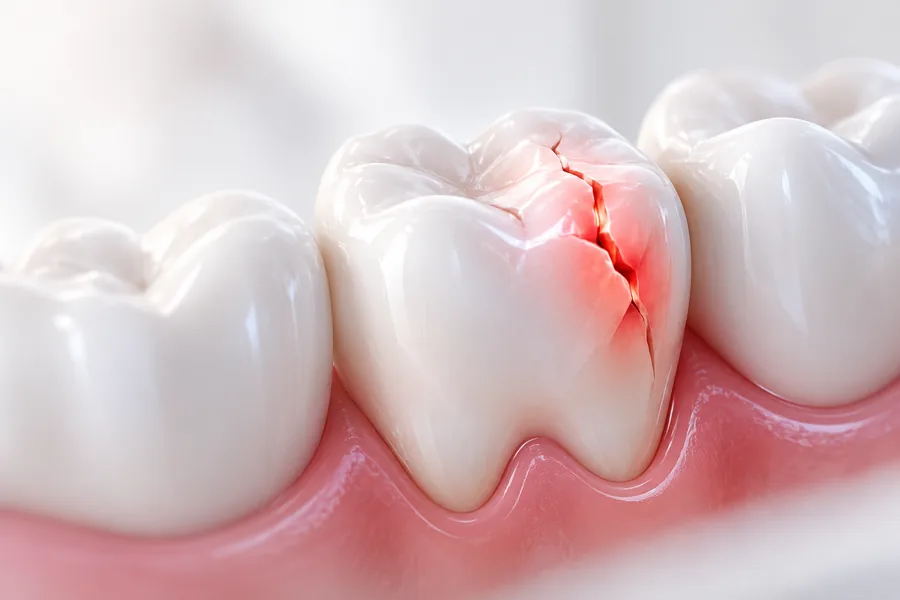
How urgent depends on what is exposed. A chipped edge can wait a day or two; a fracture into the nerve cannot — and the pain is what tells you which one you have.
 4
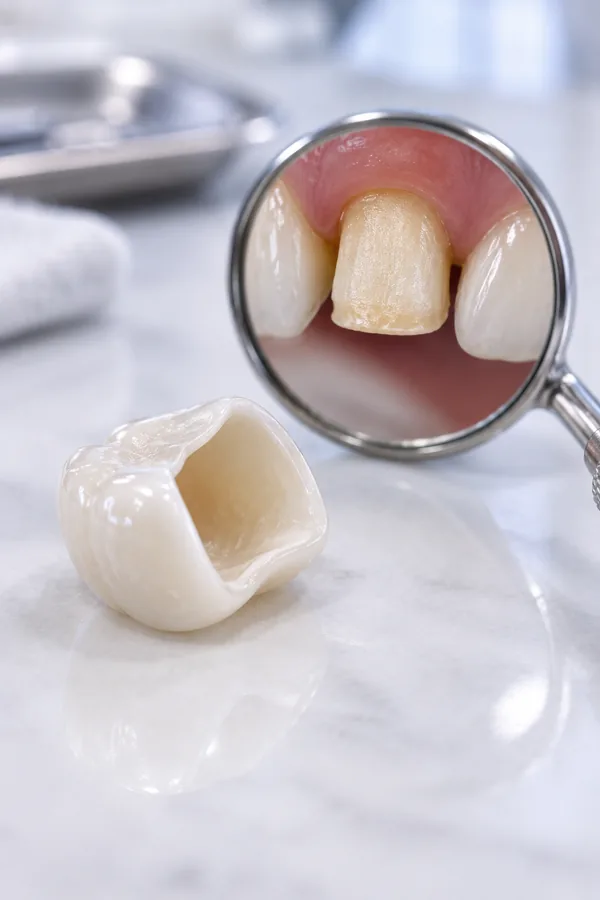
4A lost crown or filling
Usually the least urgent, but not one to leave. The prepared tooth underneath drifts within days, and then the crown no longer fits the space it was made for.
What We Do on the Day
Taking the pain down
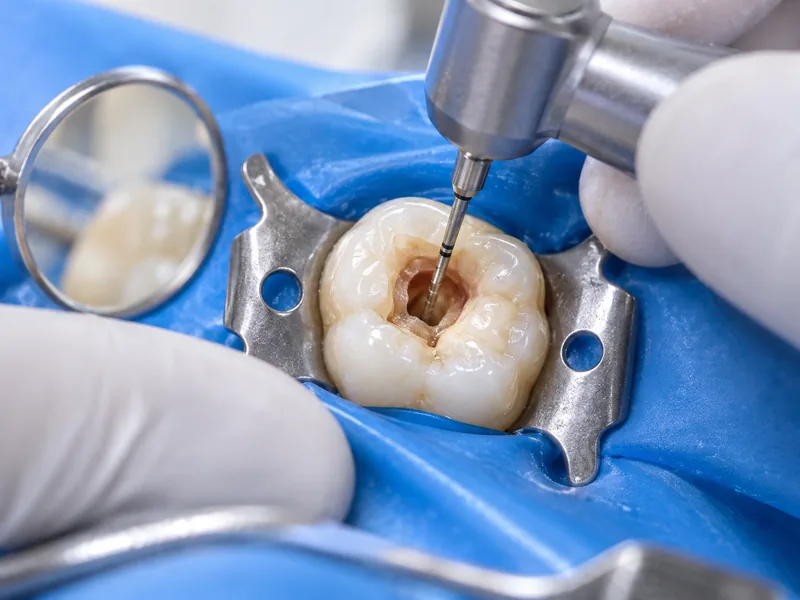
Almost all severe dental pain is pressure with nowhere to go — inflamed pulp trapped inside a rigid tooth, or pus building under the gum. Relief comes from making a path for it: opening the tooth to release the pulp chamber, or a small incision to drain a swelling. It works within minutes, which is why this appointment is so often far less unpleasant than the night before it. Antibiotics do not do this on their own; they are an addition, not a substitute.
Holding a damaged tooth in place
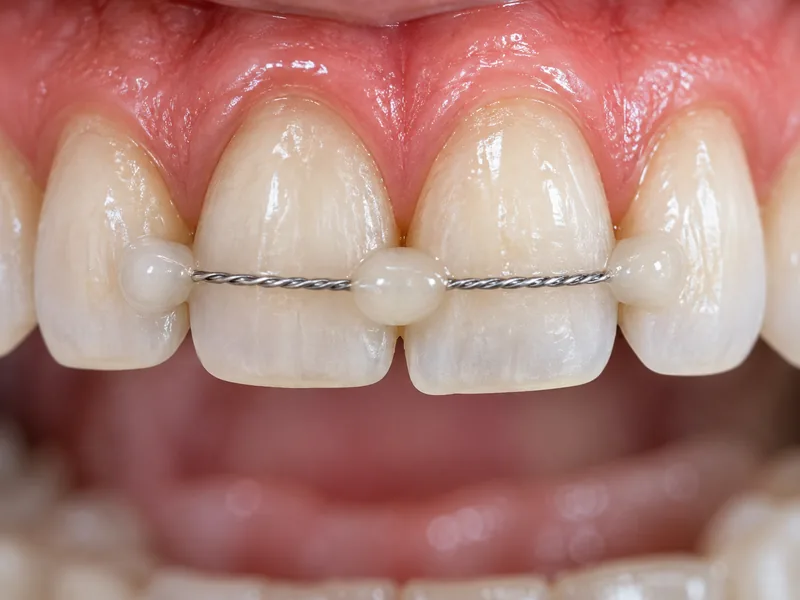
A tooth knocked loose, or put back into its socket, is splinted — bonded to the teeth either side with a thin wire or a strip of composite so it cannot move while the ligament reattaches. A broken tooth has the exposed surface covered so it is neither sharp nor sensitive. Both are temporary by design: they hold the situation steady until the tooth can be assessed properly.
Recovery
After an Emergency Visit
You should leave more comfortable than you arrived. These four decide how the next few days go.
- 1
Finish the antibiotics
If you were given them, take the whole course even once the swelling has gone. Stopping early is what brings the infection back, harder to treat the second time.
- 2
Keep the appointment that follows
The emergency visit stopped the pain; it did not repair the tooth. Pain that has gone is not the same thing as a problem that has.
- 3
Eat on the other side
Especially with a splinted or temporarily covered tooth. Soft food, nothing very hot, and nothing that has to be torn.
- 4
Come straight back if
The swelling grows, the pain returns, a temporary dressing comes out, or a splinted tooth starts to feel loose again.
Why it matters
Coming In Today vs Waiting It Out
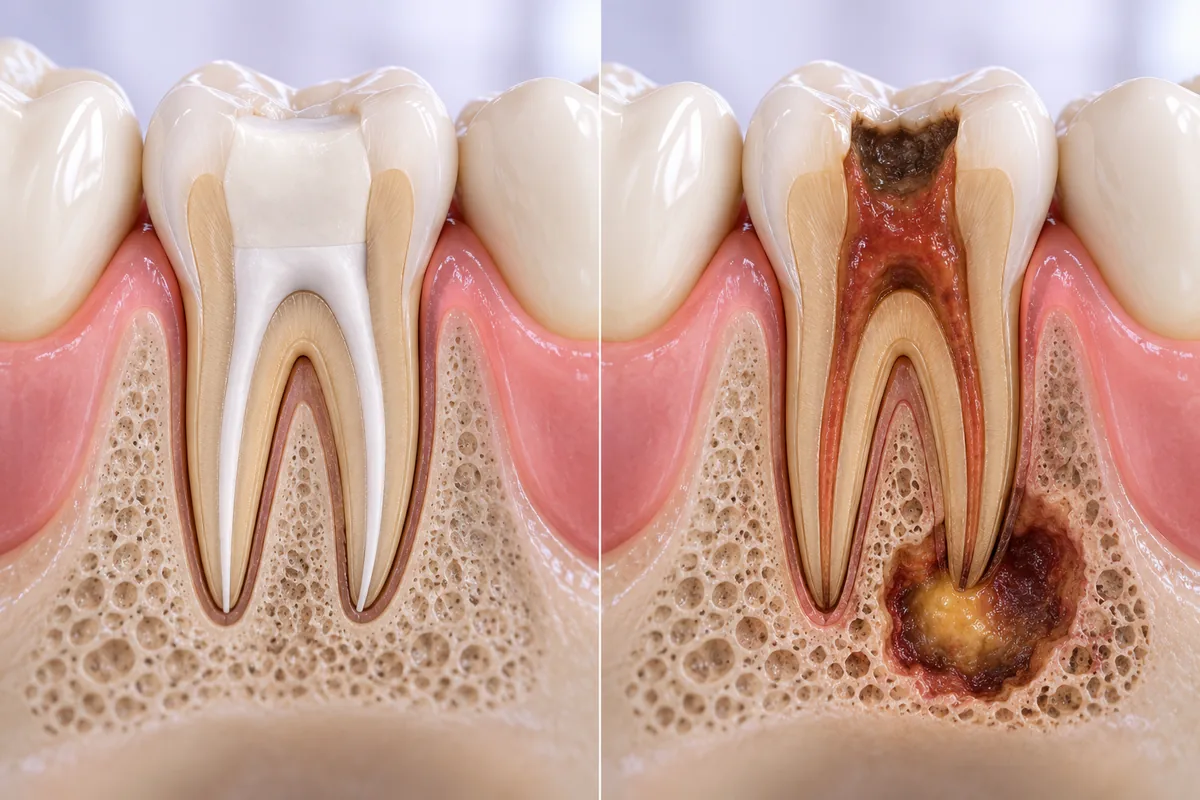
Dental pain does sometimes fade on its own, and that is exactly what makes it dangerous. When a nerve dies the pain stops — not because the problem has gone, but because the part that was reporting it has.
What follows is silent for a while. The infection travels out through the root tip into the bone and builds there, and the next thing you feel is swelling rather than toothache. By then the treatment is longer, the tooth is less likely to be savable, and the appointment is no longer one whose timing you chose.
The other half of it is options. A knocked-out tooth has hours. A cracked tooth that is still only sensitive can usually be crowned; the same tooth once the crack has run below the gum often cannot be saved at all. Coming in early is, more often than not, the difference between keeping a tooth and replacing it.
What Happens When You Arrive
- 1You callTell us what has happened. We say how soon you need to be seen, and what to do meanwhile.
- 2ExaminationThe dentist finds the source — it is not always the tooth that hurts the most.
- 3X-rayA small X-ray shows infection at a root tip, a fracture, or how deep the damage has gone.
- 4Relief todayThe pressure is released or the tooth stabilised. This is the part that cannot wait.
- 5PlanWhat the tooth needs properly, and when — booked before you leave.
Why us
Why Choose Us in an Emergency
- Open seven days a week, 9:30 AM to 9 PM, at two branches in Gajularamaram.
- Call 77020 95262 and say it is urgent: we try to see severe pain, swelling or injury the same day.
- Specialists for what emergencies usually need: an endodontist for infected teeth and an oral surgeon for difficult extractions.
- Instruments sterilised and sealed for every patient, under a strict protocol.
Tooth Pain & Repair
Relief from toothache and repair for decayed, cracked or broken teeth, from fillings and root canals to crowns.
- Root Canal Treatment
- Tooth Sensitivity Treatment
- Cavity Treatment
- Tooth Fillings
- Dental Crowns & Caps
- Wisdom Tooth Removal
- Emergency Dental Care
 learn more
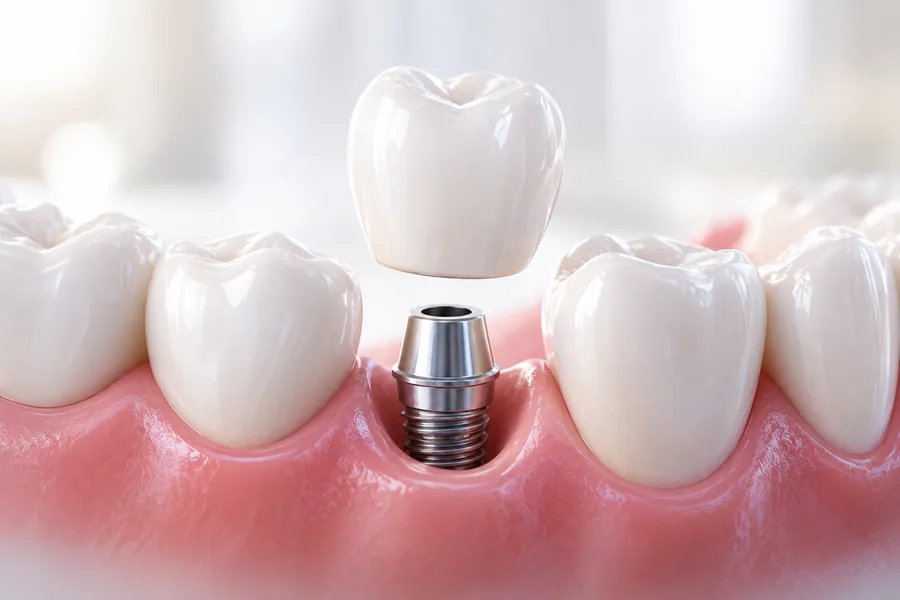
Missing Teeth
Implants, bridges and dentures to replace missing teeth, planned by our implantologist and prosthodontist.
 learn more
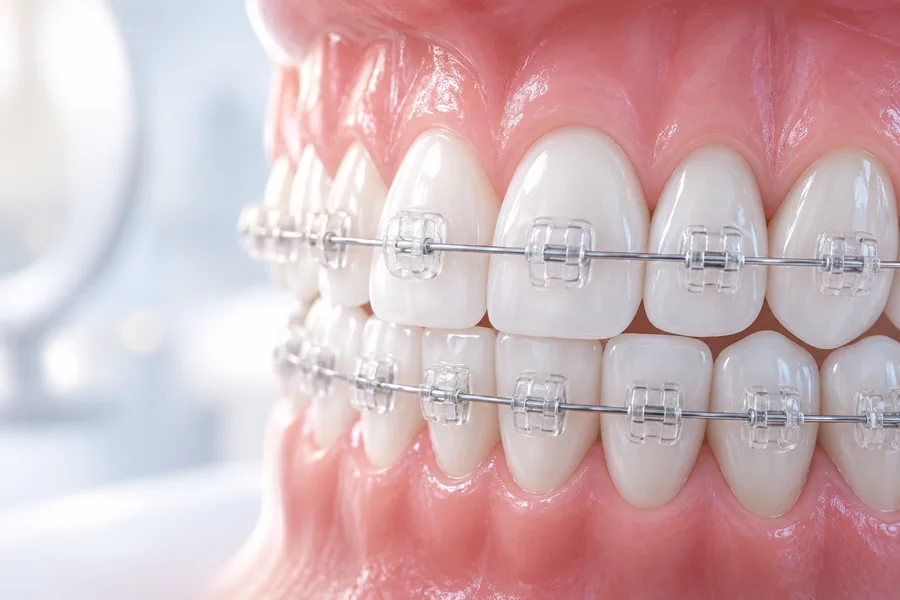
Straightening
Braces and Illusion clear aligners for crooked or gapped teeth, planned by our orthodontist for children and adults.
 learn more
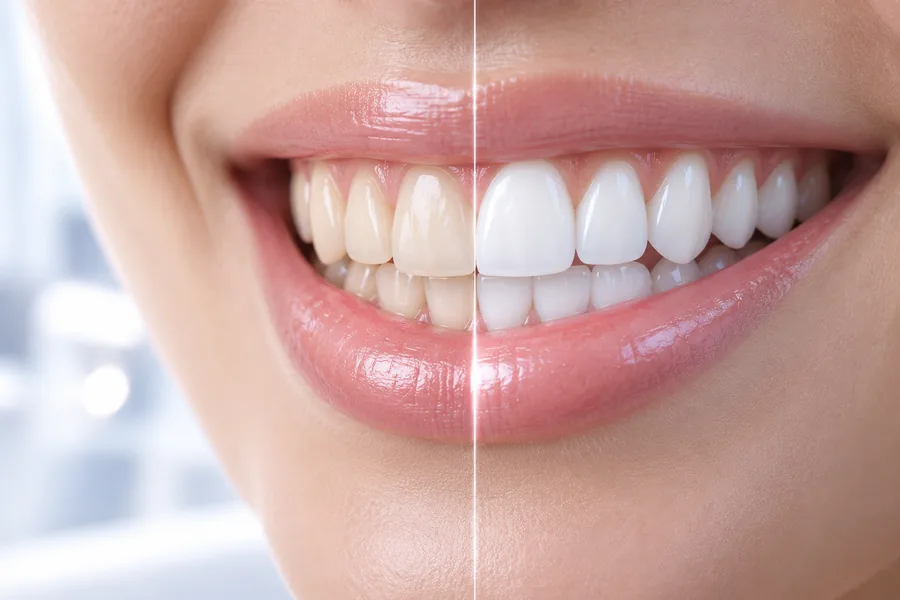
Cosmetic
Whitening, veneers, bonding and smile makeovers to improve the colour and shape of your smile, led by our cosmetic dentist.
 learn more
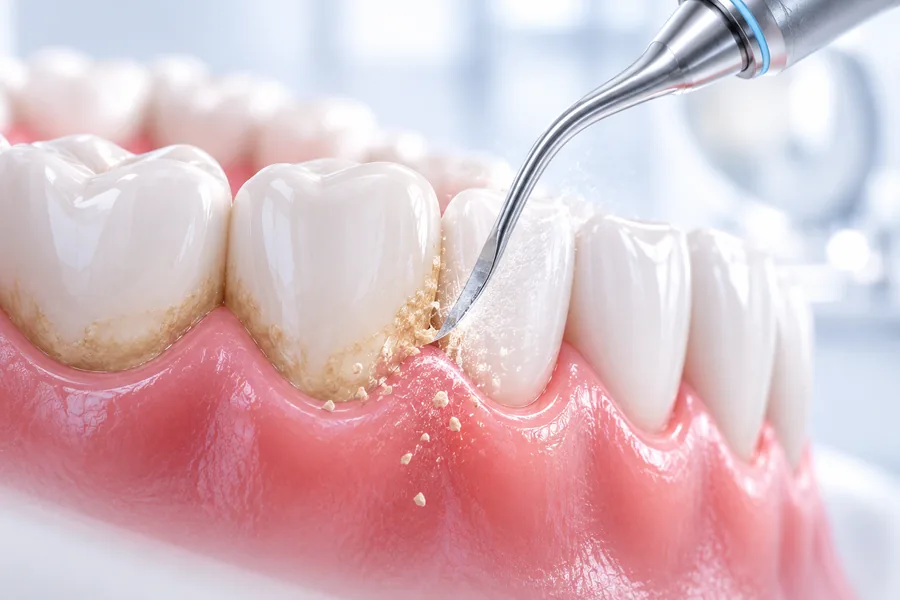
Gums & Cleaning
Cleaning, gum treatment and laser care for bleeding gums and bad breath, from our periodontist.
 learn more
Kids & Family
Gentle check-ups, fluoride and sealants for children with our pedodontist, and routine check-ups for the whole family.






Verified Google Reviews
Excellent
Based on 238 reviews
Harsha Vardhini
2026 · Google
I highly recommend Dr. Roja! She is incredibly kind, patient, and caring. I’ve had a root canal and multiple fillings done by her, and every procedure was completely painless. She explains everything clearly, makes you feel comfortable, and ensures you’re at ease throughout the treatment. Her gentle approach and professionalism make every visit a great experience. If you’re looking for a skilled dentist who truly cares about her patients, Dr. Roja is an excellent choice!
akk reddy
2026 · Google
I had a great experience with Dr. Roja madam. She is a very good doctor and extremely patient-friendly. I was suffering from a tooth cavity, and she suggested a root canal treatment. After starting the treatment, my tooth pain completely disappeared. The cap fitting was also very comfortable and flexible. Overall, I am very satisfied with the treatment and care provided. Thank you so much
Mamidisetti Siva
2026 · Google
I had a very good experience at this dental clinic. The treatment was excellent, and the staff were very friendly and supportive. Even after the treatment, they took great care by calling me, checking on my recovery, and asking me to come for follow-up visits. I really appreciate their concern and professionalism. Highly recommended.
BHARATH GUNDEBOINA
2026 · Google
Had a great experience with teeth replacement treatment. Dr. Roja mom explained everything clearly and the procedure was smooth and painless. The results look very natural and I’m extremely happy with my new smile. Highly recommended..thank you….
venkannababuk venki
2026 · Google
Madam provides very good dental treatment. She explains everything clearly and patiently whenever I have any doubts. I am very satisfied with the treatment and the way she cares for patients. Thank you, SR Dental.
Near you
Emergency Dental Care Near You in Gajularamaram
If you have been searching for an emergency dentist near you, call rather than booking online. What you describe changes how soon you need to be seen, and some of these are measured in hours rather than days.
If it is the middle of the night, the steps at the top of this page are what to do until morning. If there is swelling around your eye or spreading into your neck, or you are having any trouble swallowing or breathing, go to a hospital now — that is beyond what a dental clinic can treat.
77020 95262Gajularamaram
Contact
Reach out to schedule your next dental visit
Whether you have a question, need expert advice, or are ready to book your next appointment, our team is here to help.
Reach out to us on
- Phone Number 77020 95262
- Email address srdentalcare48@gmail.com
- Location Hospital Phase 2, Plot No:100/N, behind UMCC Road, Chandragiri Nagar, Ushodaya Colony, Indira Nagar, Gajularamaram, Hyderabad, Telangana, 500055
Working Hours
- Mon – Sun:
- 9:30 AM – 9:00 PM
FAQs
Frequently asked questions about emergency dental care
Still have a dental question?
Send us a message and our dental team will help.
What counts as a dental emergency?
Pain that painkillers will not touch, any swelling of the face or gum, a tooth knocked out or knocked loose, bleeding that will not stop, and a broken tooth with the inside exposed. A lost filling or a chipped edge with no pain is urgent rather than an emergency — it should be seen soon, but it does not need to be tonight.
Can I just take antibiotics instead?
Antibiotics slow an infection down; they do not remove what is causing it, and it returns once the course ends. They are given alongside treatment — draining the swelling, or opening the tooth — rather than instead of it. An infection inside a tooth has no blood supply left for the antibiotic to arrive through, which is why the tooth itself has to be opened.
How quickly does a knocked-out tooth have to go back?
Within the hour for the best chance, and every ten minutes counts. Keep it moist — back in the socket if you can manage it, otherwise in milk. Never in water, which damages the living cells on the root surface, and never wrapped in a tissue, which dries it out.
What can I do for the pain tonight?
Take the painkiller you would normally take for a headache, at the normal dose, and keep your head raised — lying flat makes dental pain noticeably worse. A cold pack against the cheek helps if there is swelling. Do not hold an aspirin against the gum: it burns the tissue and makes the next few days worse.
Will the tooth have to come out?
Usually not. Most emergency visits are about relieving pressure and keeping the tooth, and extraction is the last option rather than the quick one. It is discussed with you rather than decided for you, and rarely on the same visit unless the tooth is genuinely beyond saving.
My child has knocked out a baby tooth — what now?
Do not try to put it back. A replanted baby tooth can damage the adult tooth developing above it. Control the bleeding with gauze, keep the tooth to show us, and call — we will check that nothing else has been damaged and that the adult tooth underneath is safe.