
Dental Braces in Gajularamaram
- 14+Years of experience
- 50,000+Patients treated
- 4.9Google rating
- 18–24 months on average
- an adjustment every 4–8 weeks
- Mon – Sun: 9:30 AM – 9:00 PM
What Are Dental Braces?
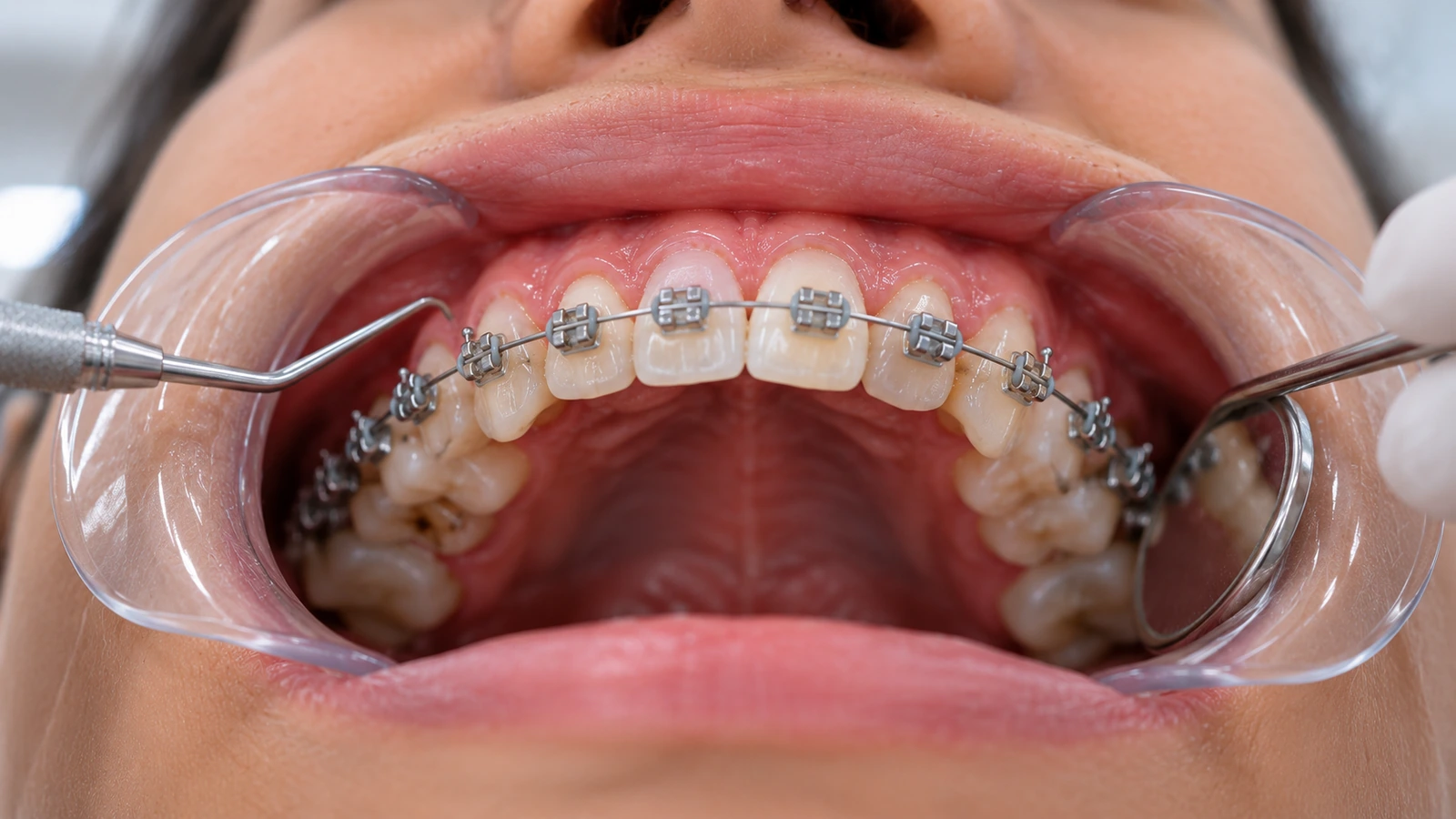
Dental braces straighten teeth by moving them slowly through the bone that holds them. Small brackets are bonded to each tooth and joined by a wire, and the wire’s gentle, constant pull is what does the work. Bone is living tissue: pressed on one side of a root it dissolves a little, and on the other side it rebuilds. The tooth travels into the space this creates, roughly a millimetre a month.
That pace is the reason treatment takes as long as it does, and it cannot be hurried. Force a tooth harder and it does not move faster — the blood supply to the root is squeezed, movement actually slows, and the root itself can shorten. Everything about orthodontics is built around light forces applied for a long time, which is why appointments are short and far apart, and why very little seems to happen between them.
The half that decides whether it lasts is what comes after. Teeth held in new positions sit in bone that has not finished reorganising, held by gum fibres that keep a memory of where they used to be. That is why retainers are not an optional extra at the end but the second half of the treatment — and why almost every adult being straightened for a second time is someone whose teeth were once perfect and whose retainer ended up in a drawer.
The Two Halves of Straightening
Moving the Teeth
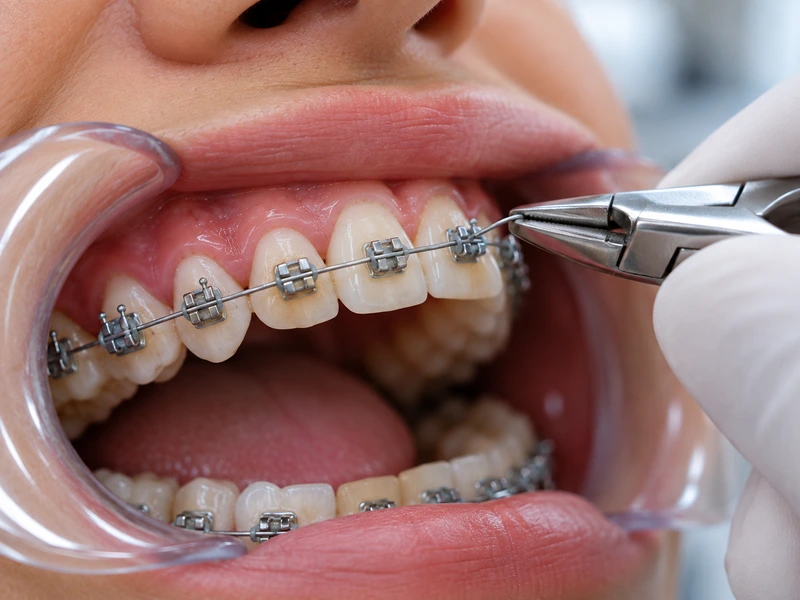
The part everyone pictures. Brackets and a wire apply a light, constant force, and the bone around each root remodels to let the tooth travel through it. It is slow on purpose — push harder and the tooth does not move faster, it just becomes sore and the root suffers.
Holding Them There
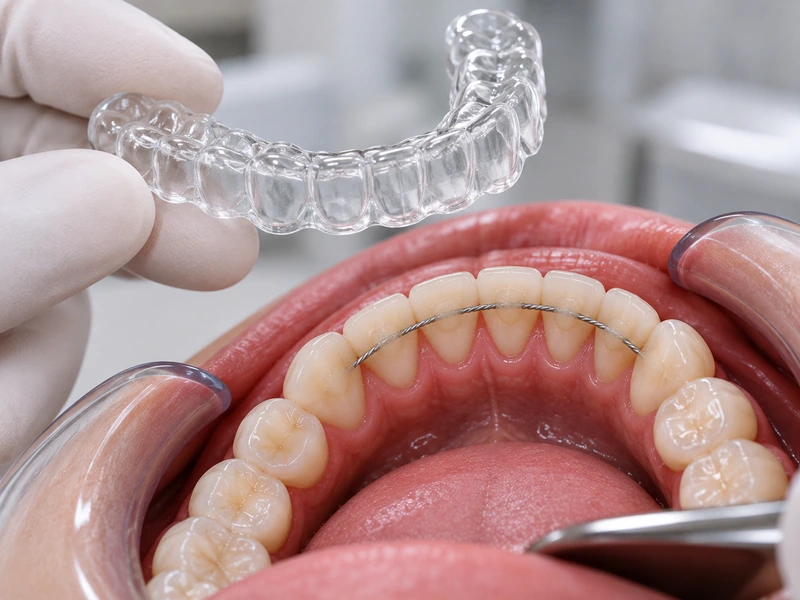
The part nobody mentions until the end, and the reason some people need treating twice. Bone takes months to settle around teeth in their new positions, and the fibres in the gum keep a memory of where they were for years. Retainers hold the result while that settles — and then indefinitely, a few nights a week, because teeth drift throughout life whether they were straightened or not.
When Do Teeth Need Straightening?
Straightening is not only about appearance, though that is usually what brings people in. These are the situations where it changes how the mouth works as well as how it looks.
- Crowded, overlapping teethTeeth turned and pushed out of line because the jaw has less room than the teeth need.
- Gaps between the teethSpacing that traps food, or a single gap at the front that has always bothered you.
- Teeth that have drifted backStraightened years ago, then moved again — almost always because the retainers stopped.
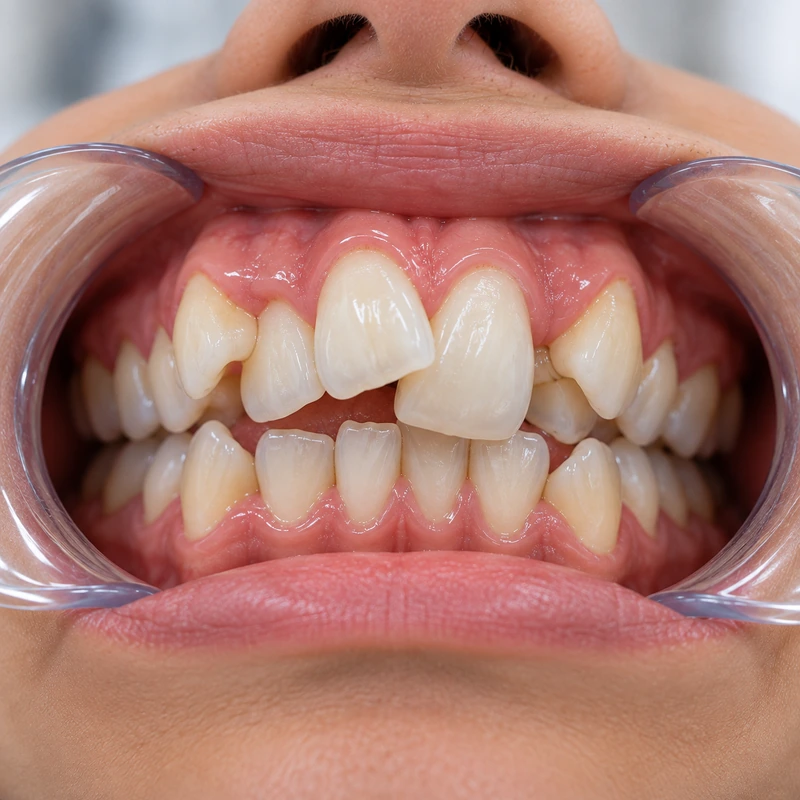
- A bite that does not meet evenlyFront teeth that stick out or bite too deeply, or back teeth that meet on one side first.
- Teeth wearing unevenlyEdges chipping or flattening on the few teeth taking the force the rest should be sharing.
- Food trapping where teeth overlapOverlaps a brush cannot reach, where decay and gum inflammation keep starting.
Options
Types of Braces
All of them do the same job in the same way. What changes is what they are made of, where they sit, and how visible they are while the work is being done.
 1
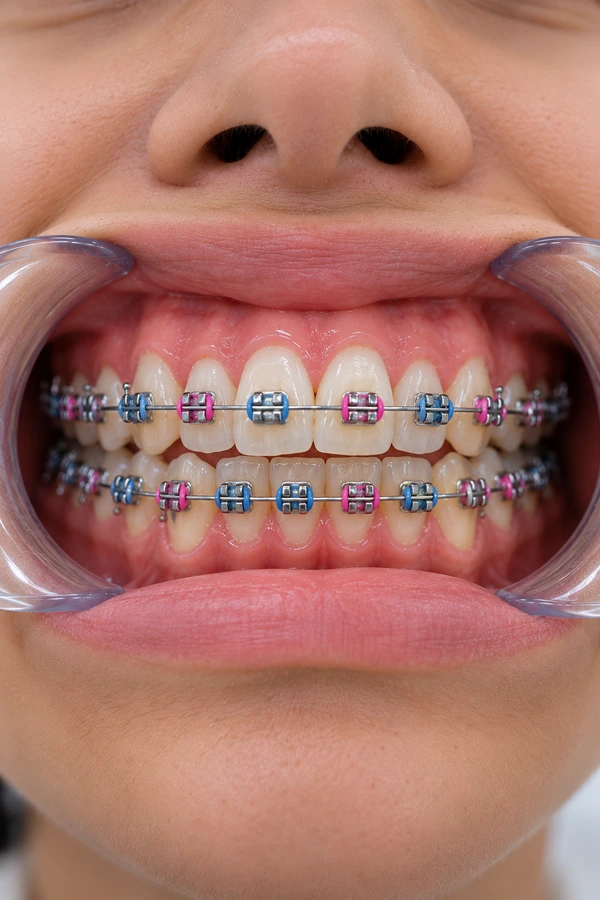
1Metal braces
Stainless steel brackets and a wire, held by small coloured elastic rings. The strongest and most versatile, the quickest for difficult movements, and the most visible.
 2
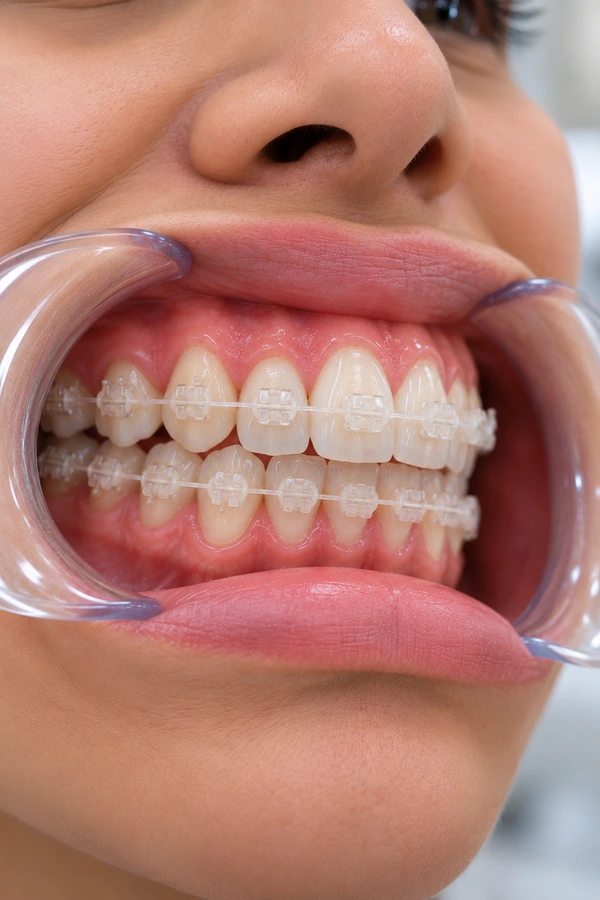
2Ceramic braces
The same system with tooth-coloured brackets, so it reads as a wire rather than a mouthful of metal. Slightly bulkier and more brittle, and the elastic ties can stain between visits.
 3
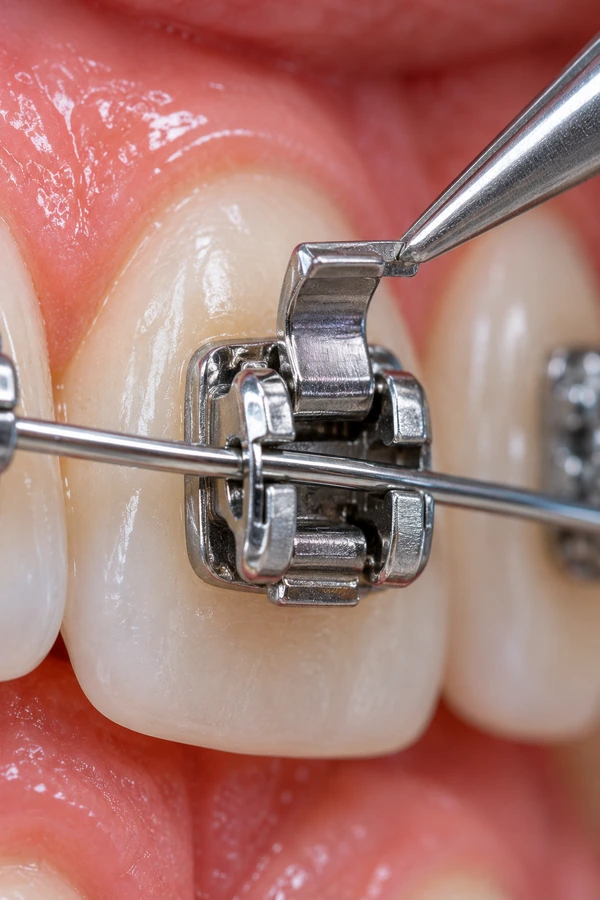
3Self-ligating braces
Brackets with a built-in clip instead of elastic rings, so nothing discolours and appointments tend to be shorter. Available in metal and in tooth-coloured versions.
 4
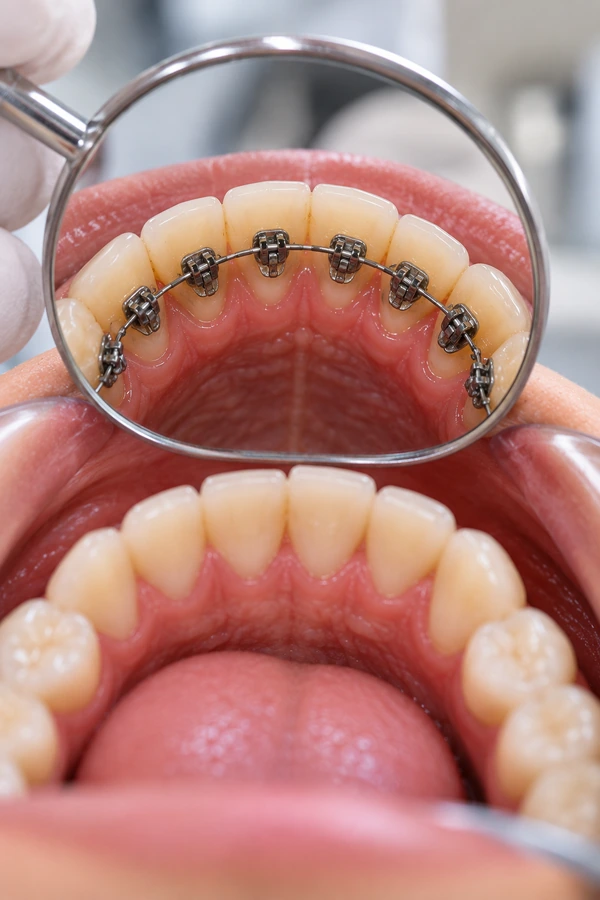
4Lingual braces
Fixed to the inside surfaces, so they are genuinely invisible from the front. They take longer to get used to, affect speech at first, and are the most demanding to adjust.
How Does Treatment Work?
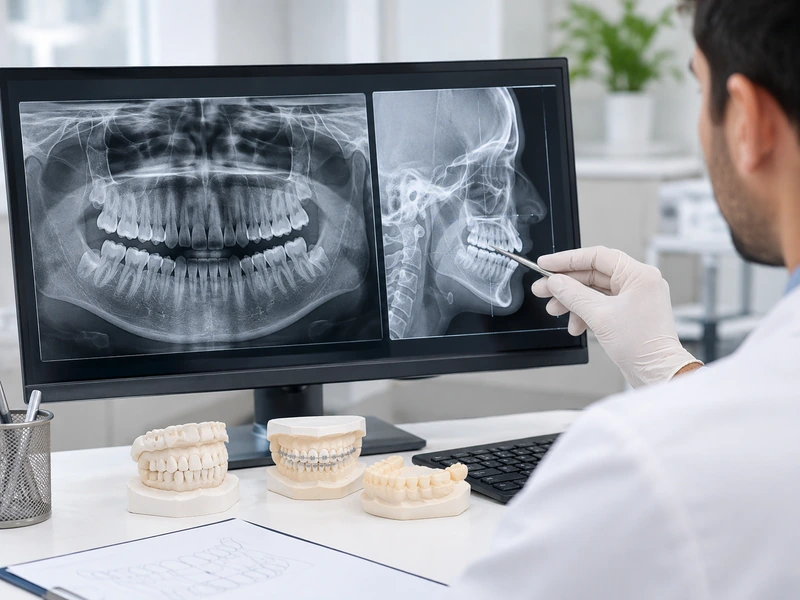
Working out where every tooth is going
Photographs, X-rays of the whole jaw and of the front teeth in profile, and a scan or impressions of both arches. From those the orthodontist works out not just which teeth are crooked but why — whether there is a shortage of room, whether the jaws themselves sit differently, and whether anything needs removing to make space. The plan and the likely length of treatment come out of this, before a single bracket is fitted.
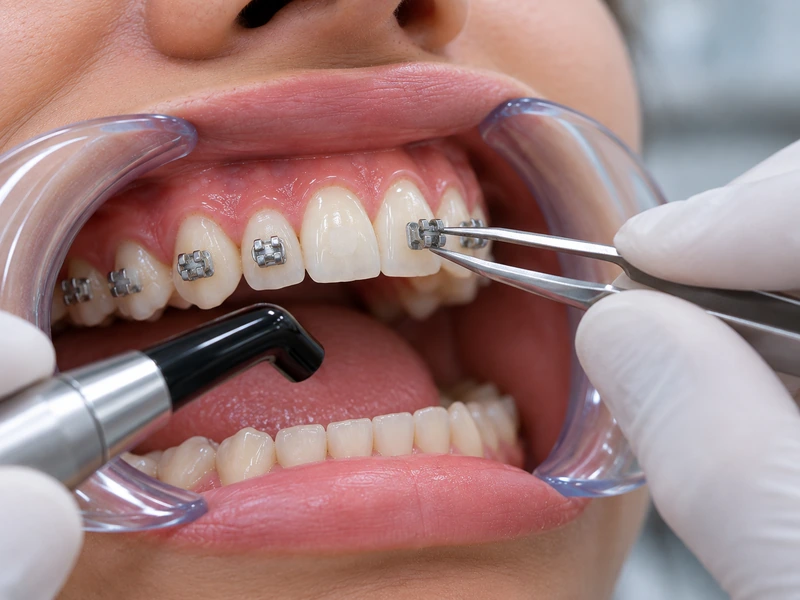
The appointment itself
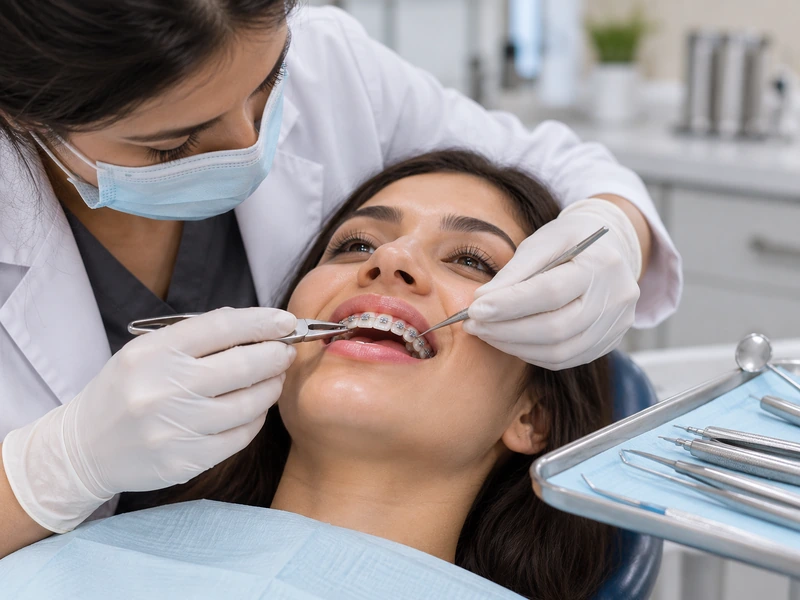
The teeth are cleaned and dried, each bracket is bonded into an exact position, and the first wire is threaded through. Nothing is drilled and no anaesthetic is needed — it is a long appointment rather than an uncomfortable one. The first wire is deliberately thin and gentle. Teeth ache for two or three days afterwards as they begin to move, and that settles.
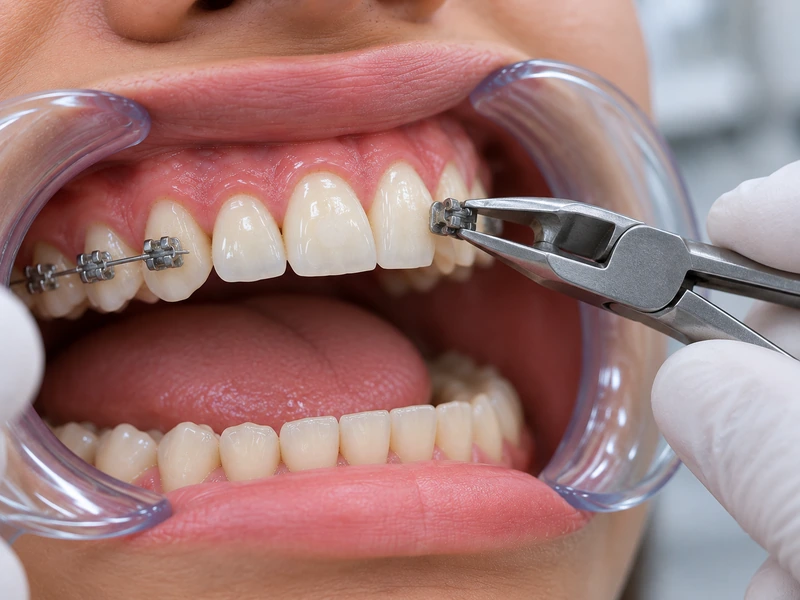
The months in between, and the end
Every four to eight weeks the wire is changed for a slightly firmer one or adjusted, and elastics may be added to correct how the jaws meet. Each visit is short; the tenderness afterwards is briefer each time. When the teeth are where the plan wants them, the brackets are lifted off, the bonding polished away and impressions taken for retainers the same day — because teeth start drifting back within hours, not weeks.
Recovery
Living With Braces
The appliance does the work, but how the two years go is mostly down to eight small habits. None of them is hard; forgetting them is what turns eighteen months into twenty-four.
- 1
Soreness after each adjustment
Two or three days of tenderness when biting, then nothing until the next visit. Soft food and an ordinary painkiller cover it, and it gets milder as treatment goes on.
- 2
Food that breaks brackets
Hard and sticky are the two enemies — ice, hard nuts, boiled sweets, chikki, gum. Cut apples and carrots into pieces rather than biting into them, and take corn off the cob.
- 3
Cleaning takes longer now
Brush around every bracket, above and below the wire, after every meal. An interdental brush gets where a normal one cannot. This is not fussiness — it is what prevents the next item.
- 4
White marks are permanent
Plaque left sitting around a bracket demineralises the enamel underneath it, and when the brace comes off there is a white square left behind for good. Almost every case of this was preventable.
- 5
Wax for anything rubbing
A new wire end or bracket can catch the cheek for the first few days. Press a piece of orthodontic wax over it — and if something is genuinely poking, call rather than enduring it.
- 6
Wear the elastics
If you are given elastics to hook between the arches, they only work while they are on. Worn as instructed they correct the bite; worn half the time they simply extend the treatment.
- 7
If something breaks
A loose bracket or a wire that has slipped is not an emergency, but it stops that tooth moving until it is fixed. Call and get it seen rather than waiting for the next scheduled visit.
- 8
Retainers, from day one
Full-time at first, then night-time, then a few nights a week for good. This is the part people stop doing, and it is the single reason adults end up in braces a second time.
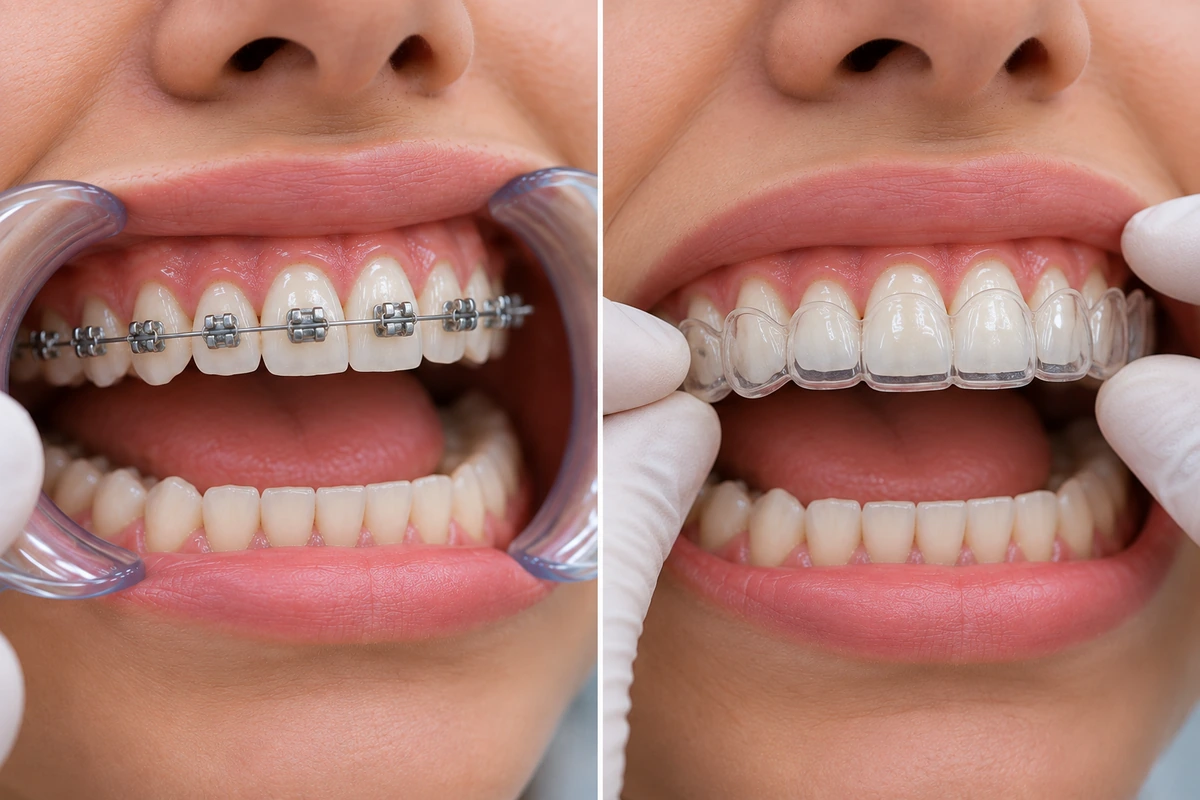
Which to choose
Braces vs Clear Aligners
This is the decision almost everyone arrives with, and the honest answer is that both work — they just fail in different ways.
Aligners win on everything to do with living with them. They are barely visible, they come out to eat so nothing is off the menu, and cleaning your teeth is unchanged. What they depend on completely is you: they only move teeth while they are in the mouth, and twenty-two hours a day is not a suggestion. Worn for sixteen hours a day they do not work slowly, they stall.
Braces win on difficult movements and on not requiring discipline. Rotating a badly turned tooth, moving a root rather than tipping a crown, closing a large extraction space — these are the things fixed appliances do reliably and aligners struggle with. And a brace works whether you remember it or not, which for teenagers and for busy adults is worth more than it sounds. The right answer depends on what your teeth are doing and on how honest you are willing to be about the second point.
What Happens at Your First Consultation
- 1ExaminationThe teeth, how the jaws meet, the gums, and whether anything needs treating first.
- 2RecordsX-rays of the whole jaw and of the profile, photographs and a scan of both arches.
- 3OptionsWhich appliances would work for your case, and what each would mean day to day.
- 4PlanHow long, how often you come in, and whether any teeth need removing for space.
- 5AftercareRetainers — what kind, and for how long, which is longer than most people expect.
Why us
Why Choose Us for Your Braces
- An orthodontist, Dr. Navya Krishna (MDS), is part of our team.
- An honest opinion on whether braces or aligners suit your teeth better.
- Instruments sterilised and sealed for every patient, under a strict protocol.
- Open every day, 9:30 AM to 9 PM, at two branches in Gajularamaram: Ushodaya Colony and Mallareddy Nagar.
Tooth Pain & Repair
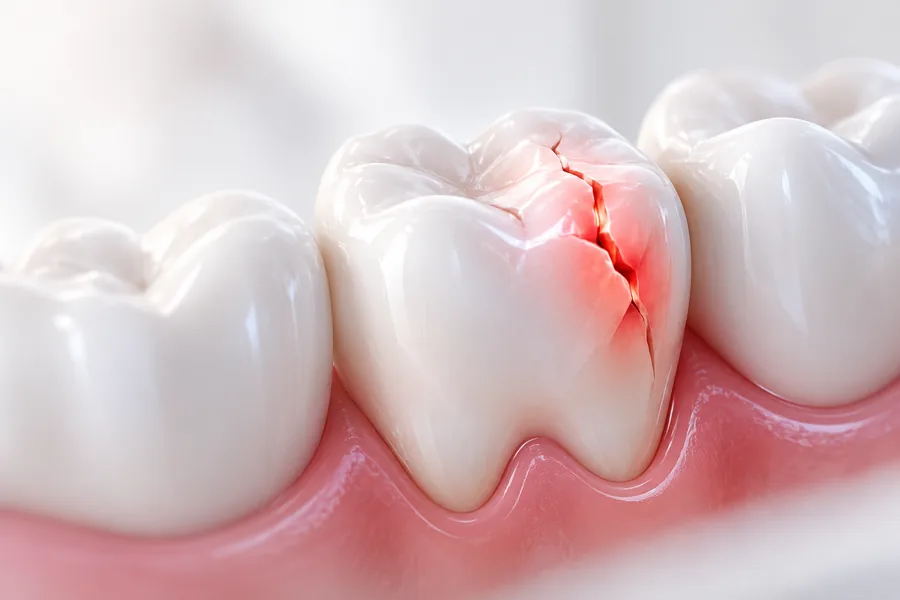
Relief from toothache and repair for decayed, cracked or broken teeth, from fillings and root canals to crowns.
- Root Canal Treatment
- Tooth Sensitivity Treatment
- Cavity Treatment
- Tooth Fillings
- Dental Crowns & Caps
- Wisdom Tooth Removal
- Emergency Dental Care
 learn more
Missing Teeth
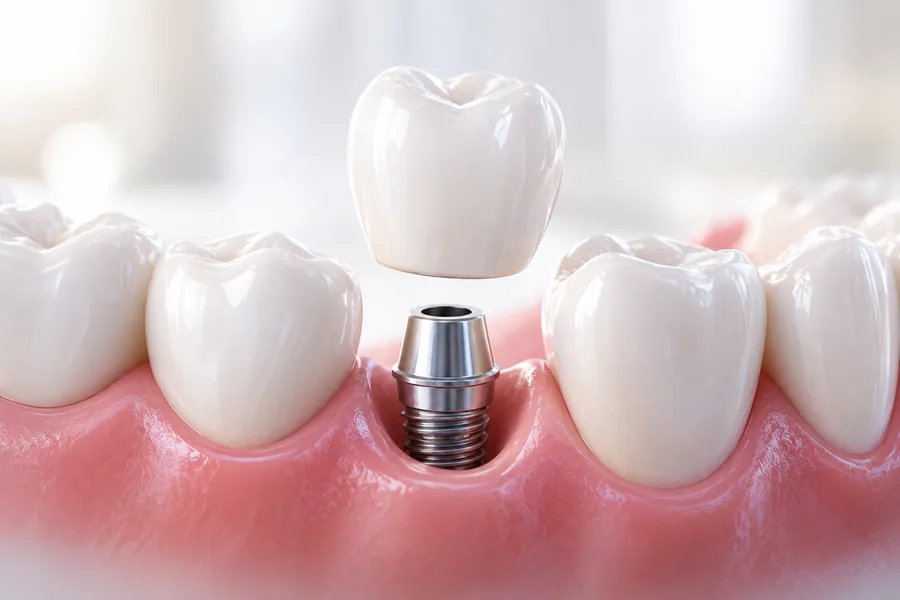
Implants, bridges and dentures to replace missing teeth, planned by our implantologist and prosthodontist.
 learn more
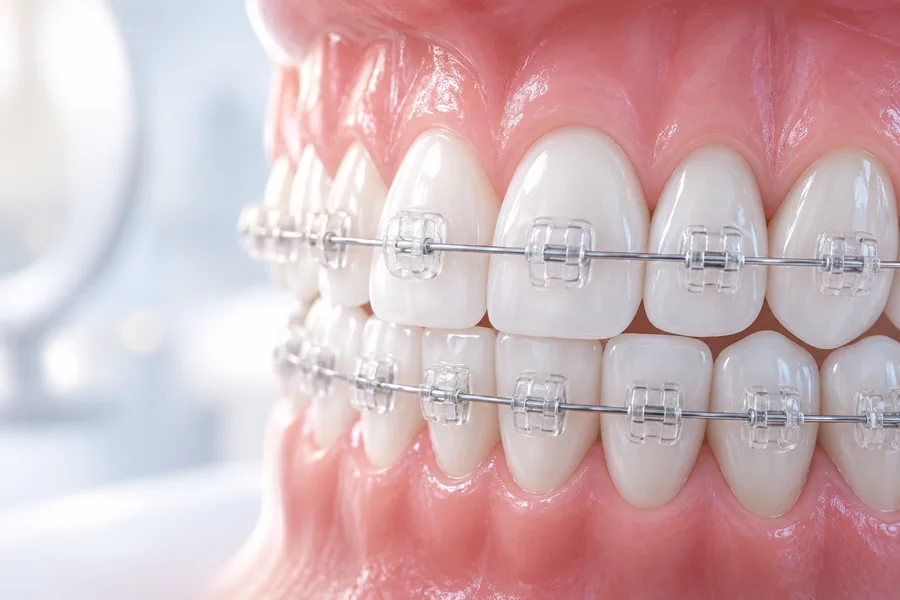
Straightening
Braces and Illusion clear aligners for crooked or gapped teeth, planned by our orthodontist for children and adults.
 learn more
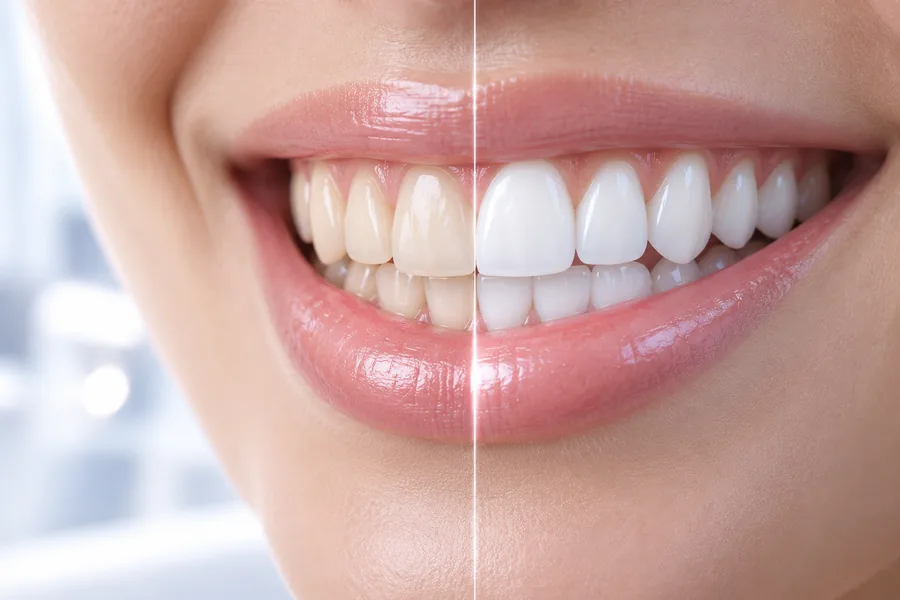
Cosmetic
Whitening, veneers, bonding and smile makeovers to improve the colour and shape of your smile, led by our cosmetic dentist.
 learn more
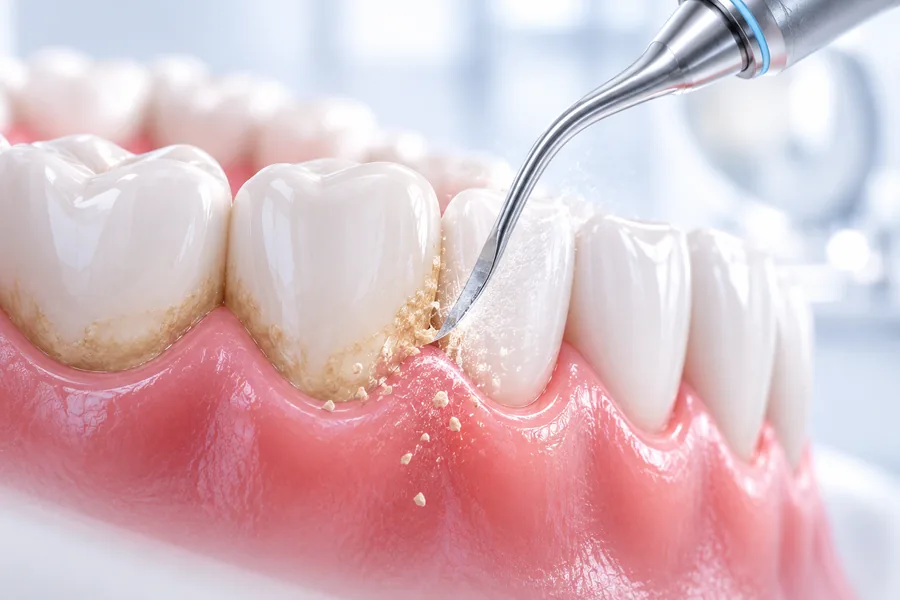
Gums & Cleaning
Cleaning, gum treatment and laser care for bleeding gums and bad breath, from our periodontist.
 learn more
Kids & Family
Gentle check-ups, fluoride and sealants for children with our pedodontist, and routine check-ups for the whole family.






Verified Google Reviews
Excellent
Based on 238 reviews
Harsha Vardhini
2026 · Google
I highly recommend Dr. Roja! She is incredibly kind, patient, and caring. I’ve had a root canal and multiple fillings done by her, and every procedure was completely painless. She explains everything clearly, makes you feel comfortable, and ensures you’re at ease throughout the treatment. Her gentle approach and professionalism make every visit a great experience. If you’re looking for a skilled dentist who truly cares about her patients, Dr. Roja is an excellent choice!
akk reddy
2026 · Google
I had a great experience with Dr. Roja madam. She is a very good doctor and extremely patient-friendly. I was suffering from a tooth cavity, and she suggested a root canal treatment. After starting the treatment, my tooth pain completely disappeared. The cap fitting was also very comfortable and flexible. Overall, I am very satisfied with the treatment and care provided. Thank you so much
Mamidisetti Siva
2026 · Google
I had a very good experience at this dental clinic. The treatment was excellent, and the staff were very friendly and supportive. Even after the treatment, they took great care by calling me, checking on my recovery, and asking me to come for follow-up visits. I really appreciate their concern and professionalism. Highly recommended.
BHARATH GUNDEBOINA
2026 · Google
Had a great experience with teeth replacement treatment. Dr. Roja mom explained everything clearly and the procedure was smooth and painless. The results look very natural and I’m extremely happy with my new smile. Highly recommended..thank you….
venkannababuk venki
2026 · Google
Madam provides very good dental treatment. She explains everything clearly and patiently whenever I have any doubts. I am very satisfied with the treatment and the way she cares for patients. Thank you, SR Dental.
Near you
Braces Near You in Gajularamaram
If you have been searching for braces near you, the appointment that matters is the one that takes records. Which appliance suits your case is decided by X-rays and models rather than by preference — whether there is enough room, whether the jaws themselves sit differently, and how far each tooth has to travel.
Adults are a large share of orthodontic patients now, and teeth move at any age. If you had braces years ago and your teeth have drifted since, a second course is usually shorter and simpler than the first — it is worth asking rather than assuming the chance has gone.
77020 95262Gajularamaram
Contact
Reach out to schedule your next dental visit
Whether you have a question, need expert advice, or are ready to book your next appointment, our team is here to help.
Reach out to us on
- Phone Number 77020 95262
- Email address srdentalcare48@gmail.com
- Location Hospital Phase 2, Plot No:100/N, behind UMCC Road, Chandragiri Nagar, Ushodaya Colony, Indira Nagar, Gajularamaram, Hyderabad, Telangana, 500055
Working Hours
- Mon – Sun:
- 9:30 AM – 9:00 PM
FAQs
Frequently asked questions about braces
Still have a dental question?
Send us a message and our dental team will help.
Do braces hurt?
Fitting them does not — nothing is drilled and no injection is needed. What aches is the two or three days after each adjustment, when the teeth are under a new force. It is a dull tenderness on biting rather than pain, it responds to ordinary painkillers, and it gets noticeably milder as treatment goes on.
How long will I need them?
Eighteen to twenty-four months is typical, though a mild case can be finished in under a year and a complex one can run past three. Most of the variables are set before you start — how far the teeth have to move, whether the jaws themselves need correcting — but attendance and looking after the appliance genuinely affect it.
Am I too old for braces?
No. Teeth move the same way at fifty as at fifteen, because the biology of bone remodelling does not change. Adult treatment can take a little longer and gum health has to be sound before it starts, but a large share of orthodontic patients now are adults, many of them having teeth straightened for the second time after retainers lapsed.
Will I need teeth taken out?
Sometimes, where there is genuinely not enough room in the jaw for the teeth to line up. It is decided from the records rather than by eye, and there are often alternatives — expanding the arch, or slenderising the contact points between teeth. If extractions are proposed you should expect to be told exactly why and what the alternative would cost you in result.
How long do I wear retainers?
Full-time for the first few months, then nights only, and then a few nights a week indefinitely. That last part surprises people, but it is the truth: teeth drift throughout life whether they have been straightened or not, and a retainer worn twice a week is what keeps twenty-four months of work. Stopping is the commonest reason people need treating again.
Can I play sport or a wind instrument?
Yes to both. Sport needs a mouthguard made to fit over the braces — an ordinary one will not. Wind instruments take a couple of weeks to readjust to, and players almost always get back to where they were; wax over the brackets helps a great deal in the first fortnight.