

Root Canal Treatment in Gajularamaram
- 14+Years of experience
- 50,000+Patients treated
- 4.9Google rating
- 45–90 minutes per visit
- single or multi-visit
- Mon – Sun: 9:30 AM – 9:00 PM
What Is Root Canal Treatment?
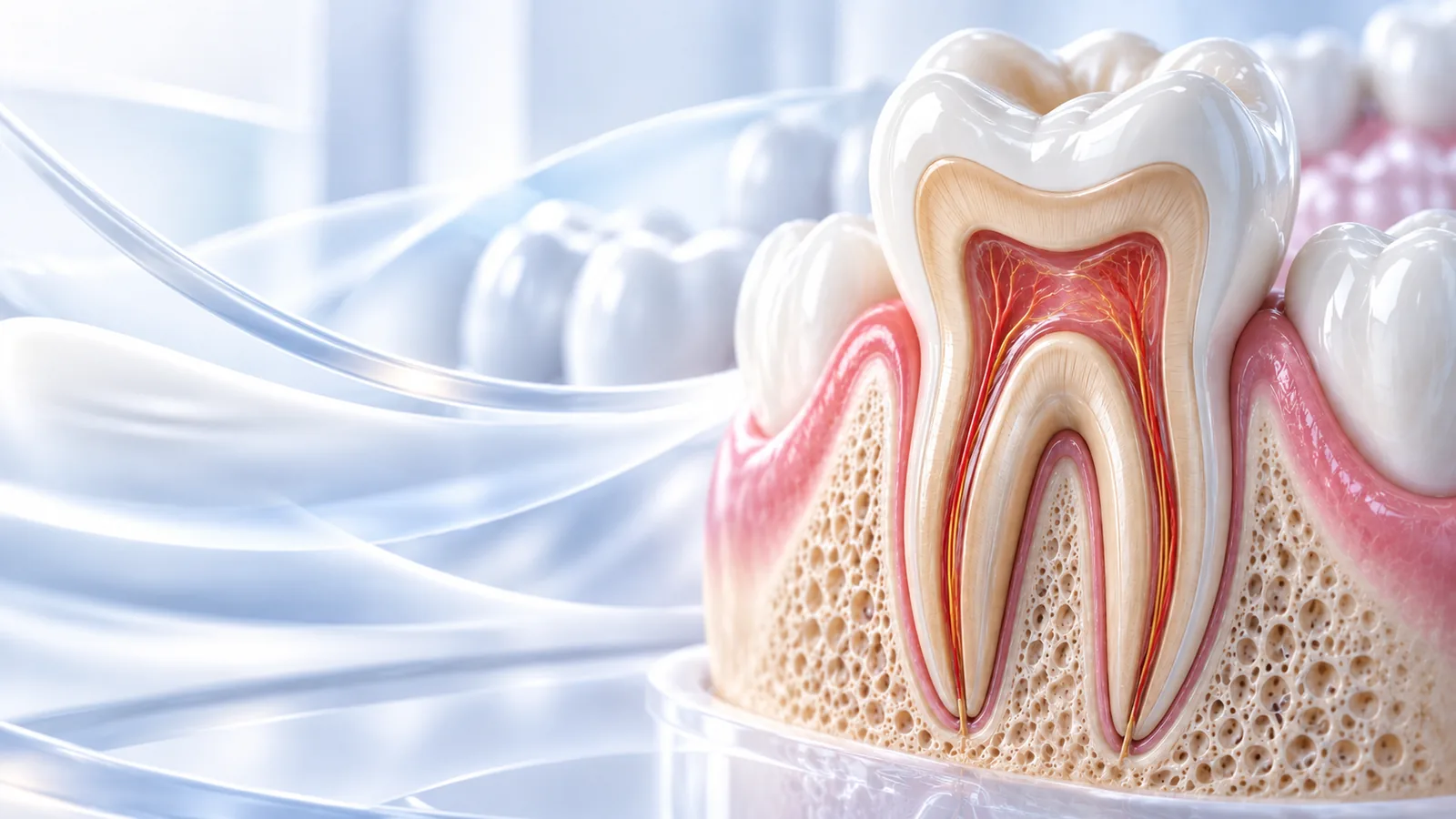
Root canal treatment saves a tooth whose nerve has become infected or died, and it is the reason a badly infected tooth no longer has to be pulled. Inside every tooth is a soft core — the pulp — carrying its nerve and blood supply. When decay, a crack or an injury lets bacteria reach that core, the pulp becomes inflamed and then infected, and the pain that follows is the pressure building inside a space that cannot expand.
The treatment removes that infected tissue, cleans and disinfects the canals running down each root, and seals them so bacteria cannot get back in. The tooth stays in place and keeps working. What it loses is its nerve supply, which is why a treated tooth feels nothing afterwards and why it is normally protected with a crown.
Left alone, the infection does not clear by itself. It travels through the tip of the root into the surrounding bone, where it forms an abscess — and at that stage the choice narrows to urgent treatment or losing the tooth altogether. Coming in while the pain is still intermittent is what keeps the simple option on the table.
Two Ways a Root Canal Is Carried Out
Non-Surgical Root Canal
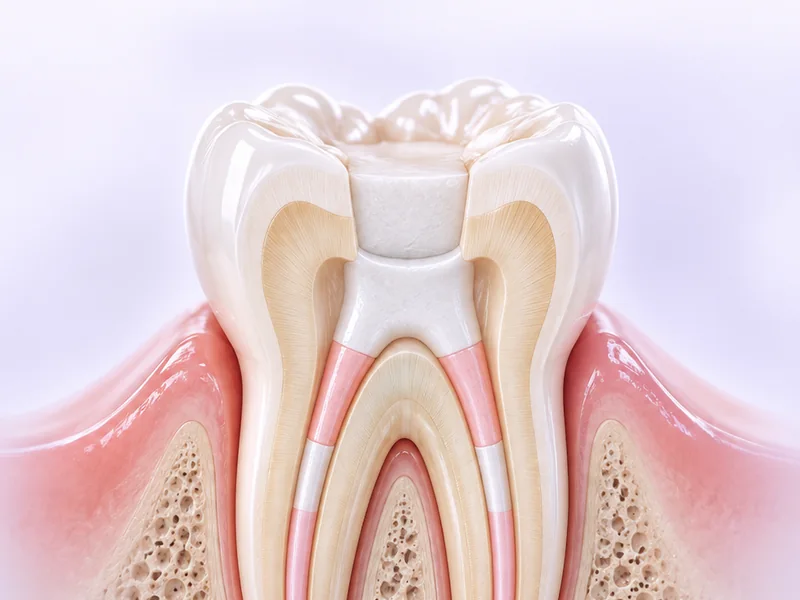
The usual route. The dentist reaches the pulp through the crown of the tooth, removes the infected tissue, shapes and disinfects the canals, then seals them. Nothing is cut, and the tooth is kept whole.
Surgical Root Canal
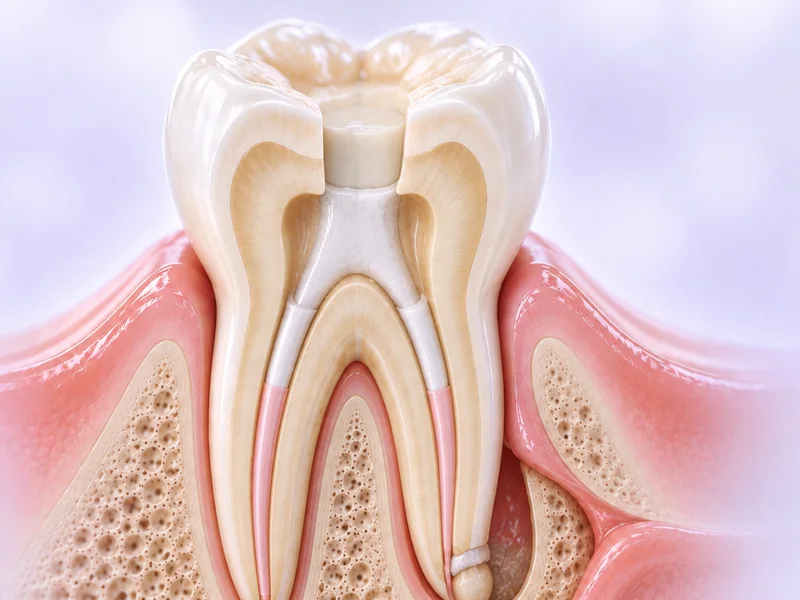
Used when infection persists at the root tip after a previous root canal, or when the canal cannot be reached from above. The tip of the root is accessed directly through the gum and sealed from the end.
Who Needs Root Canal Treatment?
A root canal treats infection inside the tooth, not on the surface of it. These are the signs that the pulp is involved — any one of them is worth an examination and an X-ray.
- Severe or throbbing painPain that wakes you, builds when lying down, or does not settle with painkillers.
- Lingering sensitivityHot or cold that keeps hurting for a minute or more after the drink is finished.
- Swollen or tender gumA swelling, bump or pimple on the gum beside one particular tooth.
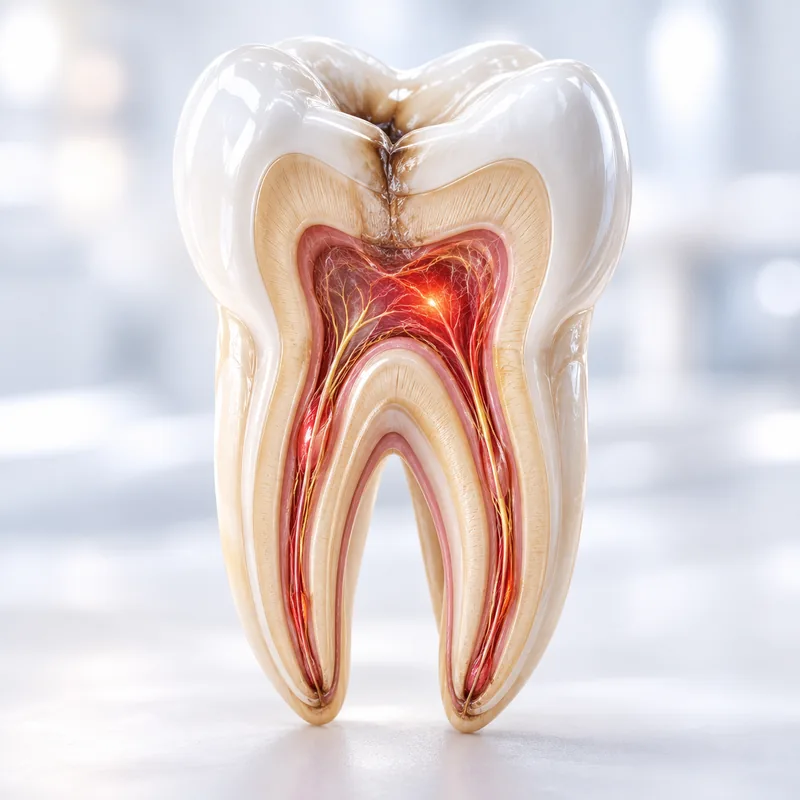
- A tooth turning darkOne tooth greying or darkening against its neighbours, with or without pain.
- Deep decay or a crackDecay or a fracture that has reached the nerve, often after a large old filling.
- Pain on bitingSharp pain when chewing on one side, or when pressure on the tooth is released.
Options
Types of Root Canal Treatment
Which one you need depends on how infected the tooth is, how many canals it has and whether it has been treated before.
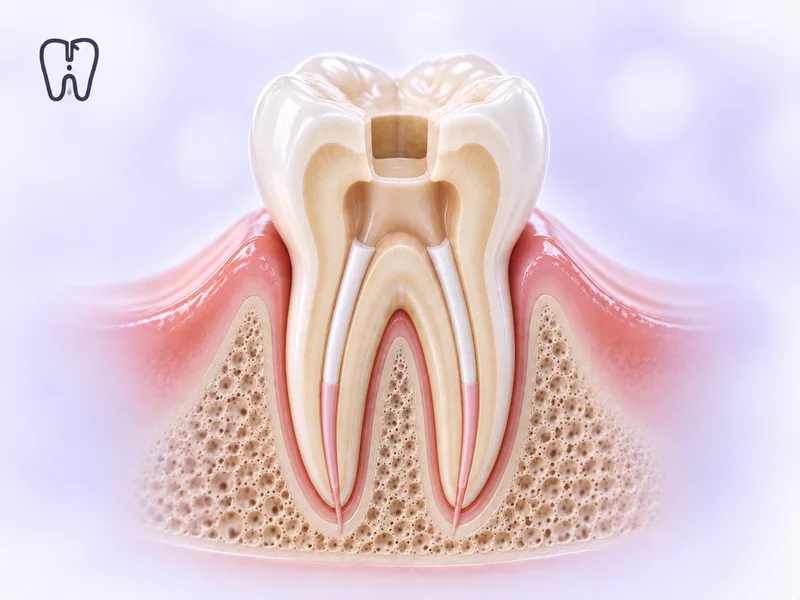 1
1Single-visit root canal
Cleaning, shaping and sealing completed in one appointment. Suitable when there is no active discharge and the canals are straightforward.
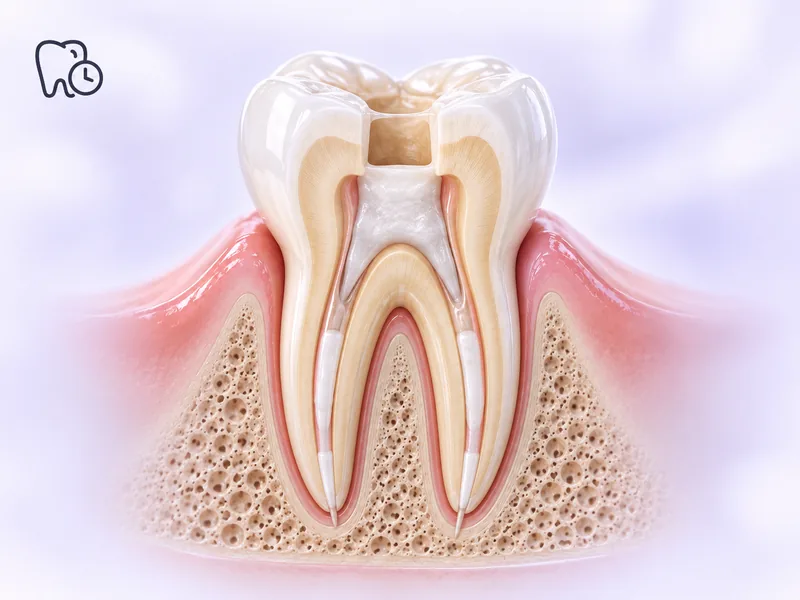 2
2Multi-visit root canal
The canals are cleaned and dressed with medication, then sealed at a second visit. Chosen when infection is heavy or the tooth is still painful.
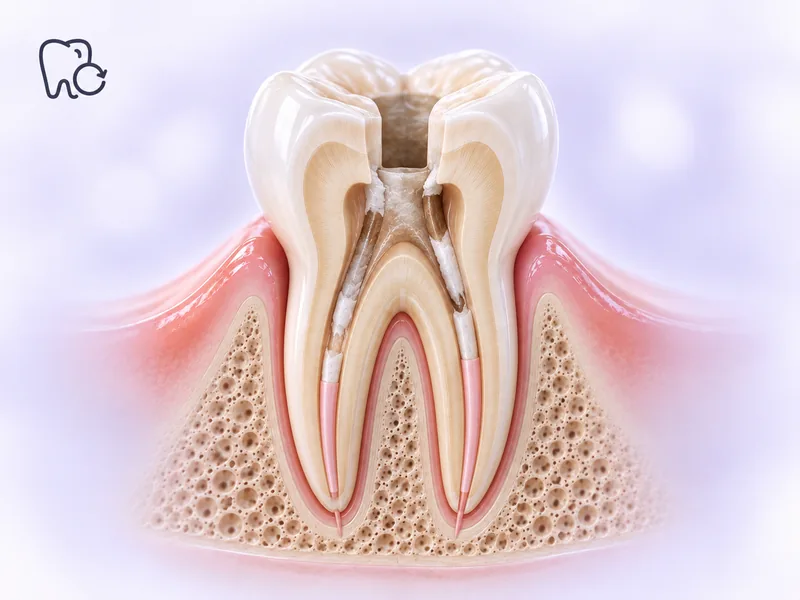 3
3Re-treatment
An earlier root canal that has failed is reopened, the old filling material removed, and the canals cleaned and sealed again.
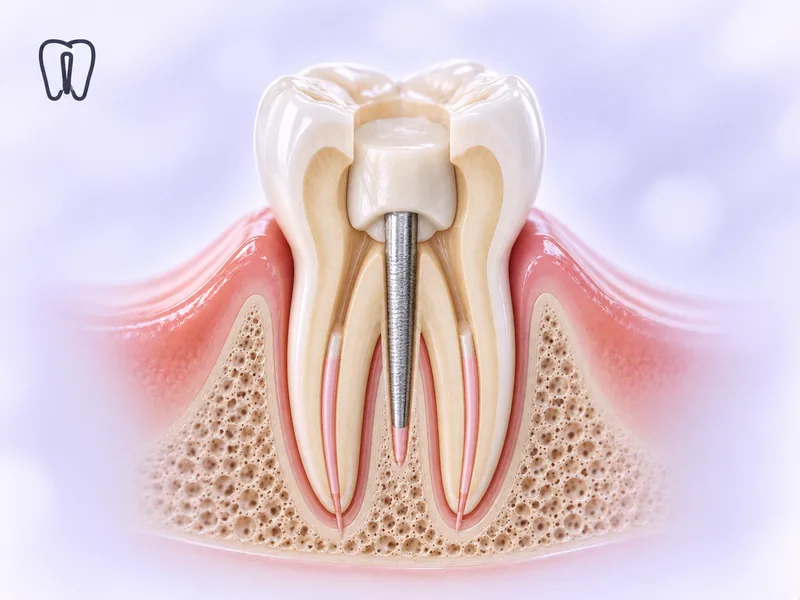 4
4Post and core
When little natural tooth is left, a post is placed inside the canal to anchor a core, which then supports the crown.
How Does Root Canal Treatment Work?
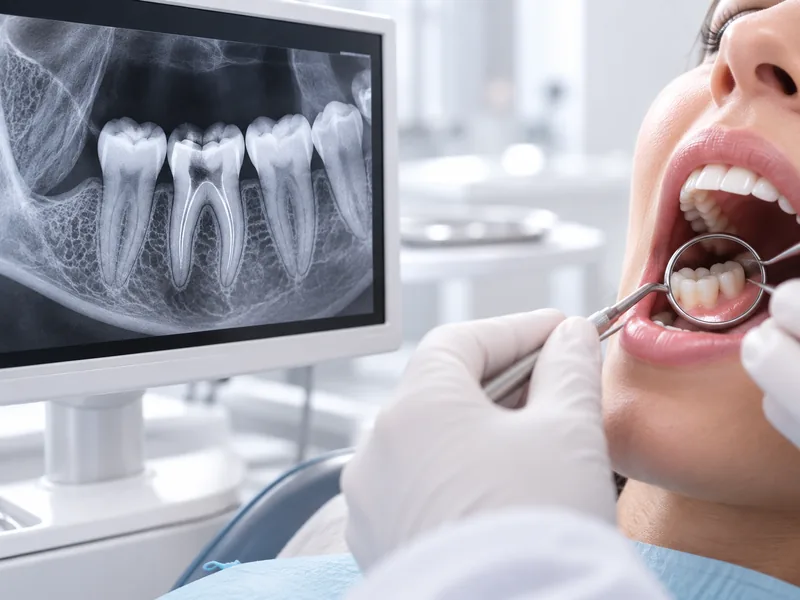
Finding the problem and numbing the tooth
An examination and an X-ray confirm which tooth is involved and how far the infection has travelled. The tooth and the gum around it are fully numbed, and a thin sheet is placed to isolate it and keep it dry. Once numb, the dentist opens the crown of the tooth to reach the pulp chamber.
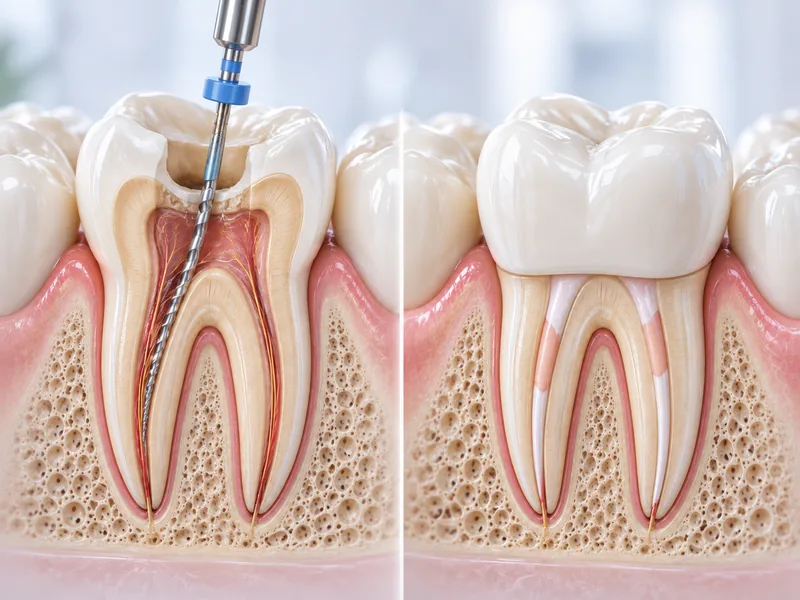
Clearing the canals and closing the tooth
The infected pulp is removed and each canal is cleaned, shaped and disinfected along its full length. The canals are then filled with a sealing material so bacteria cannot return. Because a treated tooth is more brittle, it is usually restored with a crown, which is what allows it to take chewing force again.
Recovery
What to Expect After a Root Canal
The infection is dealt with, but the tooth has been worked on. This is what the days afterwards look like.
- 1
The numbness wears off
Two to three hours. Do not chew on that side until it has, and take care with hot drinks while the lip is still numb.
- 2
Tenderness for a few days
The tooth and the gum around it are often sore to bite on for three to five days. Ordinary painkillers handle it.
- 3
Chew elsewhere until it is crowned
A treated tooth is brittle until its crown is fitted. Until then, keep hard and sticky food off that side.
- 4
When to call us
Swelling, pain that builds rather than settles, or a temporary filling that has come away. None of those are normal healing.
Which is better
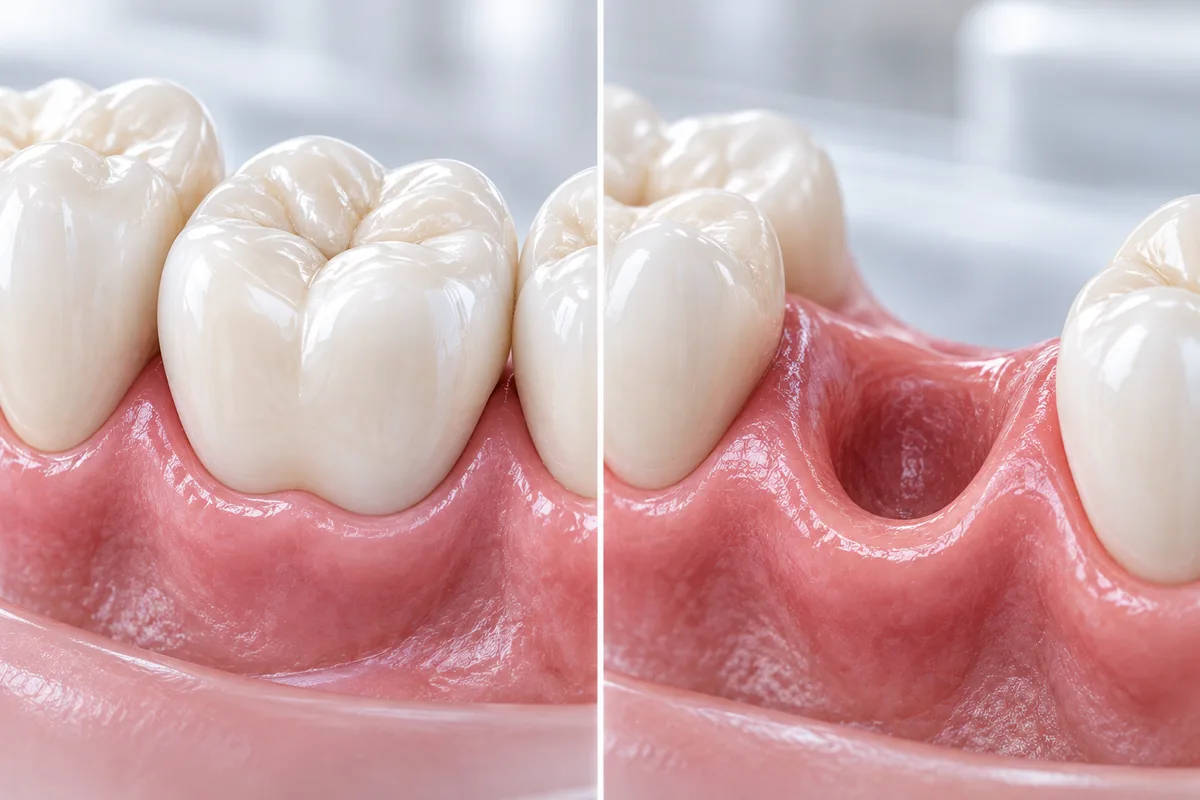
Root Canal Treatment vs Extraction
Both end the pain. They differ in what you are left with afterwards — a root canal keeps your own tooth, an extraction leaves a gap that then has to be managed.
A natural tooth holds its position, keeps the bone around it loaded and needs nothing further once it is crowned. Removing it is quicker and cheaper on the day, but the teeth either side begin to drift, the bone under the gap slowly shrinks, and replacing it later means an implant or a bridge.
Extraction is the better answer when the tooth is cracked below the gum, when too little structure remains to restore, or when severe gum disease has already loosened it. Otherwise, keeping the tooth is almost always the sounder choice.
What Happens at Your First Consultation
- 1ExaminationThe dentist checks the tooth, the bite and the gum around it, and tests how the tooth responds.
- 2X-rayA small X-ray shows the roots, the canals and any infection at the root tip.
- 3DiagnosisYou are told what is wrong, whether the pulp can be saved, and what the alternatives are.
- 4PlanNumber of visits, how long each takes and what restoration the tooth will need afterwards.
- 5AftercareWhat to expect for the next few days, and when to come back to have the tooth checked.
Why us
Why Choose Us for Your Root Canal
- An endodontist, Dr. Sindhuja (MDS), a root canal specialist, is part of our team.
- The tooth is fully numbed before work begins, and each step is explained before it starts.
- Instruments sterilised and sealed for every patient, under a strict protocol.
- Tooth pain does not wait for weekdays: both branches are open seven days, 9:30 AM to 9 PM.
- We follow up after treatment and plan the crown the tooth needs, so it lasts.
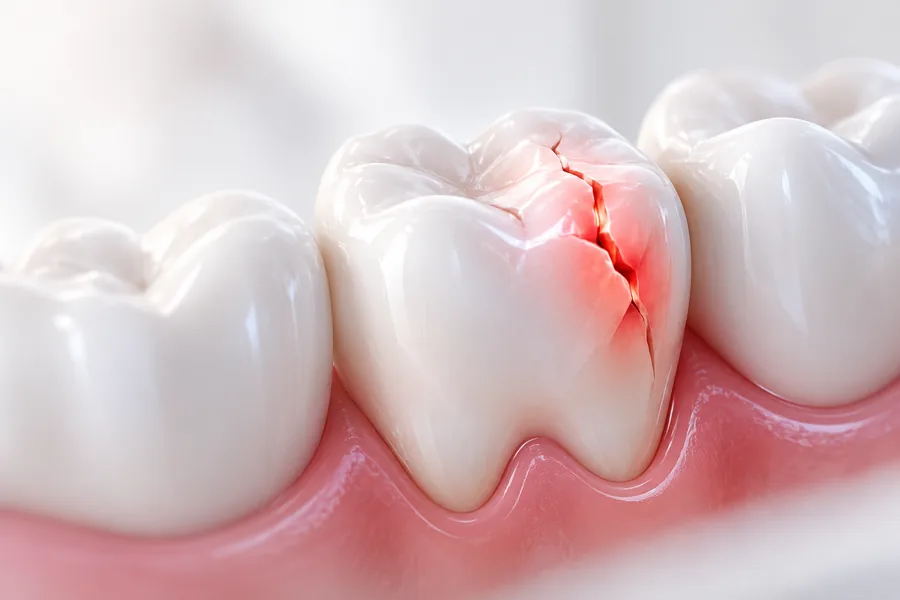
Tooth Pain & Repair
Relief from toothache and repair for decayed, cracked or broken teeth, from fillings and root canals to crowns.
- Root Canal Treatment
- Tooth Sensitivity Treatment
- Cavity Treatment
- Tooth Fillings
- Dental Crowns & Caps
- Wisdom Tooth Removal
- Emergency Dental Care
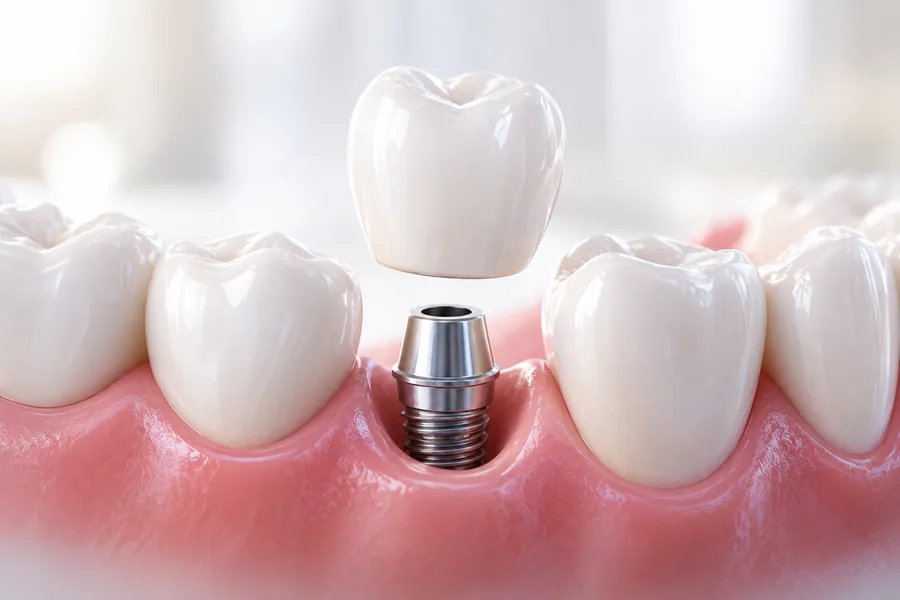 learn more
Missing Teeth
Implants, bridges and dentures to replace missing teeth, planned by our implantologist and prosthodontist.
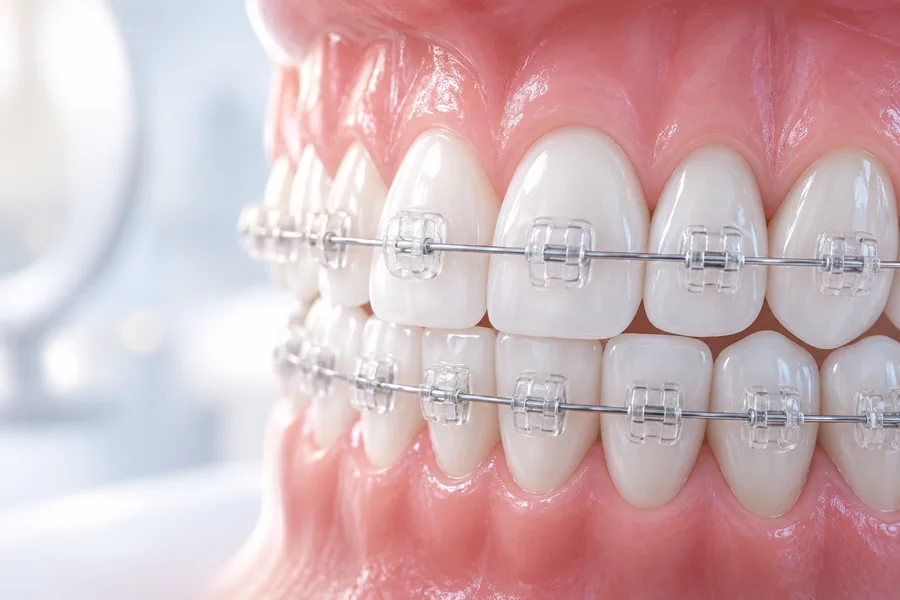 learn more
Straightening
Braces and Illusion clear aligners for crooked or gapped teeth, planned by our orthodontist for children and adults.
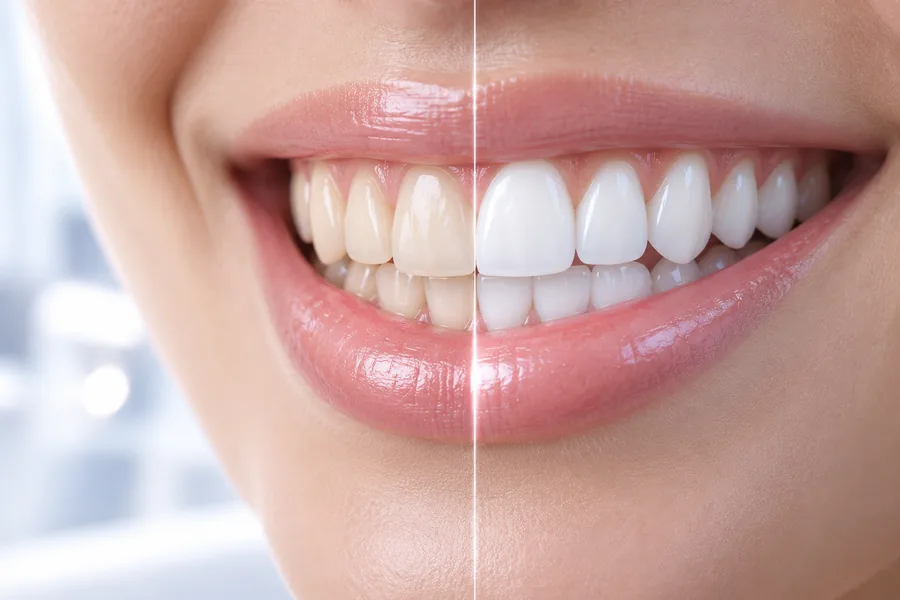 learn more
Cosmetic
Whitening, veneers, bonding and smile makeovers to improve the colour and shape of your smile, led by our cosmetic dentist.
 learn more
Gums & Cleaning
Cleaning, gum treatment and laser care for bleeding gums and bad breath, from our periodontist.
 learn more
Kids & Family
Gentle check-ups, fluoride and sealants for children with our pedodontist, and routine check-ups for the whole family.






Verified Google Reviews
Excellent
Based on 238 reviews
Harsha Vardhini
2026 · Google
I highly recommend Dr. Roja! She is incredibly kind, patient, and caring. I’ve had a root canal and multiple fillings done by her, and every procedure was completely painless. She explains everything clearly, makes you feel comfortable, and ensures you’re at ease throughout the treatment. Her gentle approach and professionalism make every visit a great experience. If you’re looking for a skilled dentist who truly cares about her patients, Dr. Roja is an excellent choice!
akk reddy
2026 · Google
I had a great experience with Dr. Roja madam. She is a very good doctor and extremely patient-friendly. I was suffering from a tooth cavity, and she suggested a root canal treatment. After starting the treatment, my tooth pain completely disappeared. The cap fitting was also very comfortable and flexible. Overall, I am very satisfied with the treatment and care provided. Thank you so much
Mamidisetti Siva
2026 · Google
I had a very good experience at this dental clinic. The treatment was excellent, and the staff were very friendly and supportive. Even after the treatment, they took great care by calling me, checking on my recovery, and asking me to come for follow-up visits. I really appreciate their concern and professionalism. Highly recommended.
BHARATH GUNDEBOINA
2026 · Google
Had a great experience with teeth replacement treatment. Dr. Roja mom explained everything clearly and the procedure was smooth and painless. The results look very natural and I’m extremely happy with my new smile. Highly recommended..thank you….
venkannababuk venki
2026 · Google
Madam provides very good dental treatment. She explains everything clearly and patiently whenever I have any doubts. I am very satisfied with the treatment and the way she cares for patients. Thank you, SR Dental.
Near you
Root Canal Treatment Near You in Gajularamaram
If you have been searching for a root canal near you, the first step is an examination and an X-ray to confirm which tooth is involved and how far the infection has travelled. That is what decides whether it is one visit or two.
If the tooth is already keeping you awake, say so when you call. Pain of that kind is seen the same day wherever we can, because it does not improve by waiting.
77020 95262Gajularamaram
Contact
Reach out to schedule your next dental visit
Whether you have a question, need expert advice, or are ready to book your next appointment, our team is here to help.
Reach out to us on

- Phone Number 77020 95262
- Email address srdentalcare48@gmail.com
- Location Hospital Phase 2, Plot No:100/N, behind UMCC Road, Chandragiri Nagar, Ushodaya Colony, Indira Nagar, Gajularamaram, Hyderabad, Telangana, 500055
Working Hours
- Mon – Sun:
- 9:30 AM – 9:00 PM
FAQs
Frequently asked questions about root canal treatment
Still have a dental question?
Send us a message and our dental team will help.
Is a root canal painful?
The tooth is fully numbed, so the treatment itself feels much like having a filling. What most people describe as root canal pain is the infection beforehand — that is what the treatment removes. Mild tenderness for a few days afterwards is normal and settles with ordinary painkillers.
How many visits will I need?
Many teeth can be completed in one visit. If the infection is heavy, if there is discharge, or if the canals are narrow or curved, the tooth is dressed with medication and sealed at a second appointment, usually a week or so later.
Do I need a crown afterwards?
Usually, yes — particularly on back teeth. A treated tooth has lost its blood supply and becomes more brittle, and a crown protects it from splitting under chewing force. Your dentist will tell you if a filling is enough.
How long does a root-canal-treated tooth last?
A well-treated and properly restored tooth can last for decades, and many last for life. What matters most is that it is crowned when it needs to be, kept clean, and checked at your regular appointments.
Can I go to work afterwards?
Most people do. The numbness wears off over two to three hours, and you should avoid chewing on that side until it does. Take it easy if you were anxious or the appointment was long.
What happens if I leave it untreated?
The infection does not resolve on its own. It spreads through the root tip into the bone, which can lead to an abscess, facial swelling and the loss of the tooth — and it becomes an emergency at the least convenient time.