
Dentures in Gajularamaram
- 14+Years of experience
- 50,000+Patients treated
- 4.9Google rating
- 45–60 minutes per visit
- four to five visits over a few weeks
- Mon – Sun: 9:30 AM – 9:00 PM
What Are Dentures?
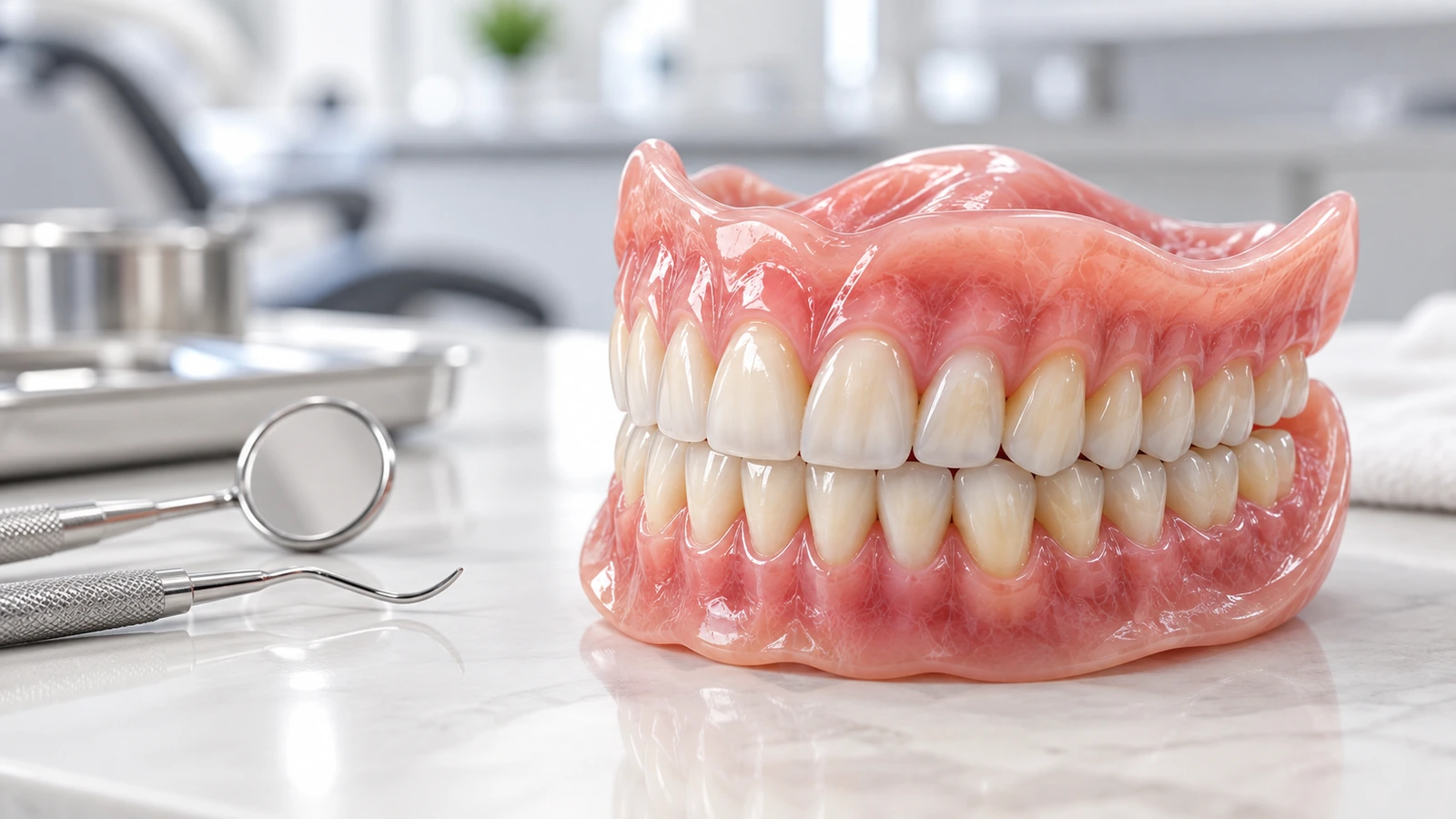
A denture replaces several missing teeth with a removable plate that carries new teeth on a gum-coloured base. A complete denture replaces a whole jaw; a partial fills the gaps around teeth you still have. Either way it rests in the mouth rather than being fixed to anything, and comes out to be cleaned.
What makes a denture work is fit rather than the teeth on it. A complete denture is held in place by a thin film of saliva between the base and the gum, in much the way two wet sheets of glass stick together — which is why the impression stages matter so much, and why a denture made from a rushed mould never quite settles. A partial has an easier job, because it can clip to the teeth that are still there.
The part worth knowing before you start is that a denture is a skill as much as an appliance. The first fortnight is genuinely awkward for almost everyone: too much saliva, odd speech, and eating that has to be relearned rather than resumed. It passes, and it passes faster with a few small techniques. What does not pass on its own is a sore spot or a denture that keeps lifting — those are things to bring back, not to put up with.
Complete or Partial
Complete Dentures
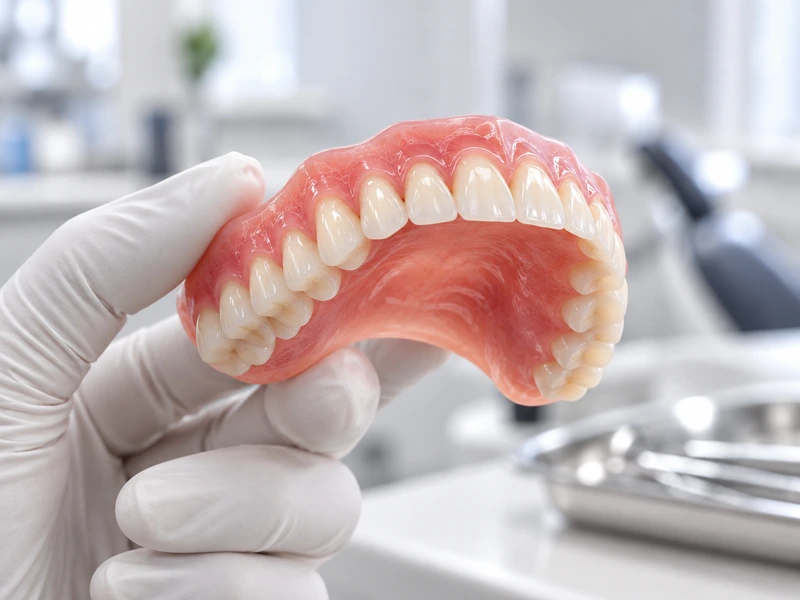
For a whole jaw with no teeth left in it. The denture rests on the gum and the bony ridge underneath, and is held by suction and by the muscles of the cheek and tongue. An upper one usually holds well. A lower one has far less to grip, which is worth knowing before you start rather than after.
Partial Dentures
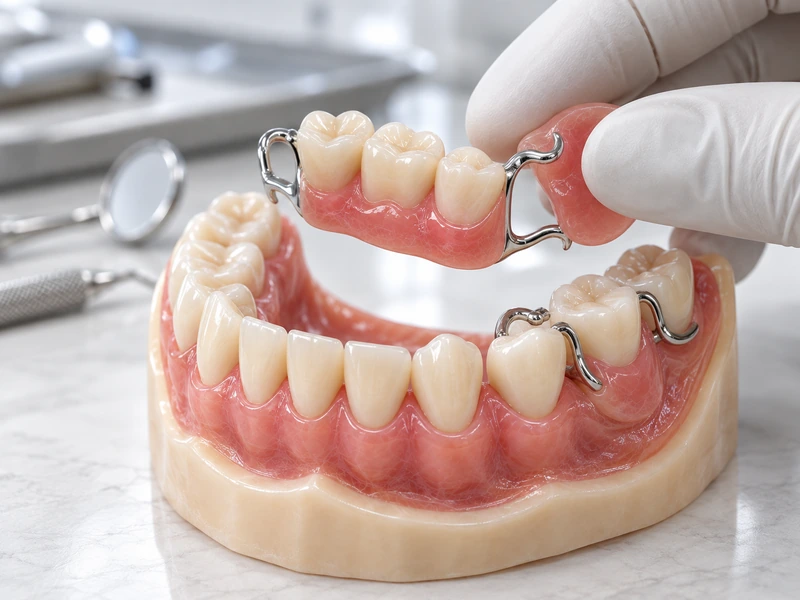
For gaps with your own teeth still standing between or beside them. The plate clips to those teeth, so it is far more stable than a complete denture and takes much less getting used to. It can also be added to later if another tooth is lost.
When Is a Denture the Right Answer?
A denture replaces several teeth at once without surgery and without touching what is left. These are the situations it suits.
- A whole jaw to replaceNo teeth left in one arch, or the last few too weak to be worth keeping.
- Several gaps in different placesTeeth missing on both sides, where a bridge would need too many supports.
- Teeth loosened by gum diseaseTeeth that move when you push them, with bone lost from around the roots.
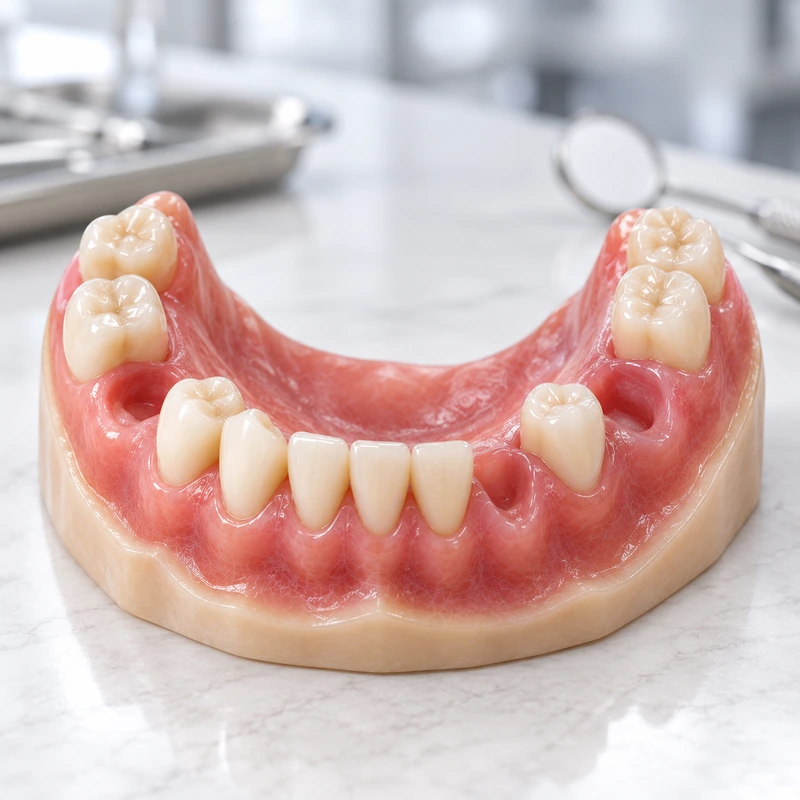
- Teeth too broken to restoreWhat is left is root stumps and heavily decayed teeth rather than anything to build on.
- An old denture that no longer fitsA plate that has loosened over the years as the ridge underneath it has shrunk.
- Eating has become hard workA diet that has quietly narrowed to soft food because chewing stopped working.
Options
Types of Denture
They differ in what the base is made of and how it is held, and that changes how slim it feels, how stable it is and how easily it can be altered later.
 1
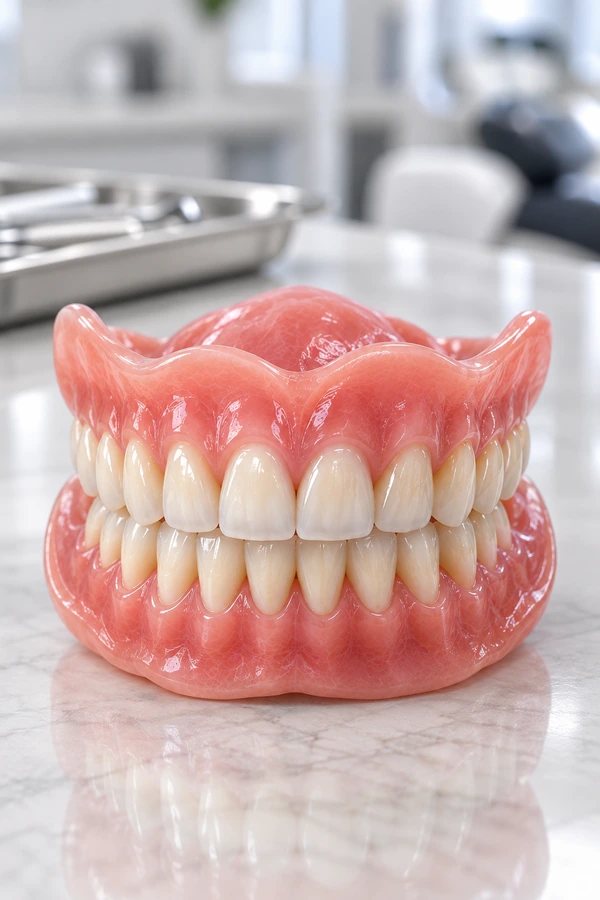
1Acrylic complete denture
The standard full denture — a pink acrylic base carrying the teeth. Straightforward to adjust, to reline and to add to, which matters as the ridge changes shape over the years.
 2
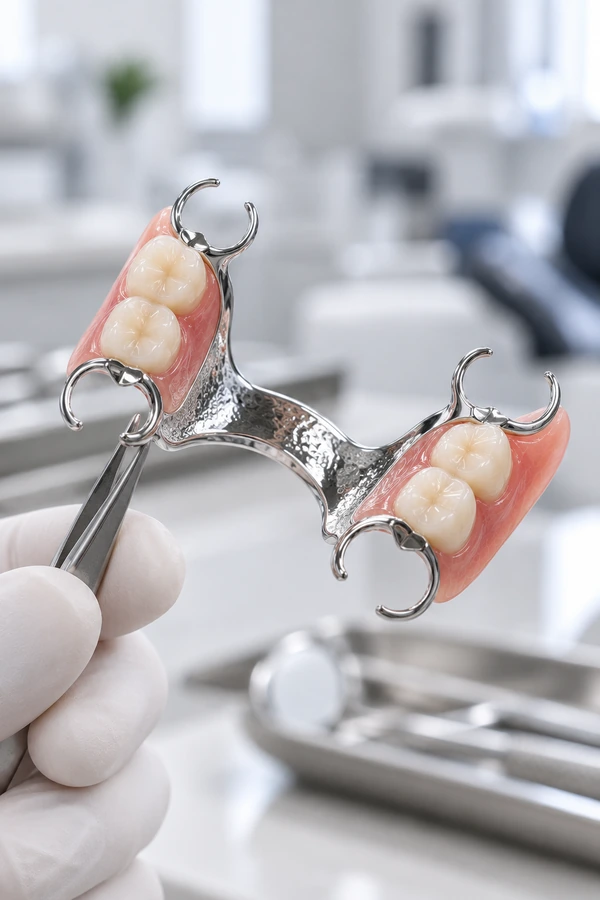
2Cast metal partial
A slim chrome framework with acrylic and teeth on it. Much thinner and stronger than all-acrylic, it rests on the teeth rather than the gum, and it is the kinder option for the gum long term.
 3
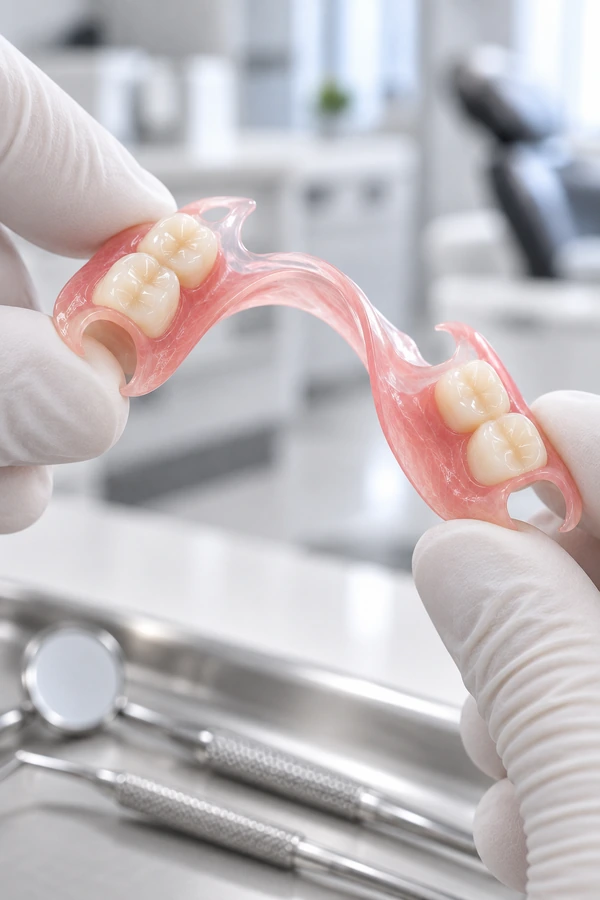
3Flexible partial
A nylon base that flexes slightly and clips in without visible metal. Comfortable and discreet, though it cannot be relined or adjusted as readily as the others.
 4
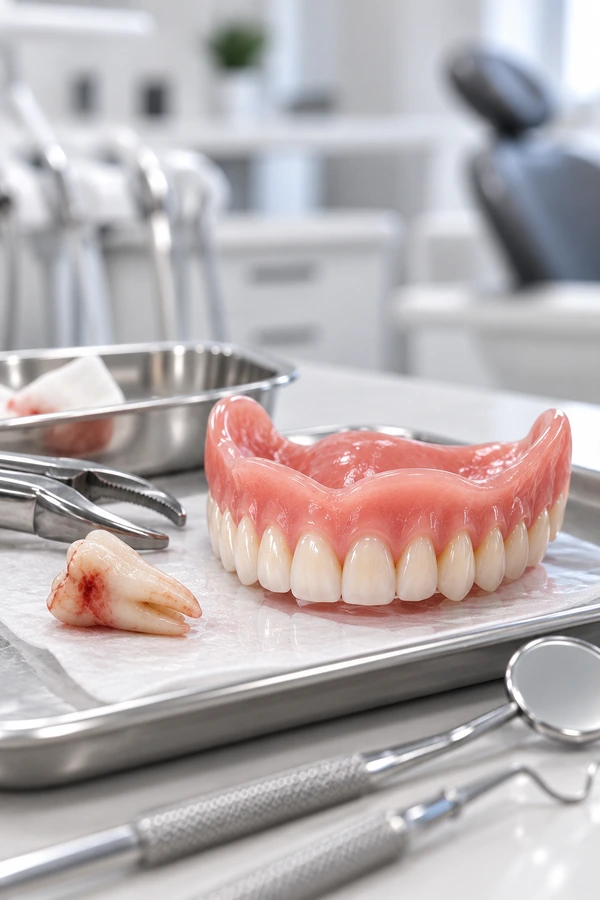
4Immediate denture
Made in advance and fitted the same day the teeth come out, so you are never without them. It needs relining once the gum has healed and settled, because the ridge changes shape underneath it.
How Is a Denture Made?
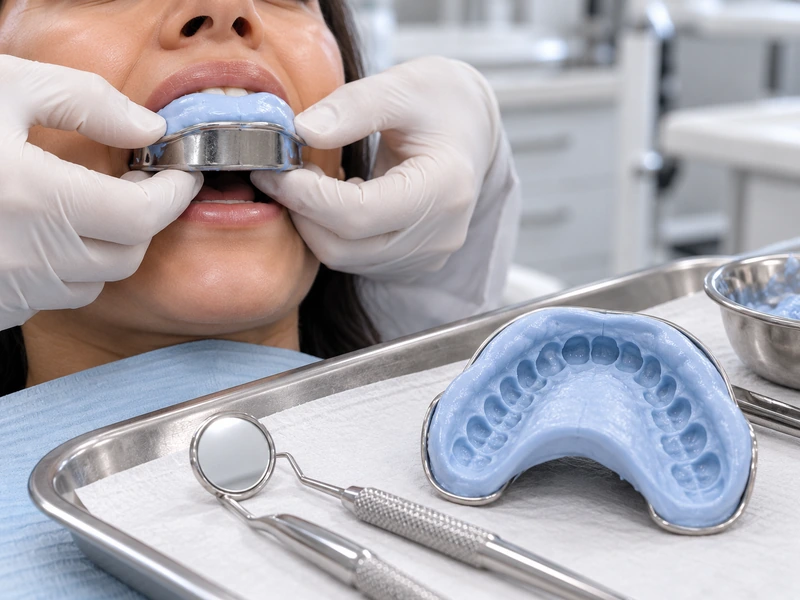
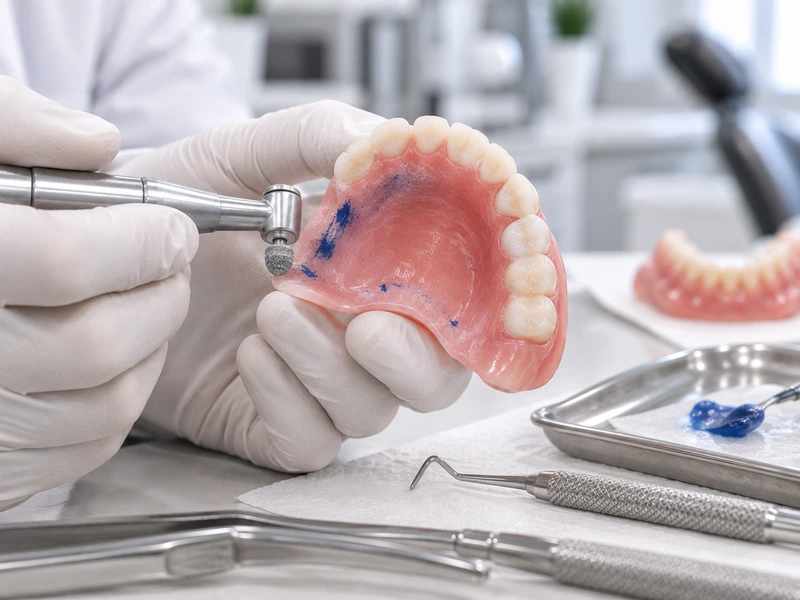
Taking the mould of your mouth
A first impression in a stock tray gives a study model, and a custom tray is then made from that to take a second, far more accurate one. Two stages rather than one, because a complete denture is held by the precision of its fit against the gum — a millimetre of inaccuracy at the edge is the difference between a denture that holds and one that drops.
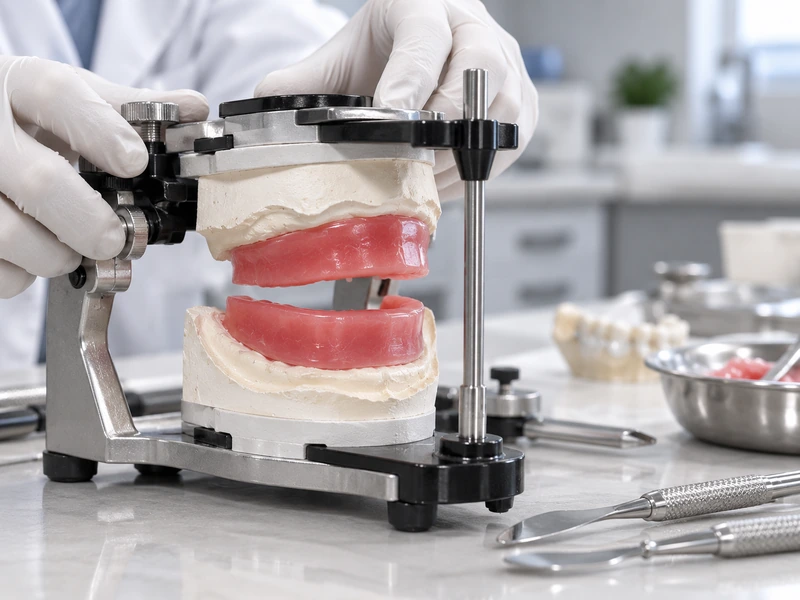
Working out where the teeth go
With no teeth left, there is nothing telling the laboratory how far apart the jaws should sit or how they meet. Wax blocks are shaped in the mouth to establish that height and that relationship, and at the same time the shape of the lip and the line of the smile are marked on them. This visit decides how the finished denture will look.
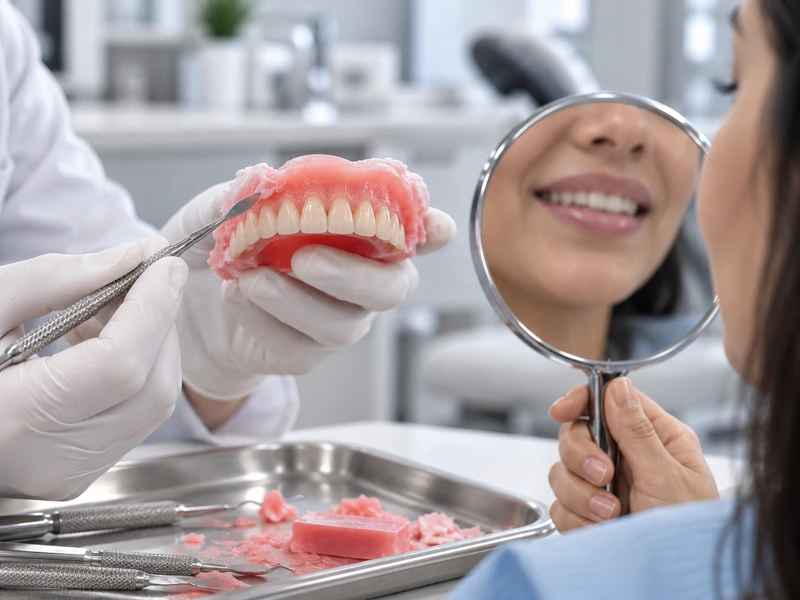
Seeing them before they are made
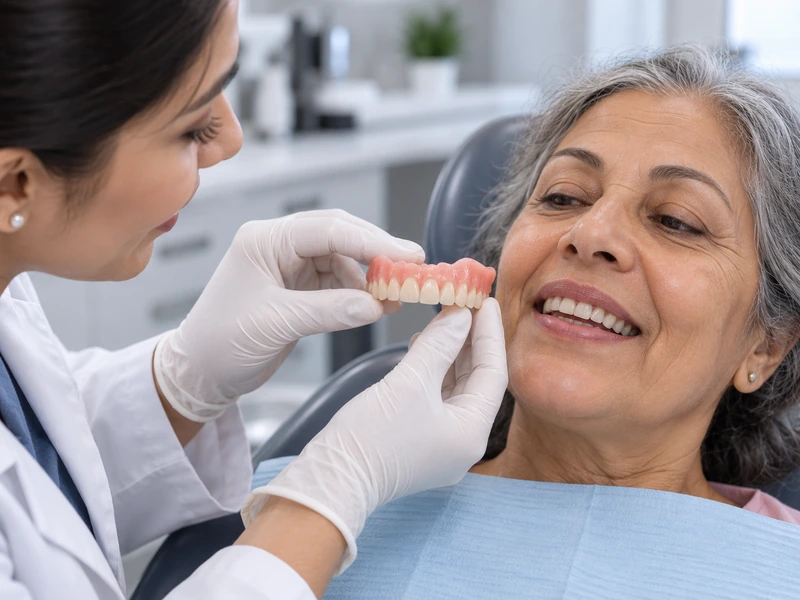
The teeth are set in wax and tried in your mouth. You see them, speak with them and look at them in a mirror while everything can still be moved — the shade, the shape, how much they show when you smile, whether they look like yours. Nothing is finished until you are happy at this visit. It is the stage most people do not know exists, and it is the one that decides whether you like the result.
Fitting them and settling them in
The finished denture is fitted, the bite checked and any pressure points eased. You are then seen again within a week or so, because sore spots always appear in the first days and they are adjusted rather than endured. Expect two or three short review visits — that is normal and it is part of the treatment, not a sign anything has gone wrong.
Recovery
Getting Used to Dentures
This is the hardest part of the treatment and the part nobody warns people about properly. The first fortnight is a learning curve for everyone; it gets easier, and quickly.
- 1
The first few days feel strange
Bulky, too much saliva, and an urge to push at them with your tongue. All of it settles within a week or two as the mouth stops treating them as foreign.
- 2
Sore spots are normal
A new denture nearly always rubs somewhere. Do not endure it and do not adjust it yourself — come in, it takes minutes to ease. Wear them for a few hours before the appointment so the sore spot can be seen.
- 3
Learning to eat again
Start with soft food cut small, chew on both sides at once rather than one, and add harder things back over two or three weeks. Biting straight through with the front teeth tips a denture; bite at the corner instead.
- 4
Learning to speak again
Some words come out oddly for the first week. Reading aloud to yourself for ten minutes a day sorts it faster than anything else.
- 5
Clean them out of your mouth
Over a basin of water or a folded towel, so a slip does not break them. A soft brush and soap or denture cleaner — not toothpaste, which is abrasive and scratches the acrylic.
- 6
Take them out at night
The gum needs time uncovered or it stays inflamed. Keep them in water so the acrylic does not dry out and warp.
- 7
Adhesive is a help, not a fix
A thin smear can add confidence, particularly on a lower denture. If you need a lot of it to get through the day, the denture needs relining rather than more paste.
- 8
They will need relining
The ridge under a denture keeps shrinking, so a denture that fitted perfectly drifts loose over a few years. Relining refits the base to the changed shape and is far simpler than starting again.
The stability question
A Denture That Clips On vs One That Does Not
This is the question almost every full denture wearer ends up asking, and it deserves a straight answer rather than a hopeful one.
An upper complete denture covers the palate, which gives it a large surface to grip by suction, and most people manage very well with one. A lower complete denture has no palate to hold on to and a horseshoe of shrinking ridge to sit on, with the tongue moving underneath it. Some people adapt completely. Others never do, and no amount of remaking changes the physics of it.
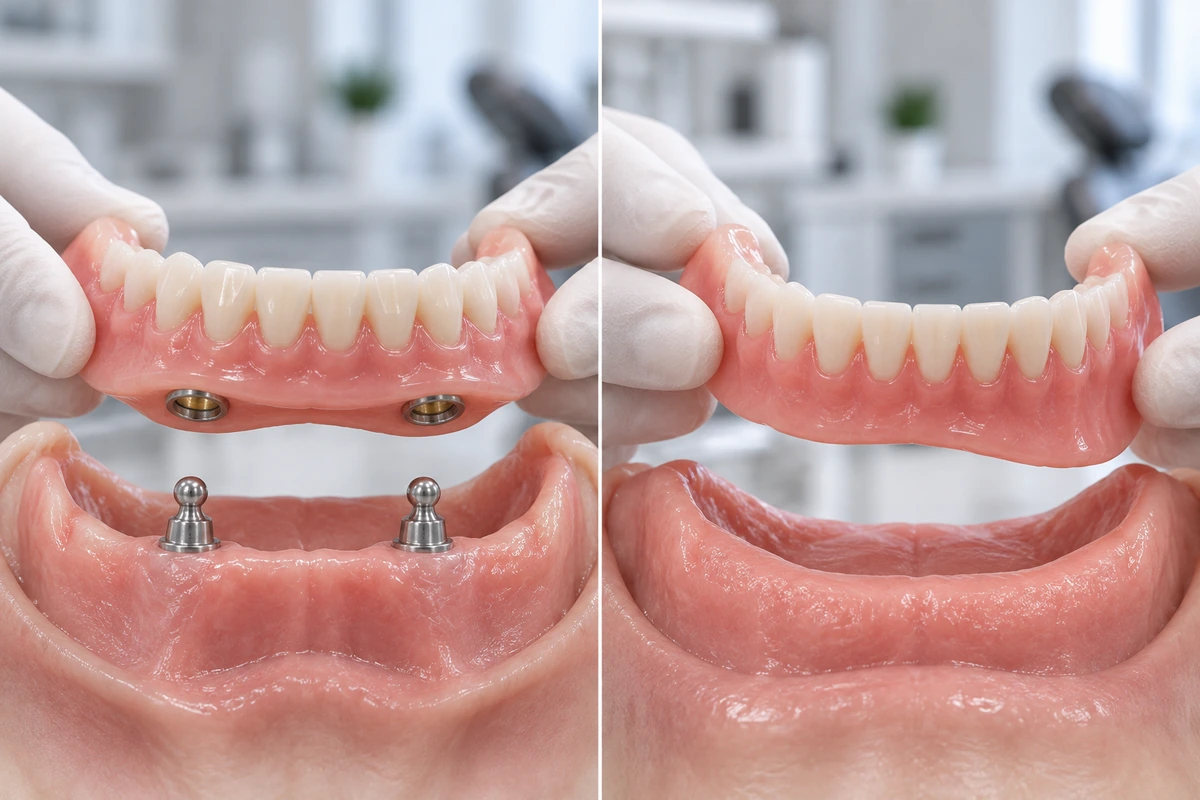
Two implants in the lower jaw, with clips in the denture that snap onto them, change that entirely — the denture still comes out for cleaning, but it does not lift while you eat or talk. It is a small operation and a healing period on top of the denture itself. If a lower denture is the thing making you miserable, that is the conversation worth having, and it is worth having before another denture is made rather than after.
What Happens at Your First Consultation
- 1ExaminationThe ridges, the gum over them, and whatever teeth are still standing.
- 2X-rayAny buried roots left under the gum, and how much bone the denture will sit on.
- 3Health reviewMedicines that dry the mouth, and anything that affects healing or comfort.
- 4PlanComplete or partial, how many visits, and when you will see them in wax.
- 5AftercareWhat the first fortnight is really like, and how often they need checking.
Why us
Why Choose Us for Your Dentures
- A prosthodontist, Dr. Sai Krishna (MDS), a specialist in dentures, is part of our team.
- Each fitting and adjustment is explained step by step, so you know what to expect.
- Instruments sterilised and sealed for every patient, under a strict protocol.
- Open every day, 9:30 AM to 9 PM, at two branches in Gajularamaram: Ushodaya Colony and Mallareddy Nagar.
Tooth Pain & Repair
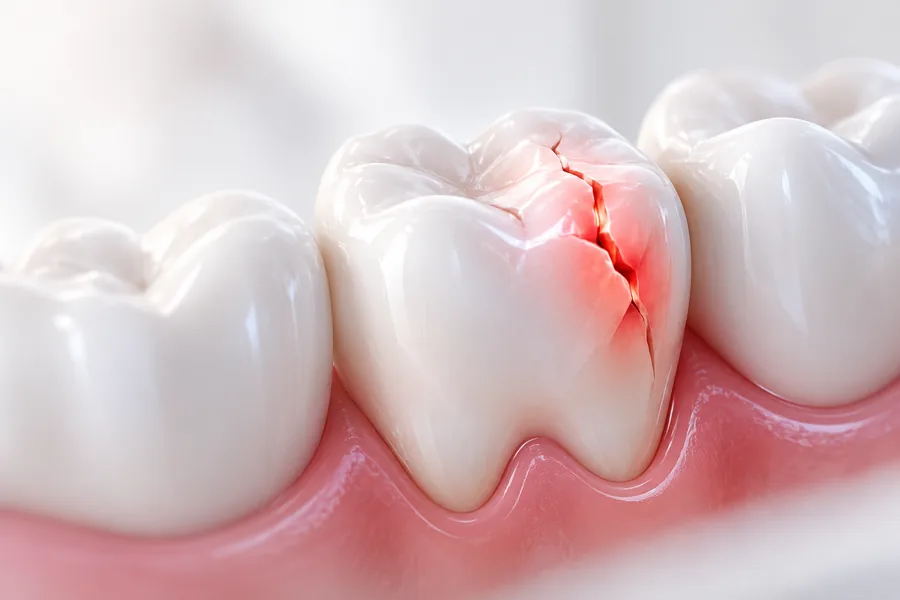
Relief from toothache and repair for decayed, cracked or broken teeth, from fillings and root canals to crowns.
- Root Canal Treatment
- Tooth Sensitivity Treatment
- Cavity Treatment
- Tooth Fillings
- Dental Crowns & Caps
- Wisdom Tooth Removal
- Emergency Dental Care
 learn more
Missing Teeth
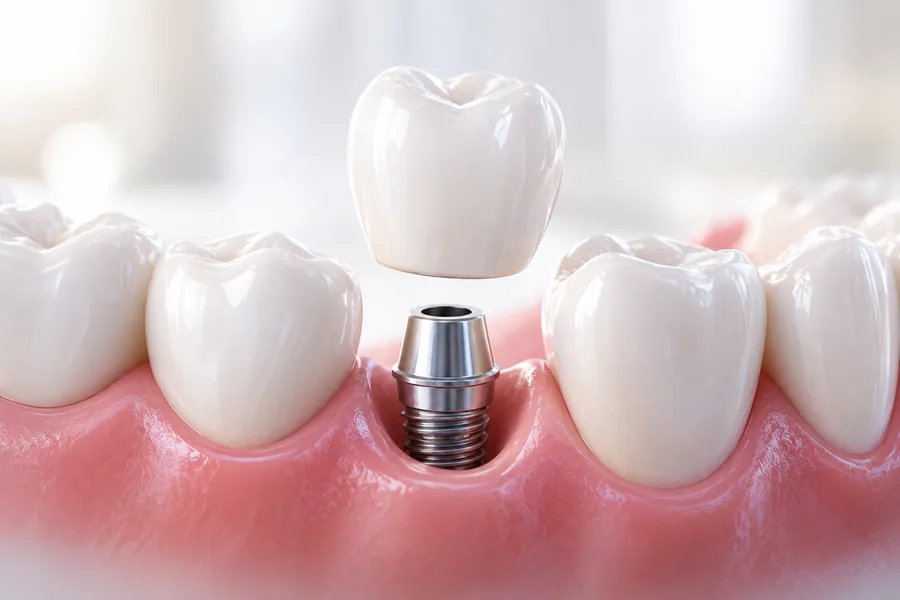
Implants, bridges and dentures to replace missing teeth, planned by our implantologist and prosthodontist.
 learn more
Straightening
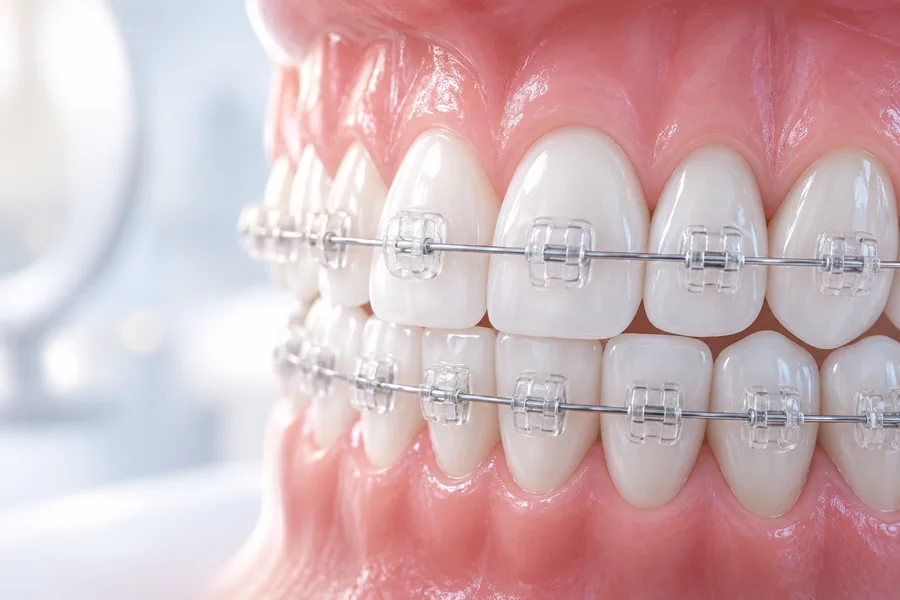
Braces and Illusion clear aligners for crooked or gapped teeth, planned by our orthodontist for children and adults.
 learn more
Cosmetic
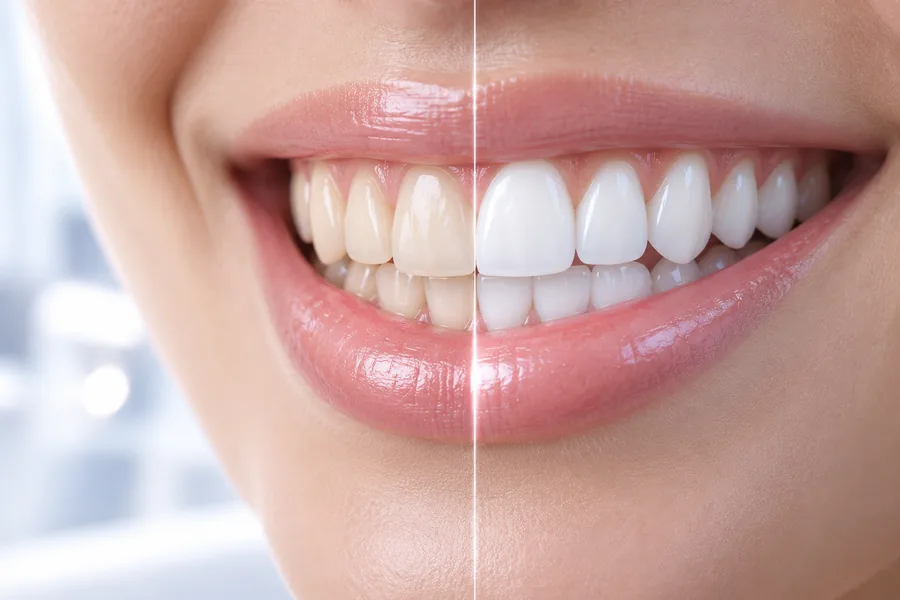
Whitening, veneers, bonding and smile makeovers to improve the colour and shape of your smile, led by our cosmetic dentist.
 learn more
Gums & Cleaning
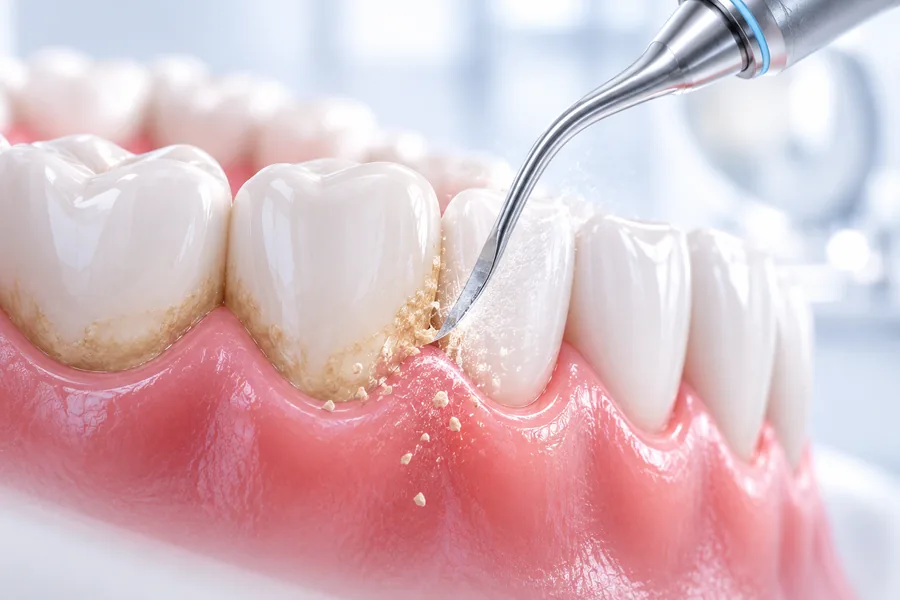
Cleaning, gum treatment and laser care for bleeding gums and bad breath, from our periodontist.
 learn more
Kids & Family
Gentle check-ups, fluoride and sealants for children with our pedodontist, and routine check-ups for the whole family.






Verified Google Reviews
Excellent
Based on 238 reviews
Harsha Vardhini
2026 · Google
I highly recommend Dr. Roja! She is incredibly kind, patient, and caring. I’ve had a root canal and multiple fillings done by her, and every procedure was completely painless. She explains everything clearly, makes you feel comfortable, and ensures you’re at ease throughout the treatment. Her gentle approach and professionalism make every visit a great experience. If you’re looking for a skilled dentist who truly cares about her patients, Dr. Roja is an excellent choice!
akk reddy
2026 · Google
I had a great experience with Dr. Roja madam. She is a very good doctor and extremely patient-friendly. I was suffering from a tooth cavity, and she suggested a root canal treatment. After starting the treatment, my tooth pain completely disappeared. The cap fitting was also very comfortable and flexible. Overall, I am very satisfied with the treatment and care provided. Thank you so much
Mamidisetti Siva
2026 · Google
I had a very good experience at this dental clinic. The treatment was excellent, and the staff were very friendly and supportive. Even after the treatment, they took great care by calling me, checking on my recovery, and asking me to come for follow-up visits. I really appreciate their concern and professionalism. Highly recommended.
BHARATH GUNDEBOINA
2026 · Google
Had a great experience with teeth replacement treatment. Dr. Roja mom explained everything clearly and the procedure was smooth and painless. The results look very natural and I’m extremely happy with my new smile. Highly recommended..thank you….
venkannababuk venki
2026 · Google
Madam provides very good dental treatment. She explains everything clearly and patiently whenever I have any doubts. I am very satisfied with the treatment and the way she cares for patients. Thank you, SR Dental.
Near you
Dentures Near You in Gajularamaram
If you have been searching for dentures near you, the visit that matters is the one that looks at the ridge. How much bone and gum is left to sit on decides how well a complete denture will hold, and it is worth being told that honestly at the start rather than discovering it afterwards.
If you already wear a denture that has gone loose, bring it with you. Quite often the answer is a reline rather than a new one, and it is much quicker to look at the old one than to describe it.
77020 95262Gajularamaram
Contact
Reach out to schedule your next dental visit
Whether you have a question, need expert advice, or are ready to book your next appointment, our team is here to help.
Reach out to us on
- Phone Number 77020 95262
- Email address srdentalcare48@gmail.com
- Location Hospital Phase 2, Plot No:100/N, behind UMCC Road, Chandragiri Nagar, Ushodaya Colony, Indira Nagar, Gajularamaram, Hyderabad, Telangana, 500055
Working Hours
- Mon – Sun:
- 9:30 AM – 9:00 PM
FAQs
Frequently asked questions about dentures
Still have a dental question?
Send us a message and our dental team will help.
How long does it take to get used to dentures?
Most people feel settled within two to four weeks, and the first few days are the worst of it. Speech comes back first, eating takes longest. A partial denture is quicker to adapt to than a complete one because it clips to your own teeth, and a lower complete denture is the hardest of all — that is the physics of the jaw rather than anything about the denture.
Will they feel loose when I eat?
An upper denture holds by suction across the palate and usually stays put. A lower one has much less to grip and can lift, especially at first. Technique helps a great deal — chewing on both sides at once, biting at the corner rather than straight through the front. If it still will not settle, implants to clip it onto are the answer that actually works.
Do I have to take them out at night?
Yes, as a rule. The gum underneath needs time uncovered or it stays inflamed and sore, and wearing dentures around the clock speeds up the shrinking of the ridge they sit on. Keep them in water overnight so the acrylic does not dry out and change shape.
How long do dentures last?
The denture itself lasts five to ten years. What changes sooner is your mouth — the ridge underneath keeps shrinking, so a denture that fitted well drifts loose over a few years. That is usually solved with a reline rather than a remake, which is quicker and keeps the teeth you are used to.
Can I have a denture the same day my teeth come out?
Yes — an immediate denture is made in advance from impressions taken beforehand and fitted straight after the extractions, so you are never without teeth. The trade is that the gum shrinks a good deal as it heals, so it will need relining after a few months, and it cannot be tried in first because the teeth are still there.
Would implants make my denture more stable?
For a lower denture, dramatically. Two implants with clips let it snap into place so it does not lift while you eat or talk, and it still comes out for cleaning. It means a small operation and a healing period, so it is a bigger undertaking — but for someone who cannot get on with a lower denture it is usually the thing that finally works.