

Cavity Treatment in Gajularamaram
- 14+Years of experience
- 50,000+Patients treated
- 4.9Google rating
- 30–45 minutes
- usually one visit
- Mon – Sun: 9:30 AM – 9:00 PM
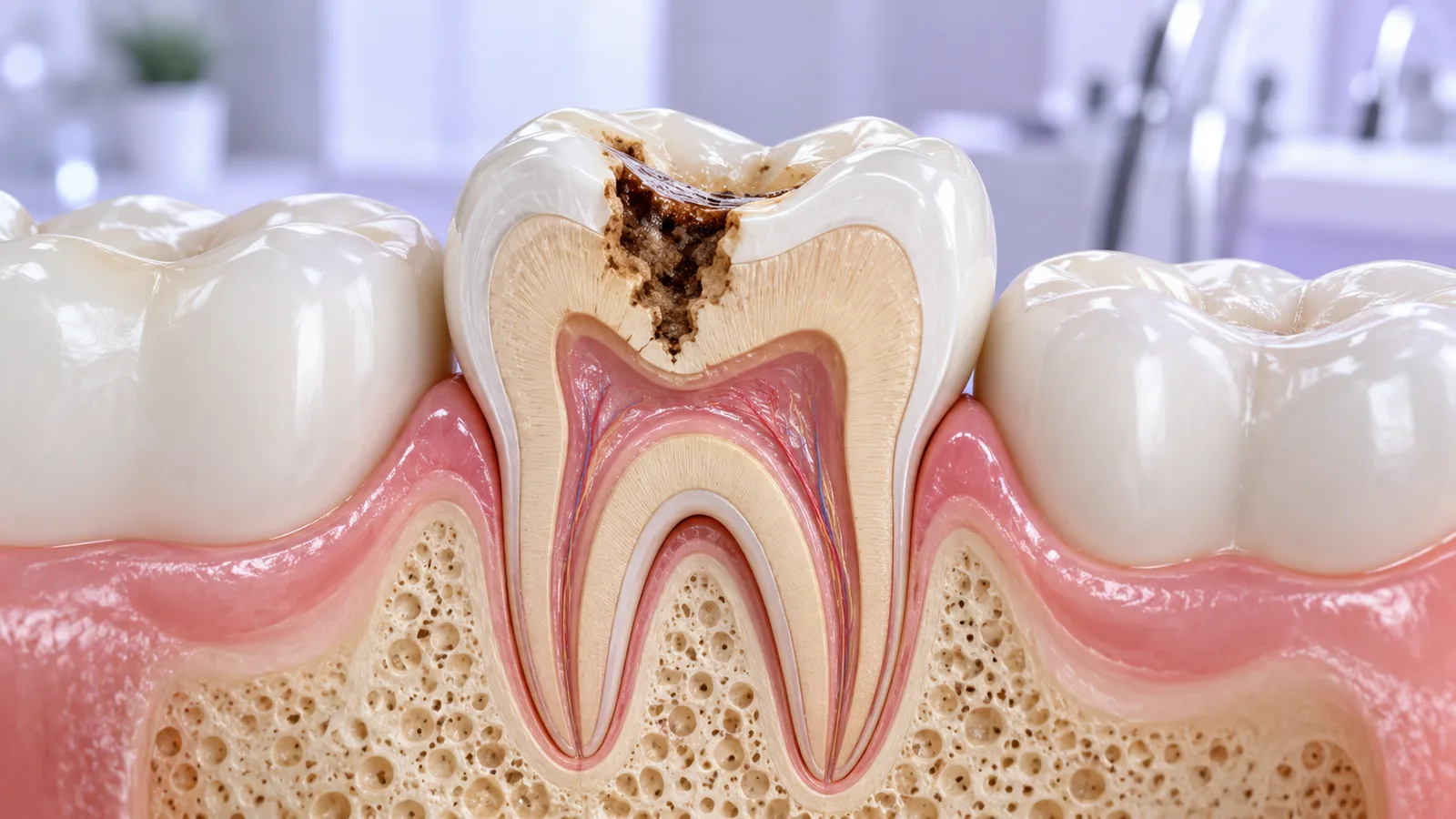
What Is a Cavity?
A cavity is a hole in a tooth, made by bacteria rather than by anything you bit into. The bacteria that live on everyone’s teeth turn sugar into acid, and that acid dissolves minerals out of the enamel. Happen often enough and the surface gives way. What is left is a hole that cannot close on its own, because enamel is the one tissue in the body with no living cells to repair it.
Cavity treatment is therefore two jobs, not one: taking out what has already been destroyed, and stopping the process that destroyed it. The first is the filling, and it is the part everyone expects. The second is the part that gets skipped — acid is produced every time sugar reaches the teeth, so how often you eat matters more than how much you eat.
Decay is slow at the start and fast once it is through. Enamel is hard and holds out for months or years; the dentine underneath is much softer and gives way in weeks. That is why a tooth can seem perfectly fine and then hurt within days, and why the same cavity found at a check-up is a filling while the one found by pain is often a root canal.
Two Ways Decay Is Treated
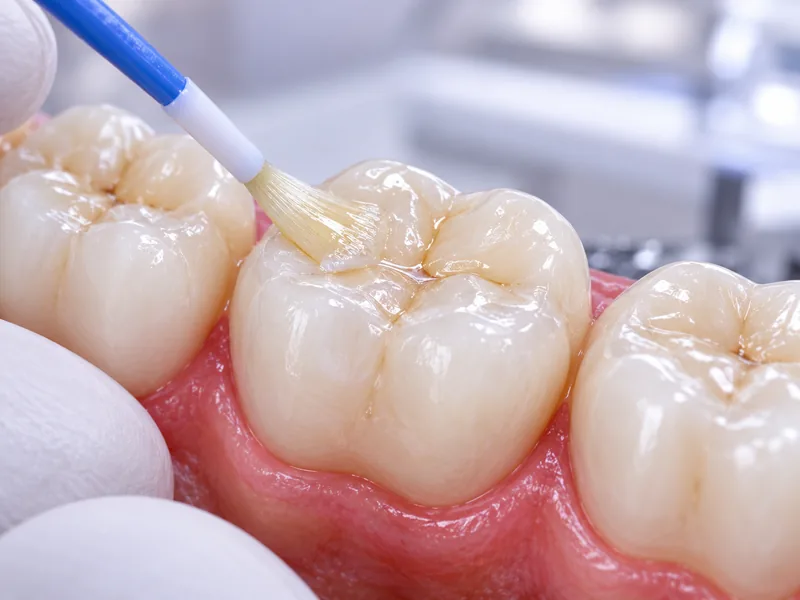
Stopping It Before Anything Is Drilled
Decay caught while it is still inside the enamel has not yet made a hole. A high-fluoride application, a sealant over the deep grooves and a change to what is feeding the bacteria can harden the surface back. Nothing is removed and nothing is filled.
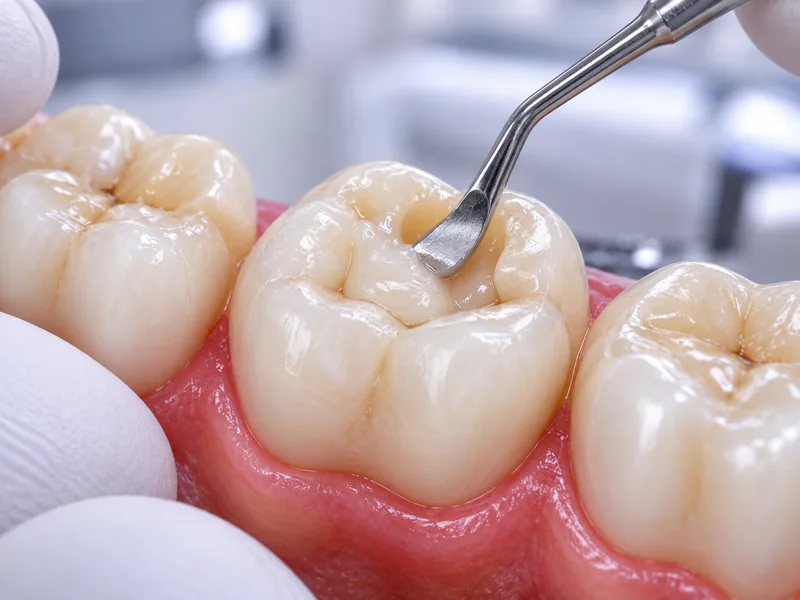
Removing the Decay and Rebuilding
Once decay is through the enamel it cannot be reversed. The softened tooth is taken out completely and the space rebuilt — with a filling, or with a crown where too little of the tooth is left for a filling to hold on to.
Signs You Have a Cavity
Early decay is silent, which is why it is usually found at a check-up rather than by the patient. By the time a tooth does speak up, these are the things it says.
- A dark spot or a holeA brown, grey or chalky white mark that does not brush away, often in a groove.
- Sweet or cold that stingsA short sting from sugar or a cold drink on one particular tooth.
- Pain when you chewA twinge on biting down on that side, or when the pressure is released.
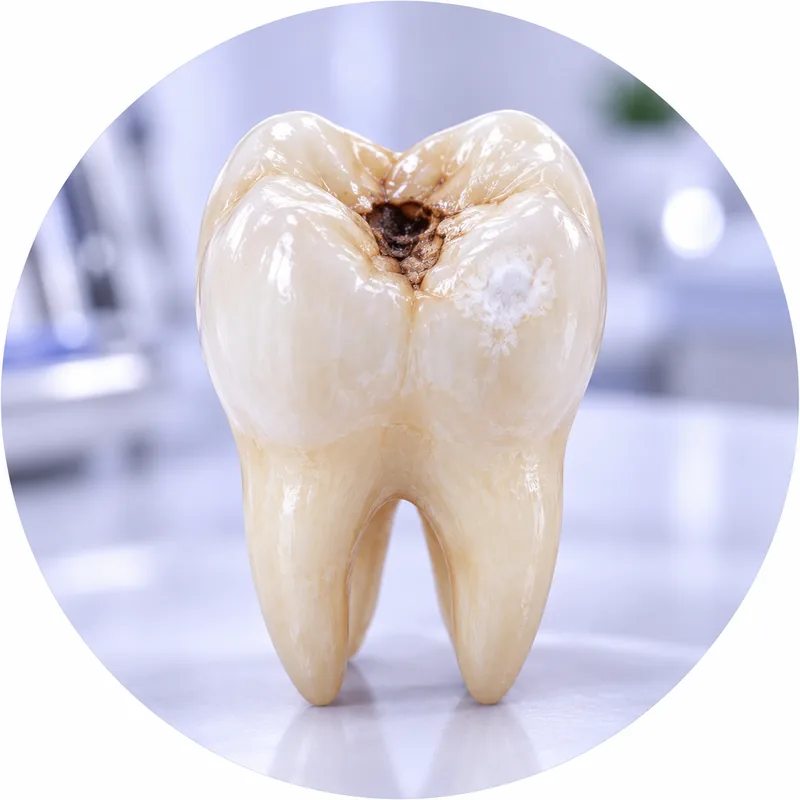
- Food packing in one spotFood wedging between the same two teeth every meal, needing floss to shift.
- A rough or chipped edgeAn edge your tongue keeps finding, where a weakened wall has broken away.
- An ache that keeps goingPain that lingers after the trigger has gone — the decay has reached the nerve.
Options
The Four Stages of Tooth Decay
Decay is the same disease at every stage; what changes is how much tooth is left and therefore what it takes to repair. This is why the same problem can mean a five-minute fluoride application or a root canal.
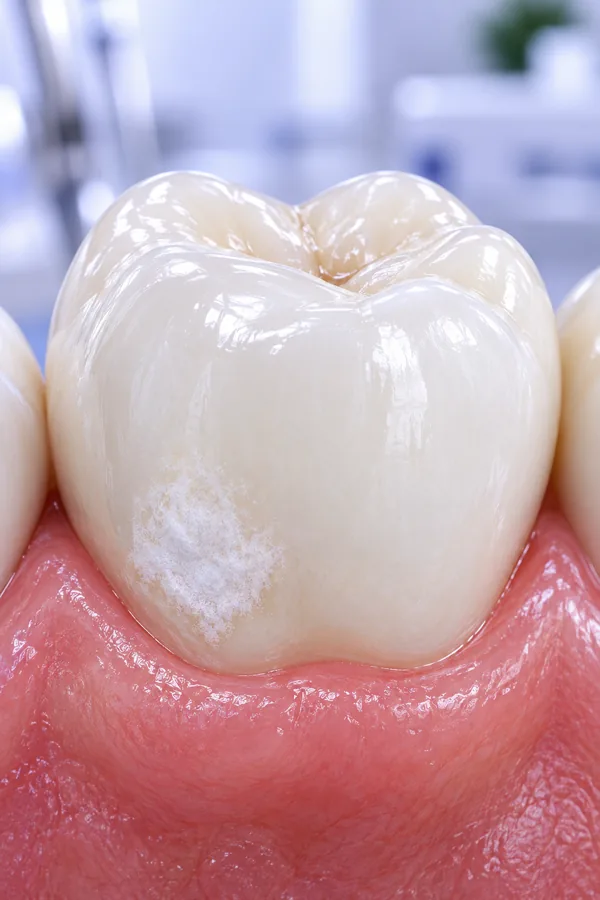 1
1A white spot on the enamel
The enamel has begun losing minerals and looks chalky, but there is no hole yet. Fluoride and a change of habits can harden it back. Nothing is drilled.
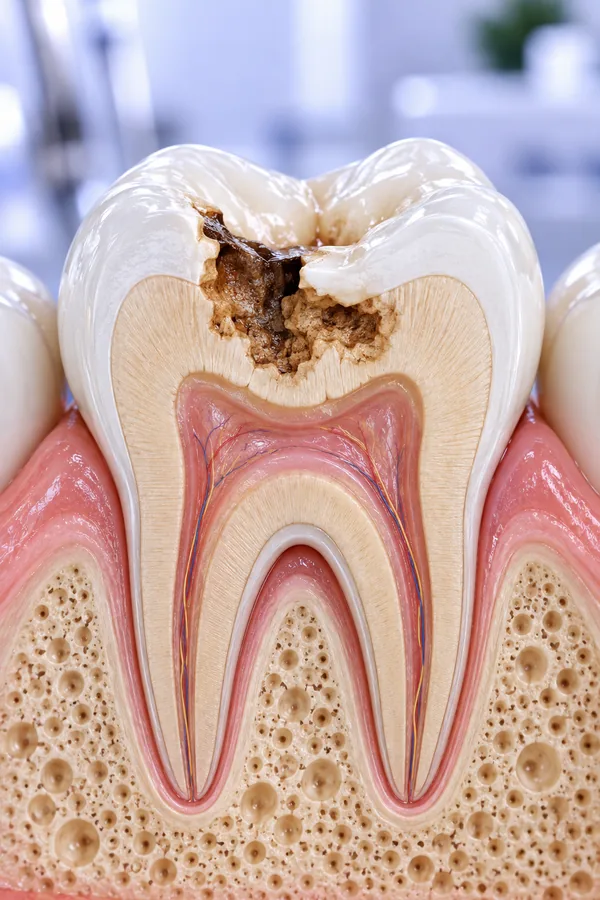 2
2Through into the dentine
The surface has broken and the softer layer beneath is decaying, which happens far faster. This is the stage a filling deals with simply, in one visit.
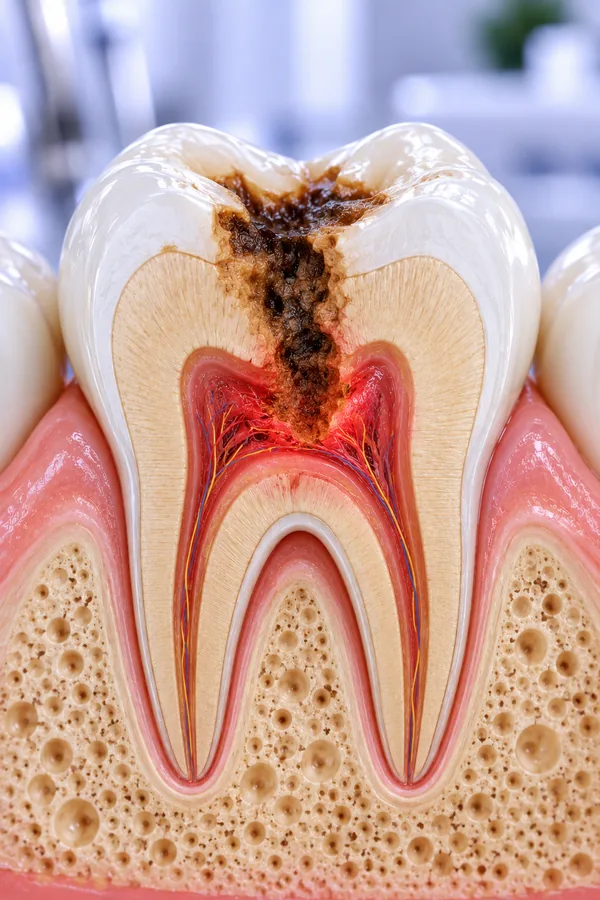 3
3Reaching the pulp
The decay has arrived at the nerve. The tooth now aches on its own, and a filling is no longer enough — it needs a root canal to be saved.
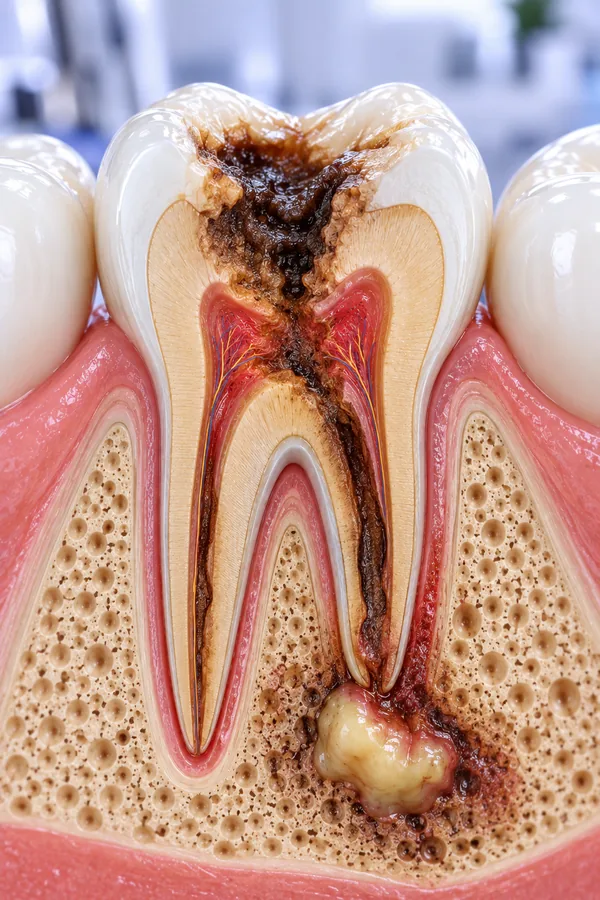 4
4An abscess at the root
Infection has passed out through the root tip into the bone. This is urgent, and the stage at which a tooth may no longer be savable.
How Is a Cavity Treated?
Finding how deep it has gone
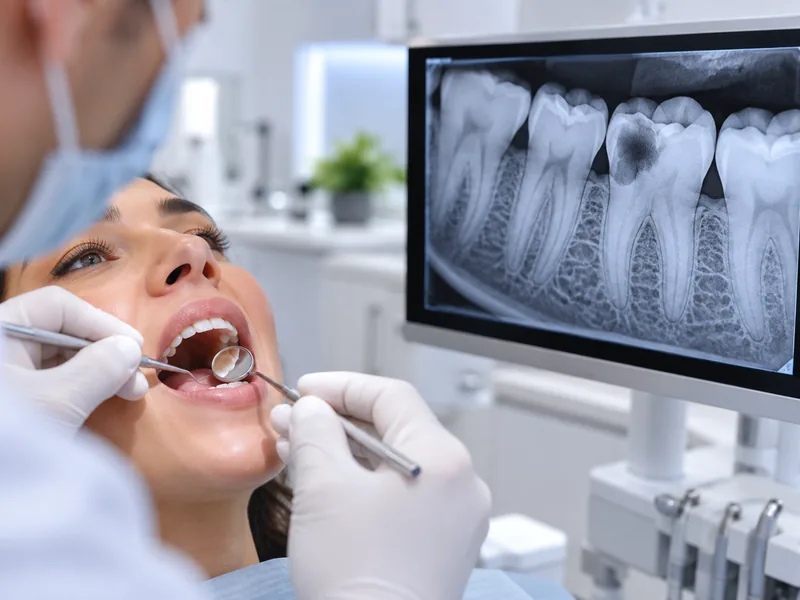
Decay between two teeth or under an old filling is invisible to the eye, so the dentist checks every surface and takes an X-ray, which is the only way to see those two places. What the X-ray shows decides everything after it: a shallow cavity needs a filling, one that has reached the nerve needs a root canal, and a tooth with little structure left needs a crown.
Clearing the decay and closing the tooth
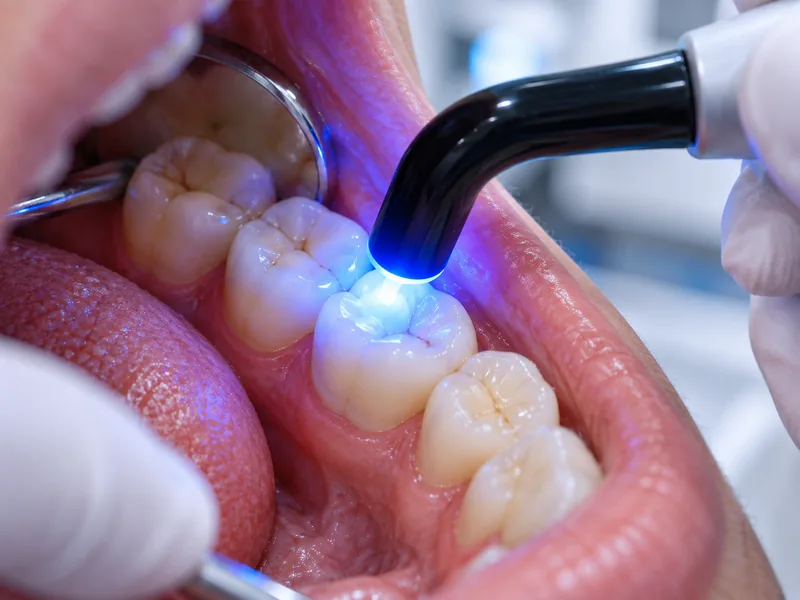
The tooth is numbed and the softened decay removed completely, because anything left behind carries on under the repair. The cavity is cleaned and the space rebuilt with a tooth-coloured material bonded in layers and hardened with a light. The bite is then checked and adjusted before you leave — a repair sitting even slightly high will ache every time you chew.
Recovery
What to Expect After Cavity Treatment
Most people go straight back to their day. These are the four things worth knowing about the first week.
- 1
The numbness wears off
Two to three hours. Avoid chewing on that side until it does, and take care with hot drinks while the lip is still numb.
- 2
Some sensitivity is normal
Cold and sweet may sting for a few days, and a deep cavity can take two to three weeks to settle down completely.
- 3
Check how the bite feels
Once the numbness has gone the tooth should meet the others evenly. If it feels high, come back — it is a two-minute adjustment.
- 4
When to call us
Pain that builds rather than fades, throbbing at night, or a filling that feels rough or has come away. None of those settle on their own.
Why timing matters
Treating a Cavity Now vs Waiting
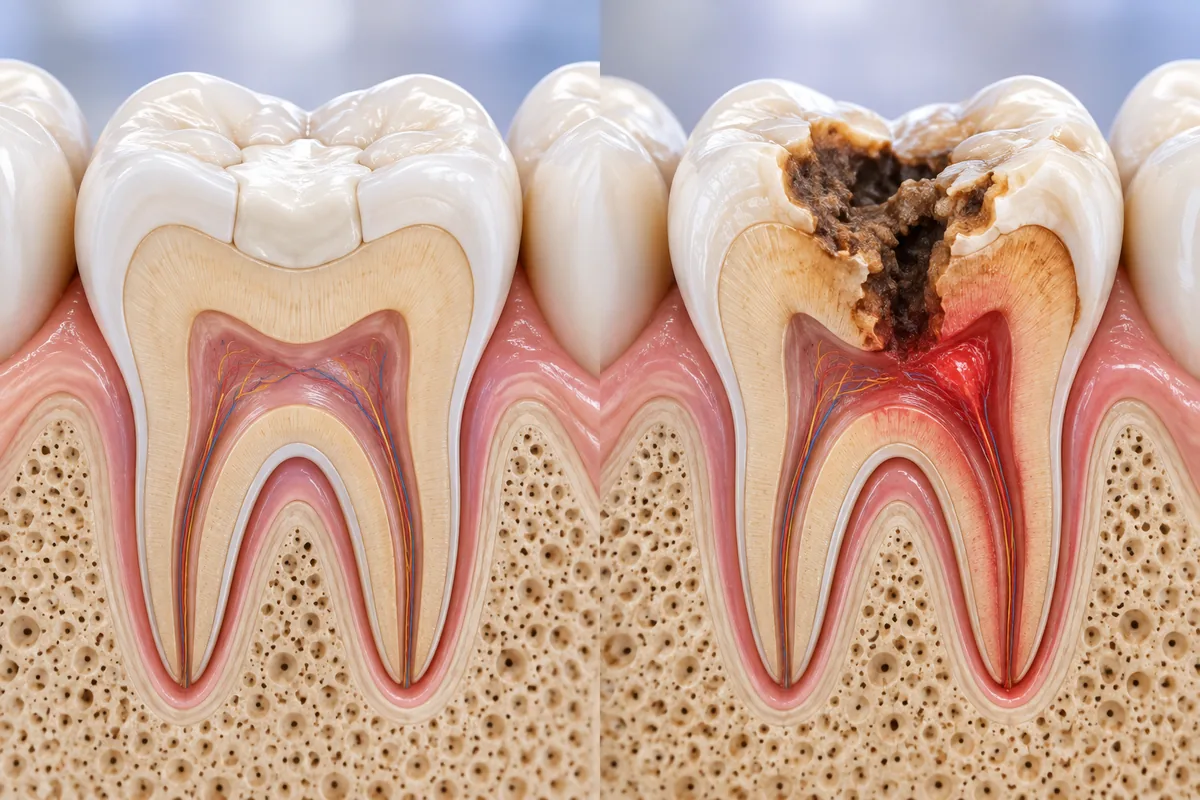
A cavity does not heal once it is through the enamel. It is a hole that gets deeper, and the only real question is how much tooth is left by the time it is treated.
Treated early, it is a numbed half-hour and a filling, and the tooth keeps almost all of its own structure. Left for a year, the same tooth often needs a crown, because too little of it remains for a filling to hold. Left longer again, the decay reaches the nerve and the answer becomes a root canal and a crown — several visits instead of one.
What waiting costs is tooth. Every stage takes away more of your own structure, and a tooth that has already been rebuilt twice has less to give the third time.
What Happens at Your First Consultation
- 1ExaminationThe dentist checks every surface of every tooth, including the ones you cannot see.
- 2X-rayAn X-ray shows decay between teeth and under old fillings, which an examination cannot.
- 3DiagnosisYou are told how deep the decay has gone, and whether a filling is enough.
- 4PlanWhat is treated today, what can safely wait, and how many visits it will take.
- 5AftercareWhat to expect afterwards, and what to change so the next one does not form.
Why us
Why Choose Us for Cavity Treatment
- Decay treated by our dentists, led by Dr. Sangoju Roja Rani, with an endodontist, Dr. Sindhuja (MDS), when it has reached the nerve.
- You are told which teeth need treatment now and which can simply be watched.
- Instruments sterilised and sealed for every patient, under a strict protocol.
- Open every day, 9:30 AM to 9 PM, at two branches in Gajularamaram: Ushodaya Colony and Mallareddy Nagar.

Tooth Pain & Repair
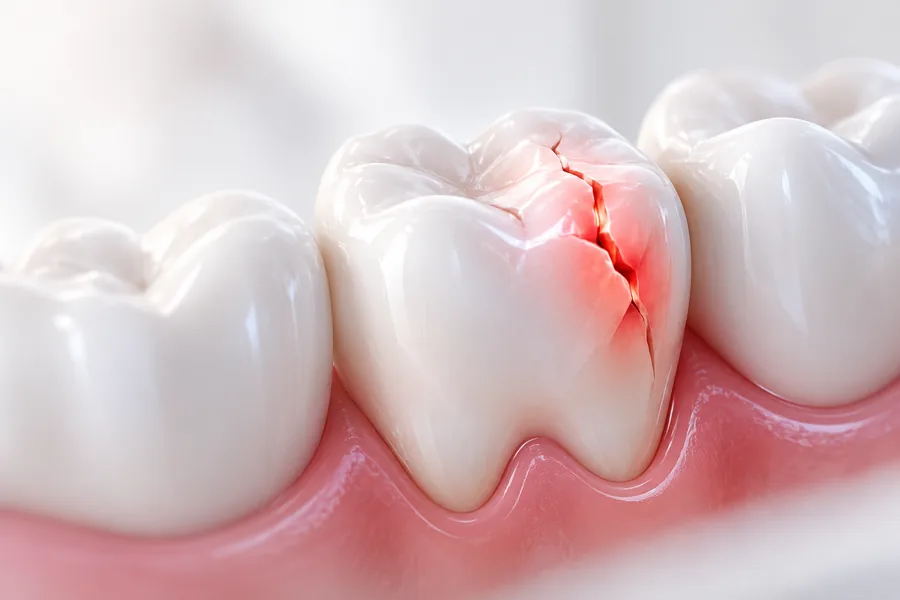
Relief from toothache and repair for decayed, cracked or broken teeth, from fillings and root canals to crowns.
- Root Canal Treatment
- Tooth Sensitivity Treatment
- Cavity Treatment
- Tooth Fillings
- Dental Crowns & Caps
- Wisdom Tooth Removal
- Emergency Dental Care
 learn more
Missing Teeth
Implants, bridges and dentures to replace missing teeth, planned by our implantologist and prosthodontist.
 learn more
Straightening
Braces and Illusion clear aligners for crooked or gapped teeth, planned by our orthodontist for children and adults.
 learn more
Cosmetic
Whitening, veneers, bonding and smile makeovers to improve the colour and shape of your smile, led by our cosmetic dentist.
 learn more
Gums & Cleaning
Cleaning, gum treatment and laser care for bleeding gums and bad breath, from our periodontist.
 learn more
Kids & Family
Gentle check-ups, fluoride and sealants for children with our pedodontist, and routine check-ups for the whole family.






Verified Google Reviews
Excellent
Based on 238 reviews
Harsha Vardhini
2026 · Google
I highly recommend Dr. Roja! She is incredibly kind, patient, and caring. I’ve had a root canal and multiple fillings done by her, and every procedure was completely painless. She explains everything clearly, makes you feel comfortable, and ensures you’re at ease throughout the treatment. Her gentle approach and professionalism make every visit a great experience. If you’re looking for a skilled dentist who truly cares about her patients, Dr. Roja is an excellent choice!
akk reddy
2026 · Google
I had a great experience with Dr. Roja madam. She is a very good doctor and extremely patient-friendly. I was suffering from a tooth cavity, and she suggested a root canal treatment. After starting the treatment, my tooth pain completely disappeared. The cap fitting was also very comfortable and flexible. Overall, I am very satisfied with the treatment and care provided. Thank you so much
Mamidisetti Siva
2026 · Google
I had a very good experience at this dental clinic. The treatment was excellent, and the staff were very friendly and supportive. Even after the treatment, they took great care by calling me, checking on my recovery, and asking me to come for follow-up visits. I really appreciate their concern and professionalism. Highly recommended.
BHARATH GUNDEBOINA
2026 · Google
Had a great experience with teeth replacement treatment. Dr. Roja mom explained everything clearly and the procedure was smooth and painless. The results look very natural and I’m extremely happy with my new smile. Highly recommended..thank you….
venkannababuk venki
2026 · Google
Madam provides very good dental treatment. She explains everything clearly and patiently whenever I have any doubts. I am very satisfied with the treatment and the way she cares for patients. Thank you, SR Dental.
Near you
Cavity Treatment Near You in Gajularamaram
If you have been searching for cavity treatment near you, the useful next step is an examination and an X-ray, because how deep the decay has gone decides everything that follows — whether a filling is enough, or whether the tooth needs a crown or a root canal as well.
You do not need a referral, and you do not need to be an existing patient. Come in while the tooth is still only sensitive: that is the version of this problem that takes a single visit.
77020 95262Gajularamaram
Contact
Reach out to schedule your next dental visit
Whether you have a question, need expert advice, or are ready to book your next appointment, our team is here to help.
Reach out to us on
- Phone Number 77020 95262
- Email address srdentalcare48@gmail.com
- Location Hospital Phase 2, Plot No:100/N, behind UMCC Road, Chandragiri Nagar, Ushodaya Colony, Indira Nagar, Gajularamaram, Hyderabad, Telangana, 500055
Working Hours
- Mon – Sun:
- 9:30 AM – 9:00 PM
FAQs
Frequently asked questions about cavity treatment
Still have a dental question?
Send us a message and our dental team will help.
Can a cavity heal on its own?
Only at the very first stage, before it becomes a hole. While the damage is still a chalky white patch within the enamel, fluoride and a change in diet can draw minerals back into the surface. Once the surface has actually broken, the tooth cannot rebuild it and the decay will keep going.
Does treating a cavity hurt?
The tooth is numbed first, so the treatment itself is pressure and noise rather than pain. Most people find the injection is the only part they notice, and a shallow cavity close to the surface can often be done with no anaesthetic at all.
How do I know if I have a cavity if nothing hurts?
Usually you cannot, which is the reason for check-ups. Decay is silent until it is deep, and the two most common places for it — between two teeth and under an old filling — are exactly the places you cannot see. An X-ray finds them while they are still small.
How long does it take?
A single filling takes around half an hour including numbing the tooth. Several cavities on the same side are usually done in one appointment, while the area is already numb.
Will I need a crown or a root canal instead?
It depends on how much tooth is left and whether the nerve is involved. If the cavity is wide enough that a filling would have nothing to hold on to, a crown is the more reliable repair. If the decay has reached the nerve, the tooth needs a root canal first and then a crown.
How do I stop getting cavities?
Decay needs sugar and time, so frequency matters more than amount — grazing on sweet things through the day does more damage than one dessert. Brushing twice a day with fluoride toothpaste, cleaning between the teeth, and not rinsing the toothpaste away afterwards are the three that make the most difference.