

Bad Breath Treatment in Gajularamaram
- 14+Years of experience
- 50,000+Patients treated
- 4.9Google rating
- one visit to find the cause
- then treatment for whatever it is
- Mon – Sun: 9:30 AM – 9:00 PM

What Causes Bad Breath?
Bad breath — halitosis, when it is persistent — comes from bacteria breaking down proteins in the mouth and releasing sulphur compounds. That is almost the whole of it. Around nine cases in ten begin in the mouth rather than anywhere else, and the largest single source is not the teeth at all: it is the film that collects across the back of the tongue, where no toothbrush goes and no rinse stays.
The next most common source is gum disease. Pockets around the teeth are airless, which suits the bacteria responsible exactly, and the pattern people describe is a bad taste as much as a smell — fresh after brushing, back within the hour. After that come a dry mouth, a tooth that is packing food at every meal, an untreated cavity, and dentures that are being brushed but never soaked.
The rest — tonsil stones, sinus drainage, reflux, or something medical — makes up a small minority, though it is what most people assume first. That is worth knowing before anything else, because it changes what a first appointment is for. It is not a cleaning. It is finding out which of those is happening, which usually takes one conversation and one careful look.
In the Mouth, or Beyond It
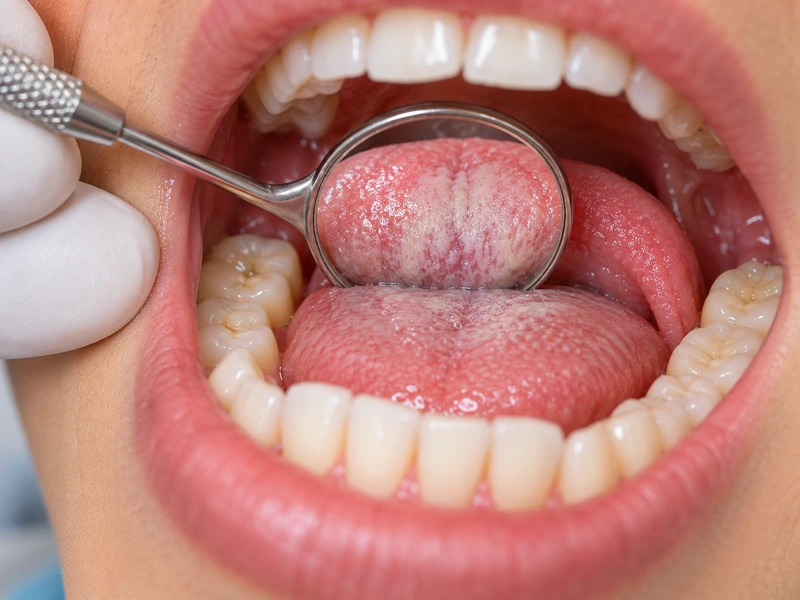
Treating the Mouth
Around nine cases in ten begin in the mouth, and most of those in one specific place: the coating at the back of the tongue. Gum disease, an untreated tooth, food packing into a space, a dry mouth or a denture that is not being cleaned properly account for nearly all the rest. This is treatable, and it is usually resolved completely once the right cause is found rather than guessed at.
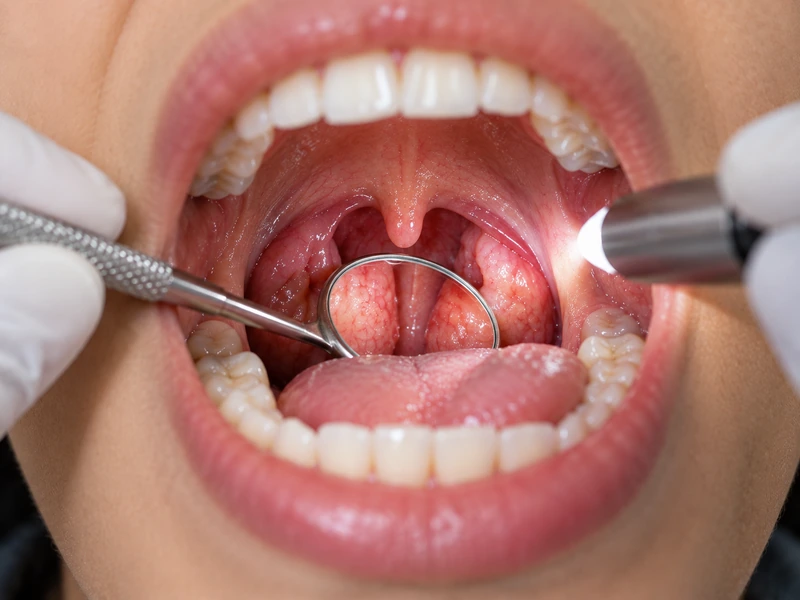
Looking Beyond the Mouth
The remaining cases come from the tonsils, the sinuses, reflux from the stomach, a medicine you take, or occasionally a medical condition. A dentist's job here is to examine the mouth properly and then say clearly whether it is the source or not — and if it is not, to point you at the right person instead of repeating dental treatment that was never going to work.
What People Notice
Almost nobody arrives certain. Most people have been told once, or have started to suspect it from how others stand.
- Breath that comes back within the hourFresh straight after brushing and stale again well before lunch, which usually means the cause has not been touched.
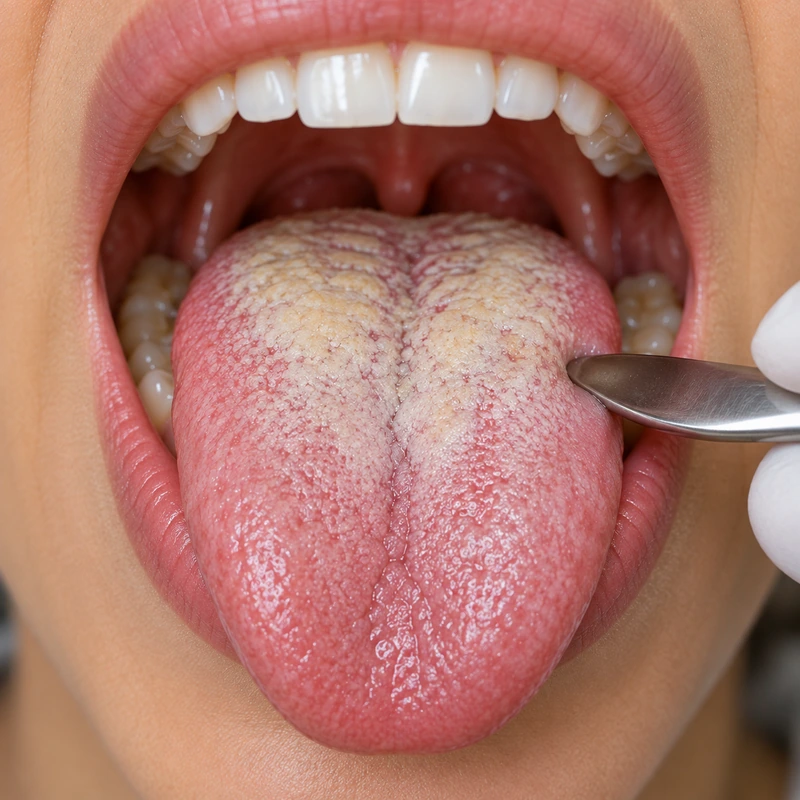
- A coating across the back of the tongueWhite or yellowish film towards the back, where a toothbrush never goes and where most of the smell is produced.
- Gums that bleed or feel soreGum disease produces the same sulphur compounds directly, and it is the second commonest cause after the tongue.
- A mouth that is always dryReaching for water constantly, or waking with a dry mouth. Saliva is the mouth's own rinse, and without it everything worsens.
- Food packing into the same spotA space that traps food at every meal — from a broken filling, a gap, or a tooth that has drifted.
- A denture that has started to smellAcrylic is porous and holds bacteria and yeast. Dentures need cleaning as carefully as teeth, and soaking as well as brushing.
Options
Where It Actually Comes From
Naming the source is the entire treatment. These four cover almost every case, and they are distinguishable at an examination.
 1
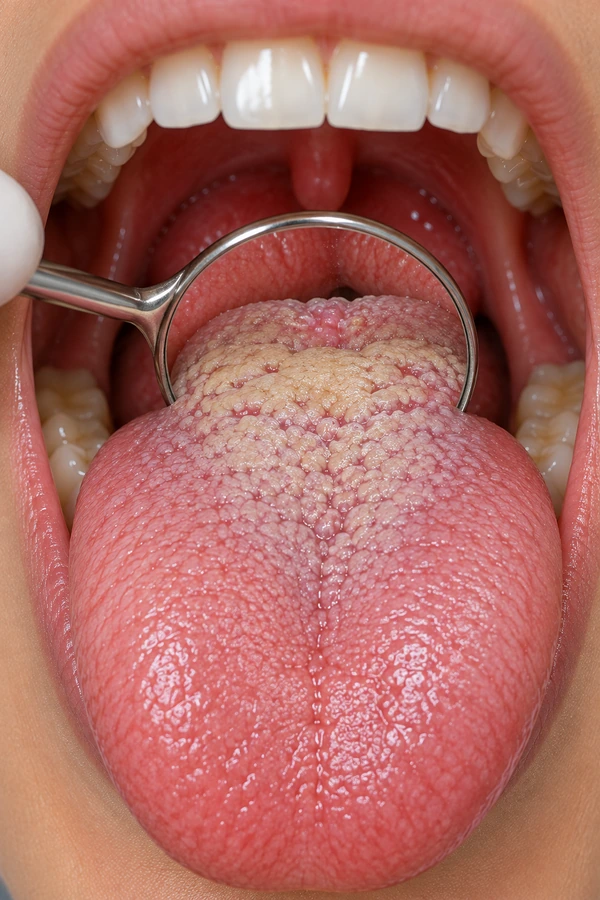
1The back of the tongue
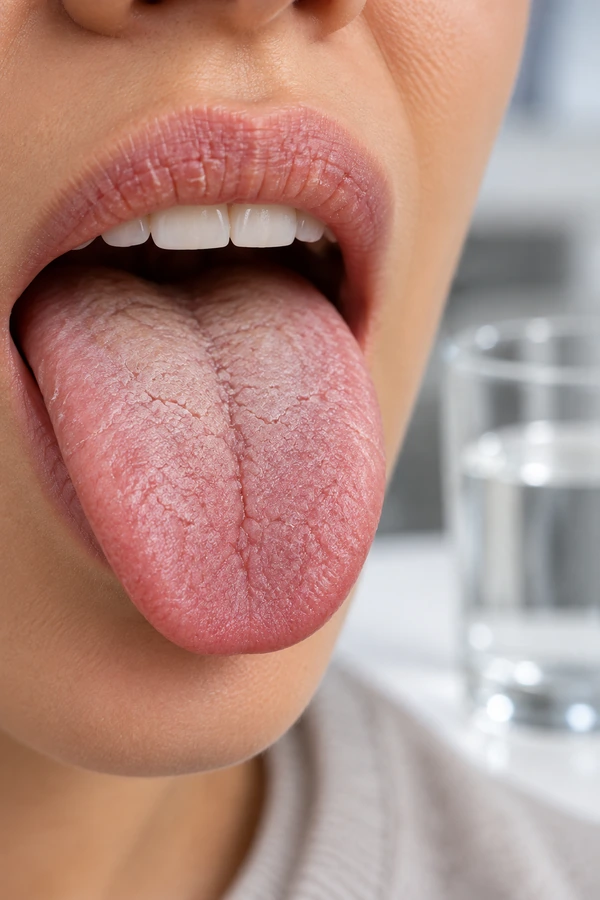
The single largest source. The rough surface at the back of the tongue holds a film of bacteria that break down proteins and release sulphur compounds — the smell itself. Brushing the teeth does not touch it, and no mouthwash reaches into it for long. Cleaning the tongue properly changes more than any other single habit.
 2
2Gum disease
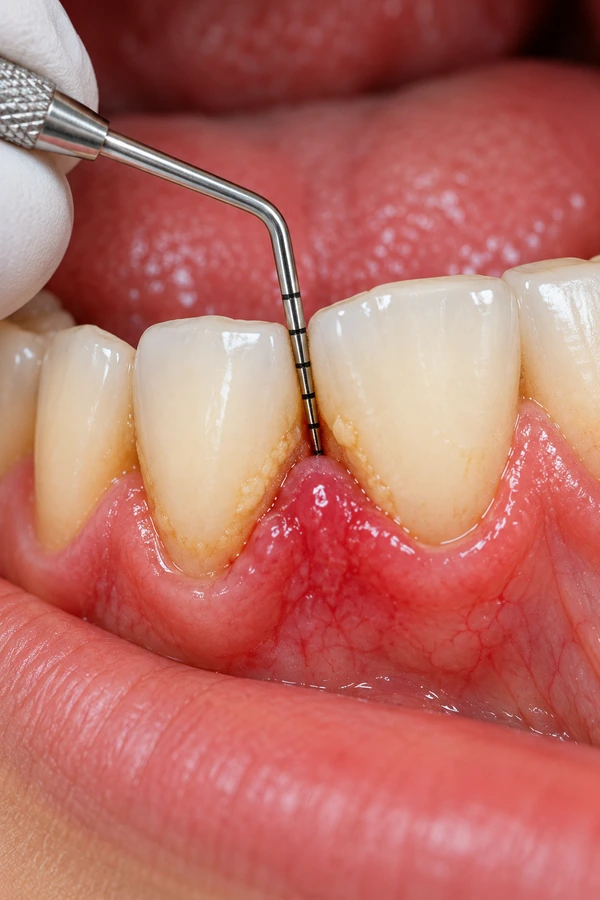
Pockets around the teeth are airless, which is exactly what the bacteria responsible prefer. The pattern is a bad taste as much as a smell, returning quickly after brushing, often with gums that bleed. Treating the gums treats the breath, and the two improve together.
 3
3A dry mouth
Saliva washes and dilutes constantly, so anything that reduces it makes breath worse. Common causes are medicines — antihistamines, antidepressants, blood pressure tablets and many others — along with breathing through the mouth, snoring, dehydration and alcohol-based mouthwashes, which dry the mouth they were bought to freshen.
 4
4Something that is not the mouth
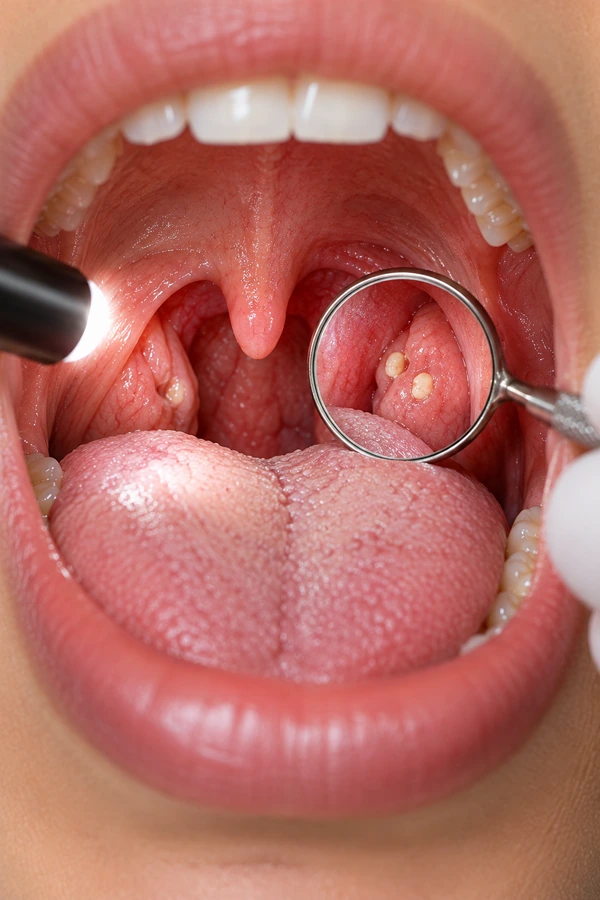
Tonsil stones — small pale lumps coughed up occasionally, with a smell out of all proportion to their size. Post-nasal drip from sinus trouble. Reflux. Rarely, a medical condition that changes the breath in a characteristic way. Each has a pattern, and they are worth asking about before anything dental is repeated.
How Is Bad Breath Treated?
The examination is the treatment plan
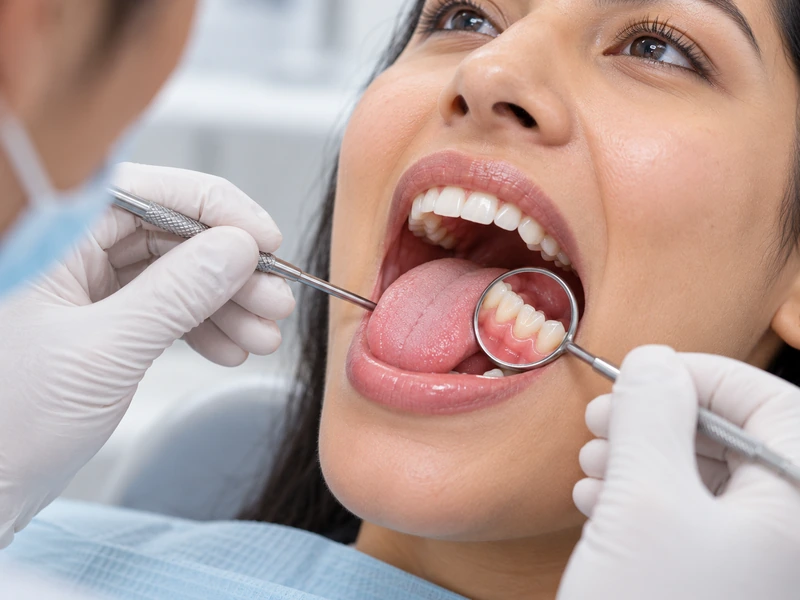
You cannot smell your own breath — the nose stops registering a constant smell within minutes, which is why people either worry unnecessarily or have no idea. So the first part is assessing it properly rather than guessing: the tongue coating is looked at and scored, the gums are charted, teeth are checked for decay, broken fillings and places food packs, dentures are examined, and you are asked about medicines, snoring, reflux, sinuses and how much water you drink. That conversation usually identifies the cause before any treatment starts.

Whatever the examination found
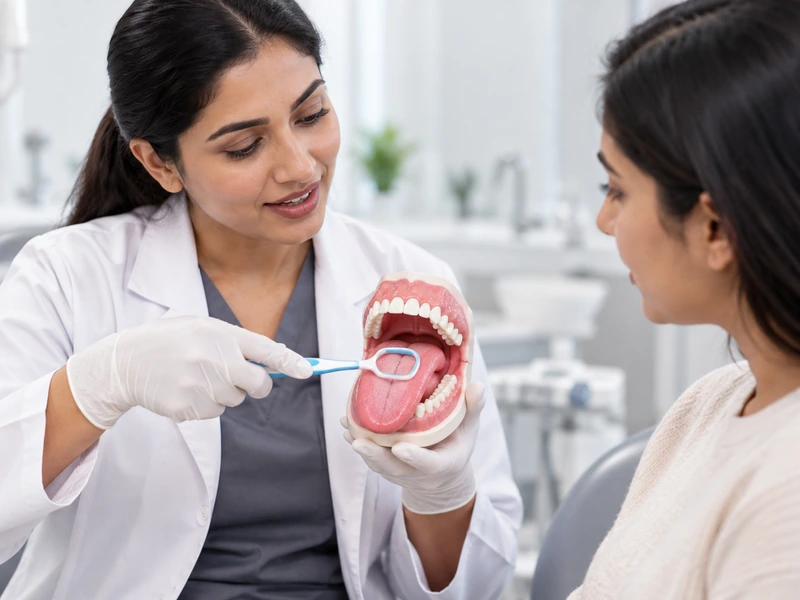
A thorough cleaning, and treatment for gum disease if there is any, since it is the second commonest source. Tongue cleaning taught properly — a scraper rather than a brush, from as far back as you can manage, working further back over a few weeks as the gag reflex settles. Food traps repaired. Denture hygiene corrected. Dry mouth addressed by whatever is causing it, which sometimes means a conversation with the doctor who prescribed the tablet rather than anything done in a dental chair.
Knowing when it is not the mouth
You come back a few weeks later and it is assessed again. For most people the problem has gone, and what remains is keeping the habits going. But if the mouth is genuinely clean, the gums are healthy and the smell is unchanged, that is an important finding rather than a failure: the source is not dental, and the next step is the right referral — ENT for tonsils and sinuses, or your doctor for reflux and medicines — instead of another cleaning that will not help.
Recovery
What Actually Keeps It Away
Treatment finds and removes the cause. These four are what stop it coming back, and the first one matters more than the other three together.
- 1
Clean the tongue every day, at the back
A scraper, drawn from as far back as you can comfortably reach, two or three times, once a day. Breathe through your nose and do it before eating rather than after, and start further forward and work back over a fortnight if you gag.
- 2
Clean between the teeth
Floss or interdental brushes daily. The spaces between teeth are airless and hold exactly the bacteria responsible, and a brush has never reached them.
- 3
Water does more than mouthwash
Sipping water through the day keeps saliva working. If you use a rinse, choose an alcohol-free one — alcohol dries the mouth and makes breath worse a couple of hours later — and do not use it straight after brushing, as it washes away the fluoride.
- 4
Mints make it worse, sugar-free gum does not
Sugar feeds the bacteria producing the smell, so a mint buys twenty minutes and then helps the problem along. Sugar-free gum works differently and genuinely helps, because chewing produces saliva.

Why it keeps coming back
Covering It vs Finding the Cause
Almost everybody treats bad breath before they ever mention it, and almost all of that treatment is aimed at the smell rather than at whatever is producing it.
Mints, sprays, strong mouthwashes and chewing gum all work, briefly. The trouble is what happens next. Mints and sweetened gum add sugar, which is precisely what the bacteria producing the smell feed on. Alcohol-based mouthwashes give an hour of freshness and then leave the mouth drier than they found it, and a dry mouth smells worse — so the rinse is reached for again, and the cycle tightens. None of these touch the tongue coating, the gum pockets or the tooth that is packing food, because none of them were ever meant to.
Finding the cause is a slower conversation and a far shorter problem. In the great majority of cases it is the coating at the back of the tongue, gum disease, or a mouth that has been dried out by a medicine — all three of which are identifiable at one appointment and treatable. People are often surprised how completely it resolves once the right thing is treated, and how little they need afterwards.
The other half of finding the cause is being told when it is not the mouth. A dentist who examines properly can say that the tongue and gums are healthy and the smell is coming from somewhere else, which is far more useful than another cleaning. That answer is worth asking for directly if it has not been offered.
What Happens at Your First Appointment
- 1Talking it throughWhen you notice it, whether anyone has said so, and what you have already tried.
- 2ExaminationTongue, gums, teeth, dentures and anything trapping food — looked at in that order.
- 3Where it comes fromThe likely source named plainly, including when the answer is that it is not dental.
- 4PlanWhat is treated, what you change at home, and when it will be assessed again.
- 5ReviewA few weeks later — either it has gone, or that tells us something useful too.
Why us
Why Choose Us for Bad Breath Treatment
- The cause is looked for first, with a periodontist, Dr. A. Rithesh Kumar (MDS), on our team for gum-related causes.
- A calm, private conversation: bad breath is common, and nothing to be embarrassed about.
- Instruments sterilised and sealed for every patient, under a strict protocol.
- Open every day, 9:30 AM to 9 PM, at two branches in Gajularamaram: Ushodaya Colony and Mallareddy Nagar.

Tooth Pain & Repair
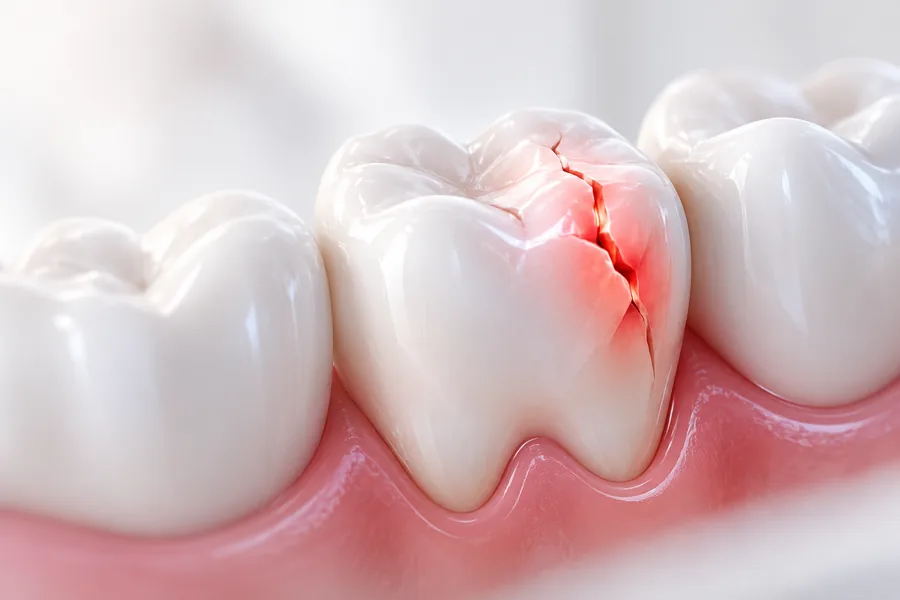
Relief from toothache and repair for decayed, cracked or broken teeth, from fillings and root canals to crowns.
- Root Canal Treatment
- Tooth Sensitivity Treatment
- Cavity Treatment
- Tooth Fillings
- Dental Crowns & Caps
- Wisdom Tooth Removal
- Emergency Dental Care
 learn more
Missing Teeth
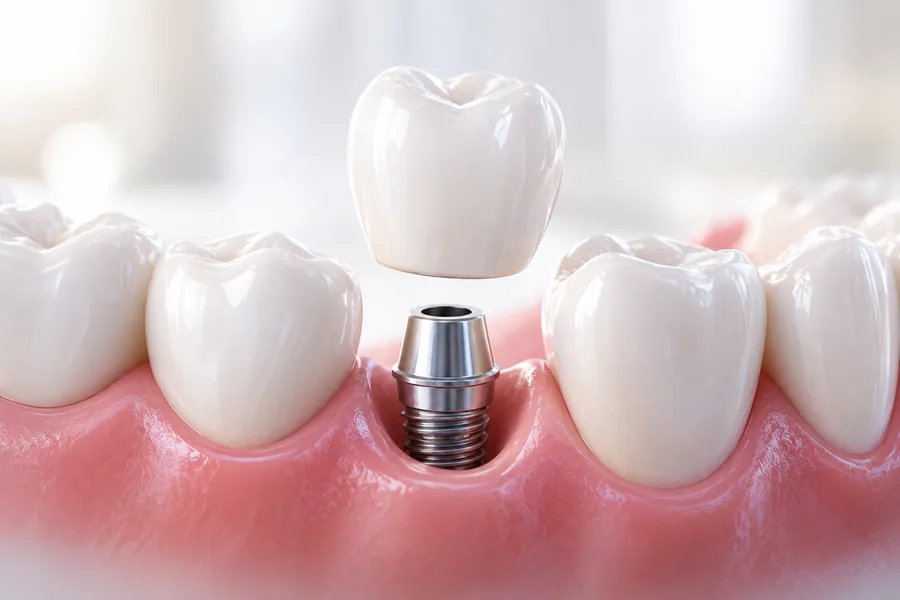
Implants, bridges and dentures to replace missing teeth, planned by our implantologist and prosthodontist.
 learn more
Straightening
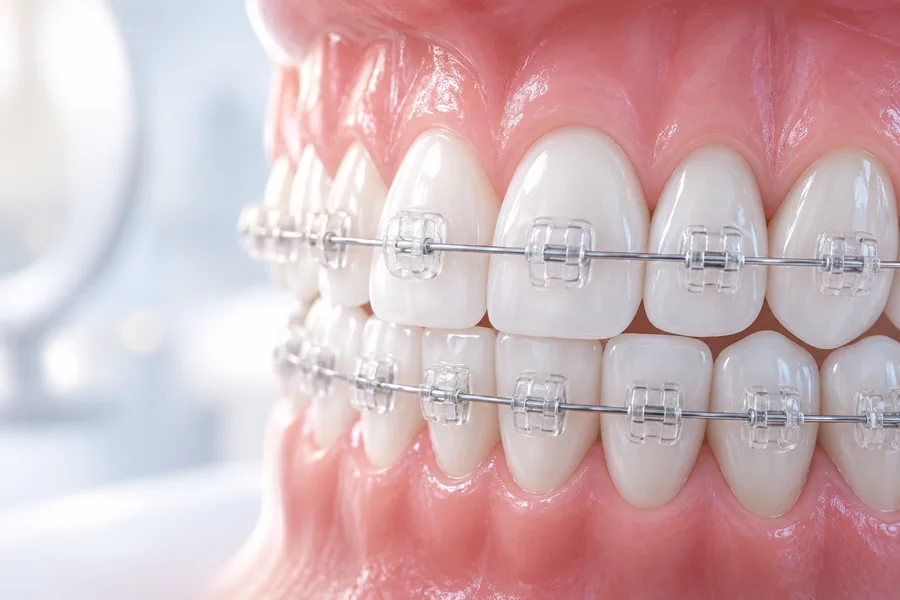
Braces and Illusion clear aligners for crooked or gapped teeth, planned by our orthodontist for children and adults.
 learn more
Cosmetic
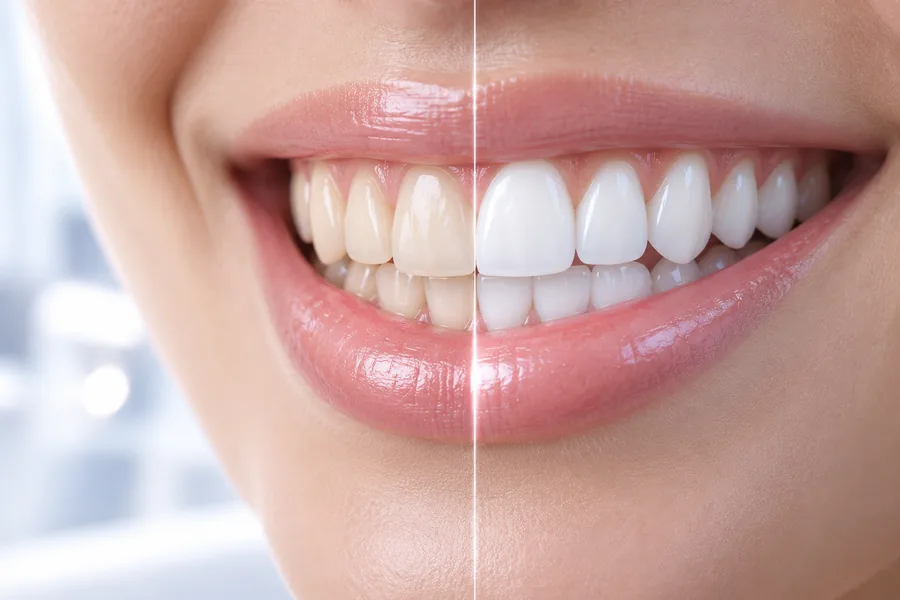
Whitening, veneers, bonding and smile makeovers to improve the colour and shape of your smile, led by our cosmetic dentist.
 learn more
Gums & Cleaning
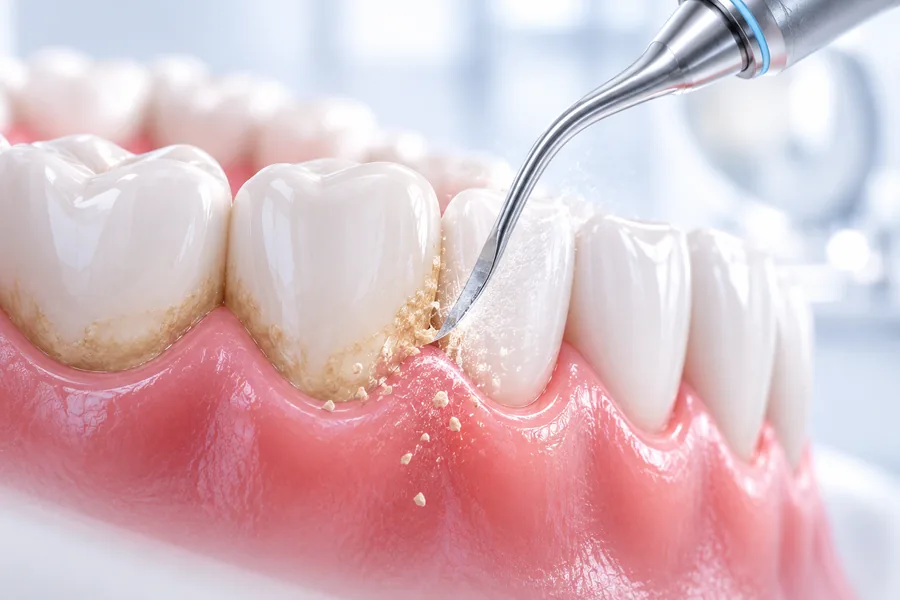
Cleaning, gum treatment and laser care for bleeding gums and bad breath, from our periodontist.
 learn more
Kids & Family
Gentle check-ups, fluoride and sealants for children with our pedodontist, and routine check-ups for the whole family.






Verified Google Reviews
Excellent
Based on 238 reviews
Harsha Vardhini
2026 · Google
I highly recommend Dr. Roja! She is incredibly kind, patient, and caring. I’ve had a root canal and multiple fillings done by her, and every procedure was completely painless. She explains everything clearly, makes you feel comfortable, and ensures you’re at ease throughout the treatment. Her gentle approach and professionalism make every visit a great experience. If you’re looking for a skilled dentist who truly cares about her patients, Dr. Roja is an excellent choice!
akk reddy
2026 · Google
I had a great experience with Dr. Roja madam. She is a very good doctor and extremely patient-friendly. I was suffering from a tooth cavity, and she suggested a root canal treatment. After starting the treatment, my tooth pain completely disappeared. The cap fitting was also very comfortable and flexible. Overall, I am very satisfied with the treatment and care provided. Thank you so much
Mamidisetti Siva
2026 · Google
I had a very good experience at this dental clinic. The treatment was excellent, and the staff were very friendly and supportive. Even after the treatment, they took great care by calling me, checking on my recovery, and asking me to come for follow-up visits. I really appreciate their concern and professionalism. Highly recommended.
BHARATH GUNDEBOINA
2026 · Google
Had a great experience with teeth replacement treatment. Dr. Roja mom explained everything clearly and the procedure was smooth and painless. The results look very natural and I’m extremely happy with my new smile. Highly recommended..thank you….
venkannababuk venki
2026 · Google
Madam provides very good dental treatment. She explains everything clearly and patiently whenever I have any doubts. I am very satisfied with the treatment and the way she cares for patients. Thank you, SR Dental.
Near you
Bad Breath Treatment Near You in Gajularamaram
If you have been searching for bad breath treatment near you, it is worth knowing that this is an ordinary thing to bring to a dentist and a common reason to come in. Nobody in a clinic reacts to it, and it is a great deal easier to say once you are in the chair than it feels beforehand.
It is also one of the few complaints where a single appointment often finds the whole answer. Most of it is a conversation — what you have tried, what you take, how you sleep — followed by a look at the tongue and the gums.
77020 95262Gajularamaram
Contact
Reach out to schedule your next dental visit
Whether you have a question, need expert advice, or are ready to book your next appointment, our team is here to help.
Reach out to us on
- Phone Number 77020 95262
- Email address srdentalcare48@gmail.com
- Location Hospital Phase 2, Plot No:100/N, behind UMCC Road, Chandragiri Nagar, Ushodaya Colony, Indira Nagar, Gajularamaram, Hyderabad, Telangana, 500055
Working Hours
- Mon – Sun:
- 9:30 AM – 9:00 PM
FAQs
Frequently asked questions about bad breath treatment
Still have a dental question?
Send us a message and our dental team will help.
How can I tell whether I actually have bad breath?
You cannot smell it yourself. The nose stops responding to a constant smell within a few minutes, which is why some people worry without cause and others have no idea. Two rough tests: lick the inside of your wrist, let it dry for ten seconds and smell it; or scrape the very back of your tongue with a plastic spoon and smell the scraping. Neither is exact. The reliable answer is asking somebody who will tell you the truth, or being assessed at a clinic where somebody says so plainly.
Is mouthwash enough?
It is enough for about an hour, which is the problem. Mouthwash masks the smell without removing what is making it, and an alcohol-based one leaves the mouth drier afterwards — and a dry mouth smells worse, so the effect reverses. An alcohol-free rinse used alongside proper tongue cleaning and treatment of the gums is fine. Used instead of those, it is a way of not finding out what is wrong.
Is bad breath caused by the stomach?
Usually not, though it is the most common assumption. Around nine in ten cases come from the mouth itself — most of all from the coating at the back of the tongue, then from gum disease. Reflux genuinely does cause bad breath in some people, and it tends to come with heartburn, a sour taste or a night-time cough. If the mouth has been examined properly and found healthy, then the stomach and the sinuses become the sensible places to look.
What are the small white lumps I sometimes cough up?
Tonsil stones — soft pale lumps of debris and bacteria that form in the crevices of the tonsils. They are harmless and surprisingly common, and the smell is out of all proportion to their size. Gargling, staying well hydrated and good oral hygiene reduce them. If they form constantly and the breath does not improve with everything else treated, that is a conversation for an ENT surgeon rather than a dentist.
Why is my breath worse in the morning?
Because saliva flow almost stops while you sleep, so the mouth dries out and bacteria are undisturbed for hours. Morning breath is normal and is not what this page is about — it clears within a few minutes of brushing and having something to drink. It is worth attention when it returns within an hour, or when it is there all day.
I have been told my breath is fine, but I am still convinced it is not.
This is more common than people realise, and it deserves a straight answer rather than either reassurance or more treatment. Because nobody can smell their own breath, the certainty can be very difficult to shake, and repeated dental treatment for a problem that is not there tends to make the worry worse rather than better. What helps is one proper assessment — tongue, gums, teeth, dry mouth, all of it recorded — and being told clearly what was and was not found. If everything is healthy, the honest answer is that the mouth is not the problem, and continuing to treat it will not settle the question.