
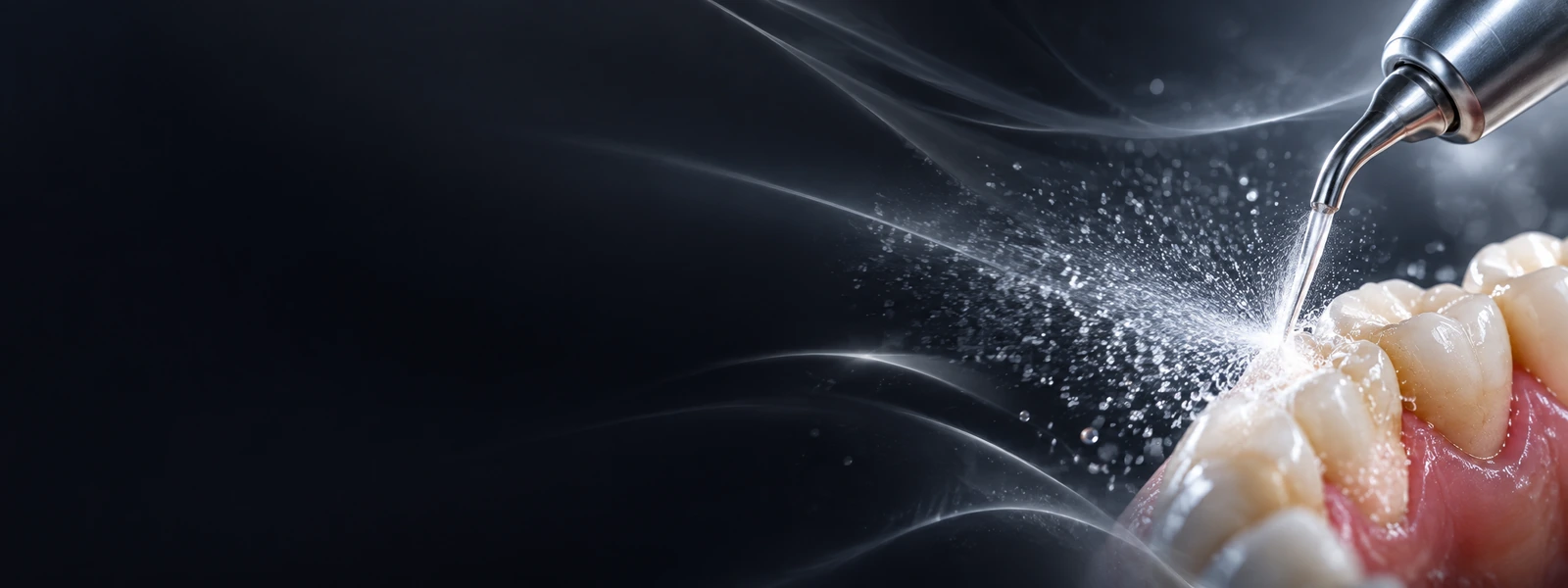
Teeth Cleaning in Gajularamaram
- 14+Years of experience
- 50,000+Patients treated
- 4.9Google rating
- 30–45 minutes
- usually one
- Mon – Sun: 9:30 AM – 9:00 PM
What Is Professional Teeth Cleaning?
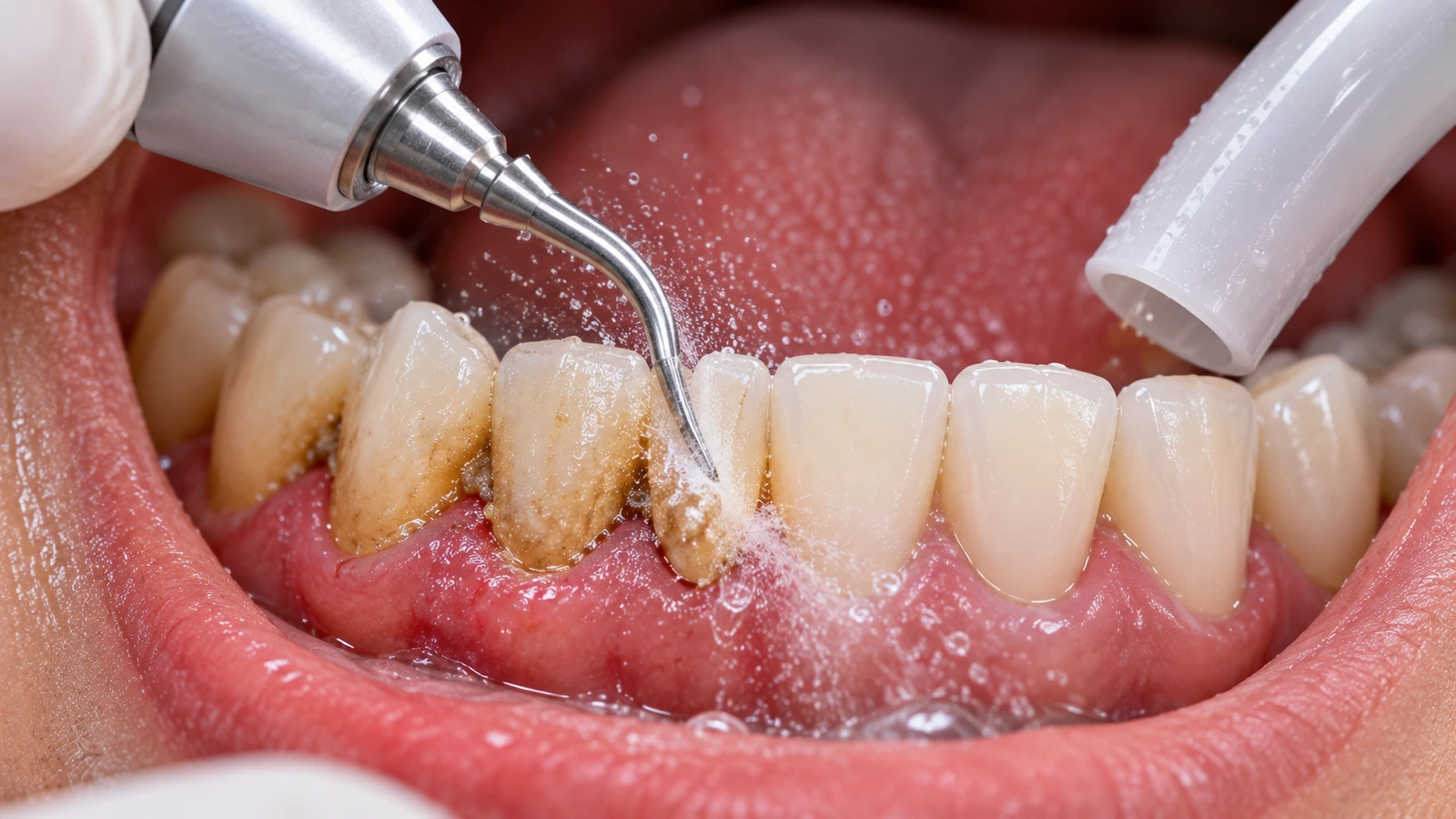
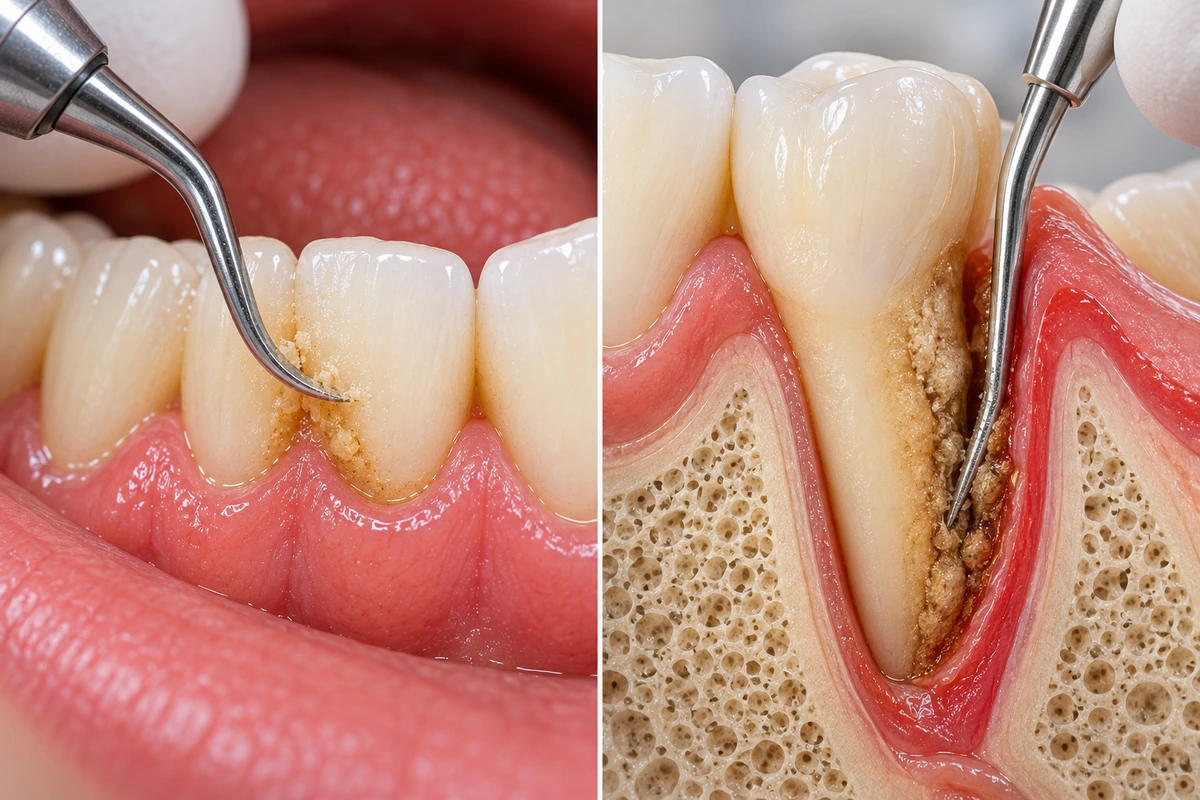
Professional teeth cleaning removes the two things a toothbrush cannot: plaque that has been left long enough to harden into tartar, and deposit that has formed below the gum line where no brush reaches. Plaque forms on everyone’s teeth within hours of brushing. Left in the same place for two or three days, it takes up minerals from saliva and sets hard, and from that point it can only be taken off with instruments.
It matters because of where it sits. Tartar collects at the gum margin and holds bacteria hard against the gum, which responds by becoming inflamed — the bleeding that most people notice first and then stop noticing. Left alone, that inflammation works its way down, the gum detaches slightly from the tooth, a pocket forms, and deposit then builds inside the pocket where cleaning is harder still. The cycle is slow, painless for years, and the commonest reason adults lose teeth.
One thing is worth saying at the start, because it keeps people away for years. Cleaning does not loosen teeth, and it does not create gaps. Teeth can feel different afterwards — sometimes looser, sometimes with spaces that seem new — and there is a straightforward explanation for both, set out further down this page. Neither of them is the tooth being damaged.
Above the Gum, and Below It
Above the Gum Line
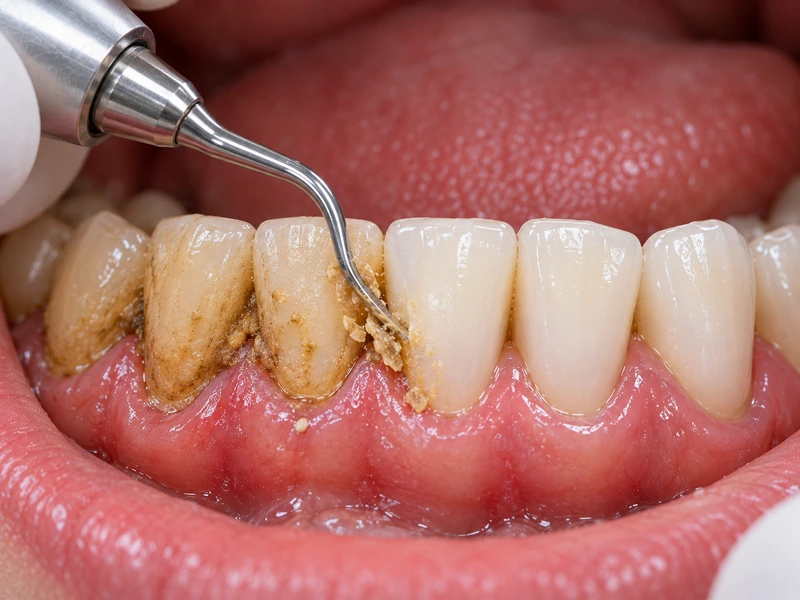
What most appointments are. Plaque and hardened tartar are removed from the surfaces you can see and from between the teeth, then everything is polished smooth so it takes longer to build up again. One visit, usually without anaesthetic, and gums that were bleeding settle down over the fortnight afterwards.
Below the Gum Line
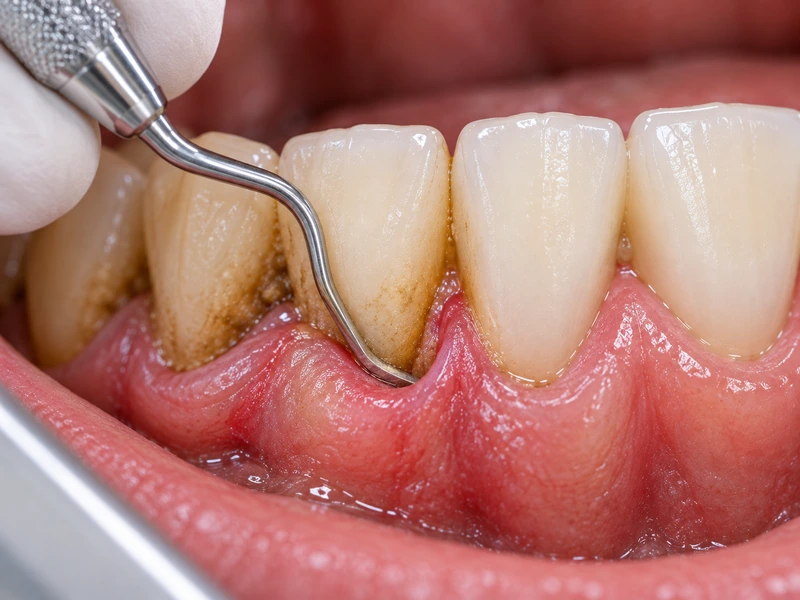
Where the gum has pulled away from the tooth slightly, deposit collects inside the pocket — out of sight, and out of reach of any brush ever made. Removing it takes longer, is done by feel as much as by sight, and is usually numbed. Where the pockets are deep, this stops being a cleaning and becomes treatment for gum disease.
When a Cleaning Is Due
Most people come because it has simply been a while. These are the signs that say it has been longer than it should.
- Gums that bleed when you brushThe commonest sign and the most ignored. Healthy gums do not bleed, however firmly you brush them.
- Something hard you can feel with your tongueA rough ledge behind the lower front teeth or between the back ones. Tartar is set hard, and no brush will move it.
- Brown or yellow marks at the gum lineTea, coffee, tobacco and paan collect on deposit rather than on clean enamel, which is why the marks sit where they do.
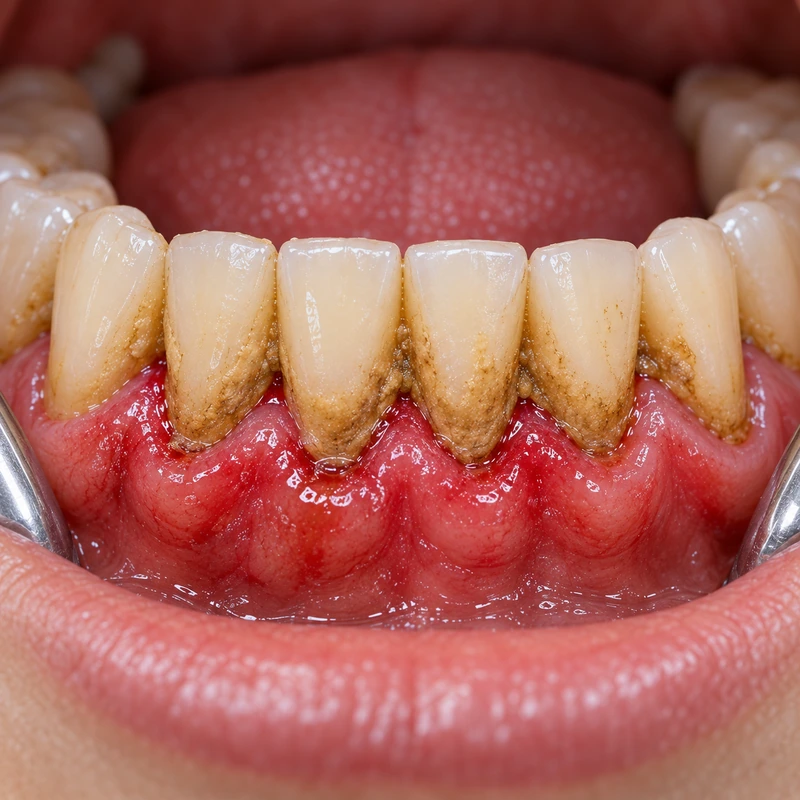
- Breath that goes stale again quicklyFresh after brushing and gone by mid-morning usually means bacteria somewhere a brush is not reaching.
- Gums that look as if they are shrinkingTeeth that appear longer than they used to, or dark triangles opening up between them near the gum.
- Sensitivity along the gum lineA cold drink catching at the necks of the teeth, where the gum meets them, rather than on the biting surface.
Options
What Is Actually Used
A cleaning is three or four different tools doing different parts of one job. Knowing which is which takes most of the apprehension out of the appointment.
 1
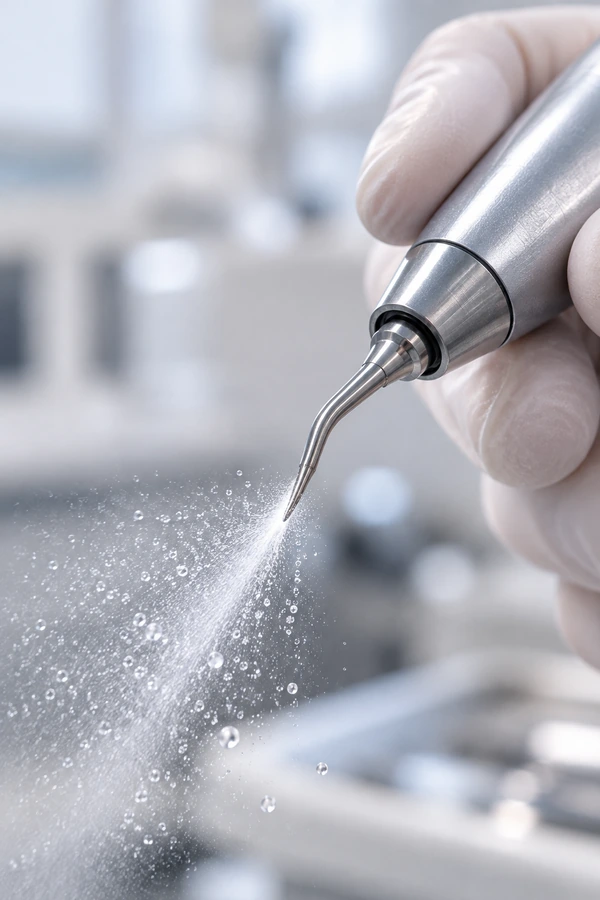
1The ultrasonic scaler
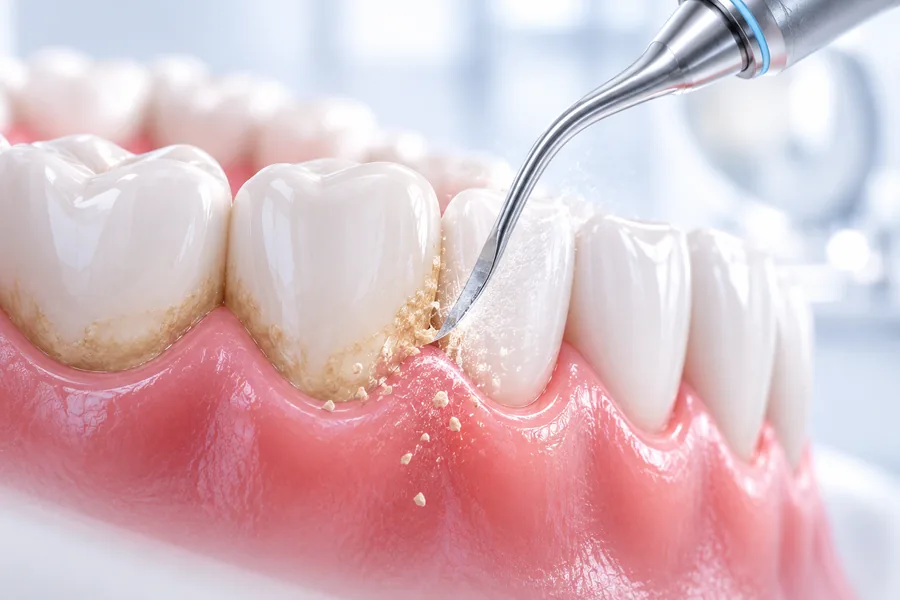
A fine tip vibrating faster than you can hear, with a water spray to keep it cool. The vibration breaks tartar loose rather than cutting it off, so it does not carve into the tooth. The noise and the water are most of what you notice, and it does the bulk of the work.
 2
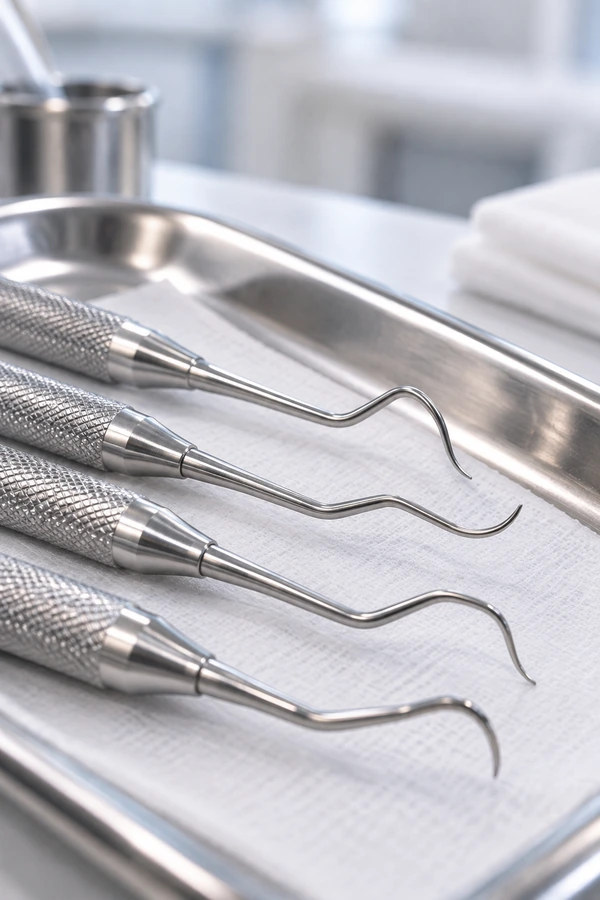
2Hand instruments
Fine curved instruments for the last of the deposit, particularly just inside the gum margin and between the teeth, where it is found by feel rather than by sight. Quieter, slower and more precise than the scaler, and the reason a cleaning is not finished the moment the buzzing stops.
 3
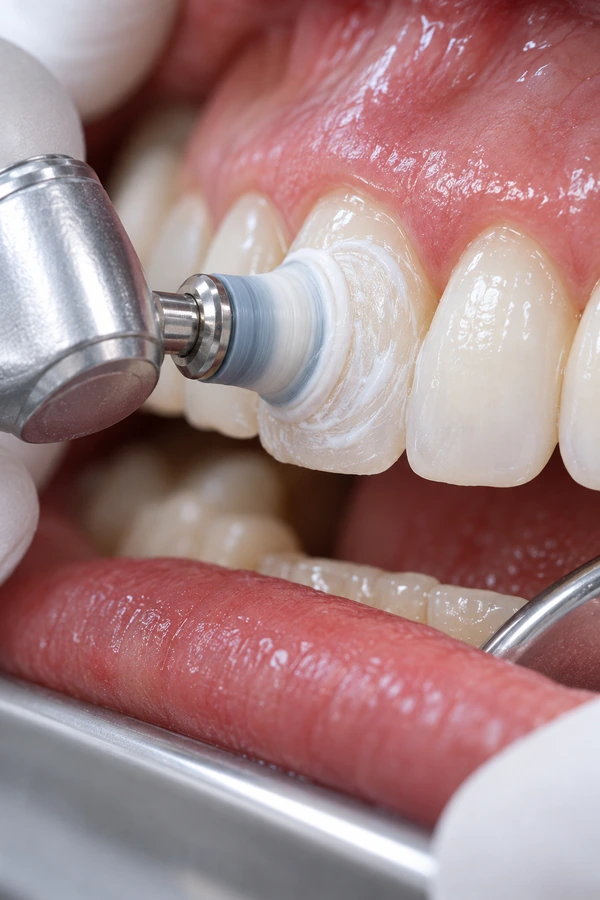
3Polishing
A soft rubber cup and a fine paste over every surface. It lifts the remaining surface stain and, more usefully, leaves the tooth smooth — plaque takes noticeably longer to settle on a polished surface than a roughened one.
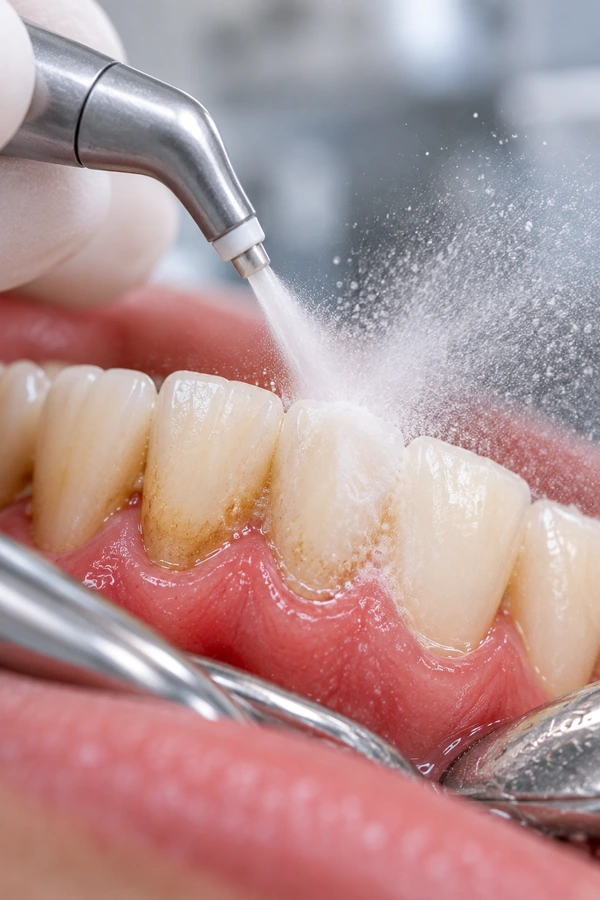 4
4Air polishing
A jet of fine powder and water for stubborn stain in grooves, between teeth and around braces. Quick and comfortable where it suits, though it is not for everyone, and it is used alongside scaling rather than instead of it.
How Does a Teeth Cleaning Appointment Work?
The part that decides everything else
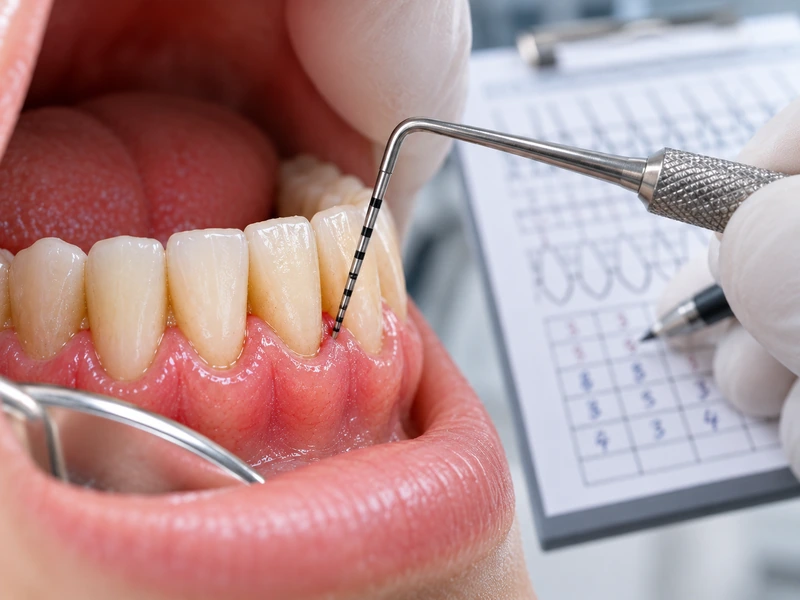
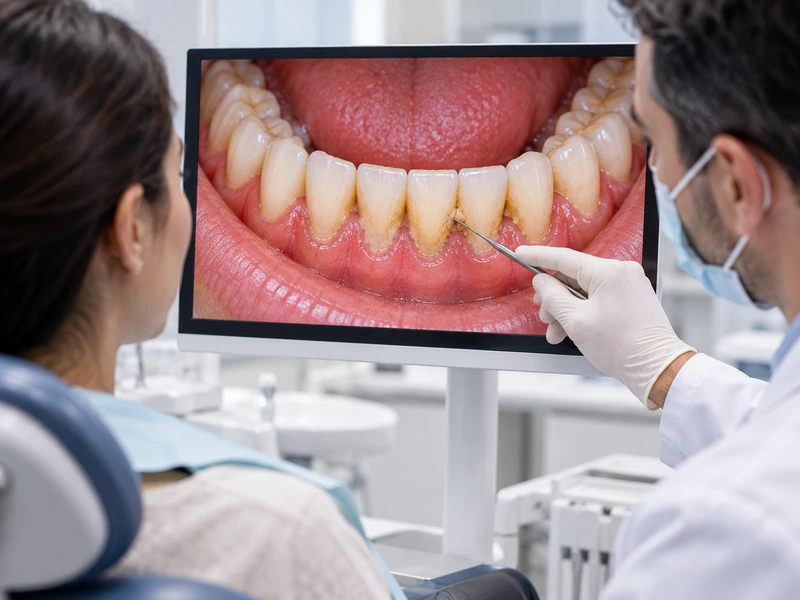
Before anything is removed, the gums are charted: a fine blunt probe is walked around each tooth and the depth of the cuff between gum and tooth is recorded, along with where it bleeds. Two or three millimetres is healthy; four and above means a pocket that a brush cannot clean. These numbers are what decide whether a routine cleaning is enough or whether you are being treated for gum disease — and they are the reason nobody can tell you which you need by looking at your teeth alone. X-rays are taken where the pockets suggest the bone should be checked.
Scaler first, then by hand
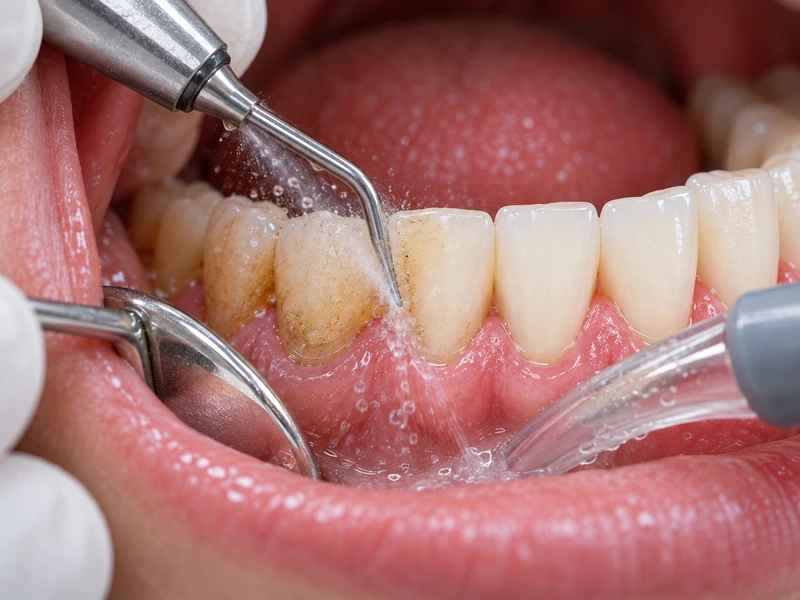
The ultrasonic scaler takes off the bulk, working over the visible surfaces and just inside the gum margin, with water spray and suction running throughout. Hand instruments then finish what the scaler cannot feel its way to — between the teeth, behind the lower front teeth, and inside the margin where the deposit is thin and hard. Anaesthetic is not usually needed above the gum, but it is available and worth asking for if the gums are sore or the deposit has been building a long time.
The last ten minutes are the useful ones
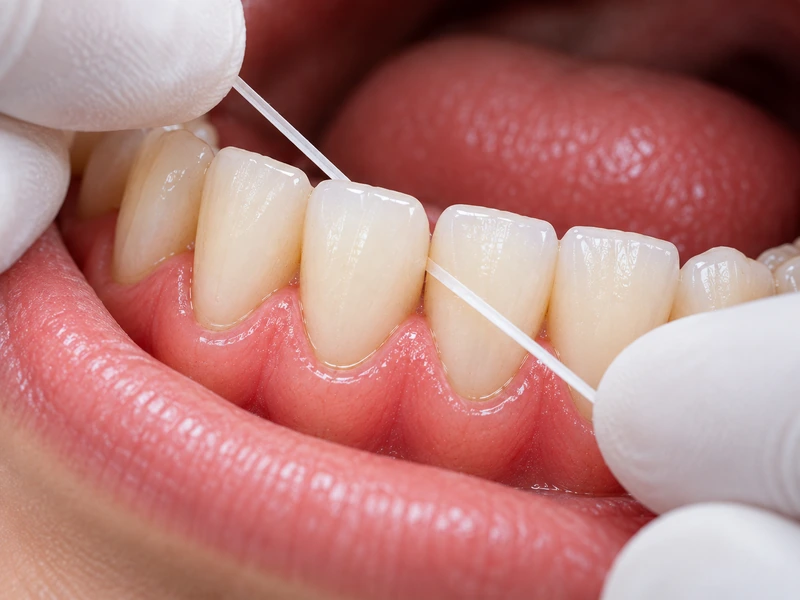
Everything is polished, floss is passed between every contact to check nothing is left, and fluoride varnish is sometimes painted on if the necks of the teeth are sensitive. Then the part that decides the next six months: being shown, on your own teeth, exactly where you are missing — usually the same two or three places every time. A cleaning removes what has built up. It does nothing at all about what is building it.
Recovery
The Few Days After
Almost every worry people have about cleanings comes from these first few days, and all four have a straightforward explanation.
- 1
Sensitivity for a few days
Root surfaces that were insulated under tartar meet cold air and cold water for the first time in years. It settles within a week or so, and a sensitive toothpaste over that period helps considerably.
- 2
Gaps that seem to have appeared
The tartar was filling those spaces. Removing it reveals gaps that were already there — nothing has been taken off the teeth. Where the gum was swollen it also shrinks back to its proper level once the inflammation goes, which shows more of the tooth than you were used to seeing.
- 3
Keep brushing the gums that bleed
Bleeding is inflammation, not injury, and avoiding the area is what keeps it inflamed. Brushed gently and thoroughly along that gum line, it usually stops bleeding within a fortnight — and when it does, that is the treatment having worked.
- 4
Clean between the teeth every day
A brush reaches three of the five surfaces on a tooth. Almost everything removed at a cleaning came from the two it does not reach, so floss or interdental brushes are what change the result at the next visit.
Which one you need
A Routine Cleaning vs a Deep Clean
These are two different appointments for two different things, and which one you need is decided by measurement rather than by opinion.
A routine cleaning deals with deposit above the gum and just inside the margin. It takes half an hour or so, rarely needs anaesthetic, and is what most people have every six months. The gums it is done on are healthy or mildly inflamed, and they recover in a fortnight.
A deep clean — scaling and root planing — is for pockets that have already formed, usually four millimetres and deeper, where deposit sits on the root surface below the gum. The root is cleaned and smoothed by feel, the area is numbed, and it is often split across visits so one part of the mouth is done at a time. It is treatment for a disease that has already begun, not a more thorough version of the same appointment.
This is worth being clear about because the two are sometimes presented as a choice, and they are not. If you are told you need a deep clean, ask what your pocket depths were and where. A clinic that has measured can tell you tooth by tooth. If nobody measured, that is the question to ask before anything else.
What Happens at Your First Cleaning Appointment
- 1ExaminationTeeth, gums and any existing work looked over before an instrument touches anything.
- 2The measurementsPocket depths probed around every tooth and bleeding recorded — the numbers behind the plan.
- 3X-rays if neededTaken where pockets are deep enough that the bone around the roots should be checked.
- 4PlanWhether one visit covers it, whether it needs splitting, and how often you should come back.
- 5AftercareWhat to expect for a few days, and the two habits that change the next appointment.
Why us
Why Choose Us for Teeth Cleaning
- A periodontist, Dr. A. Rithesh Kumar (MDS), a gum specialist, is part of our team.
- Your gums are checked as well as cleaned, and you are told if anything needs more than a clean.
- Instruments sterilised and sealed for every patient, under a strict protocol.
- Open every day, 9:30 AM to 9 PM, at two branches in Gajularamaram: Ushodaya Colony and Mallareddy Nagar.
Tooth Pain & Repair
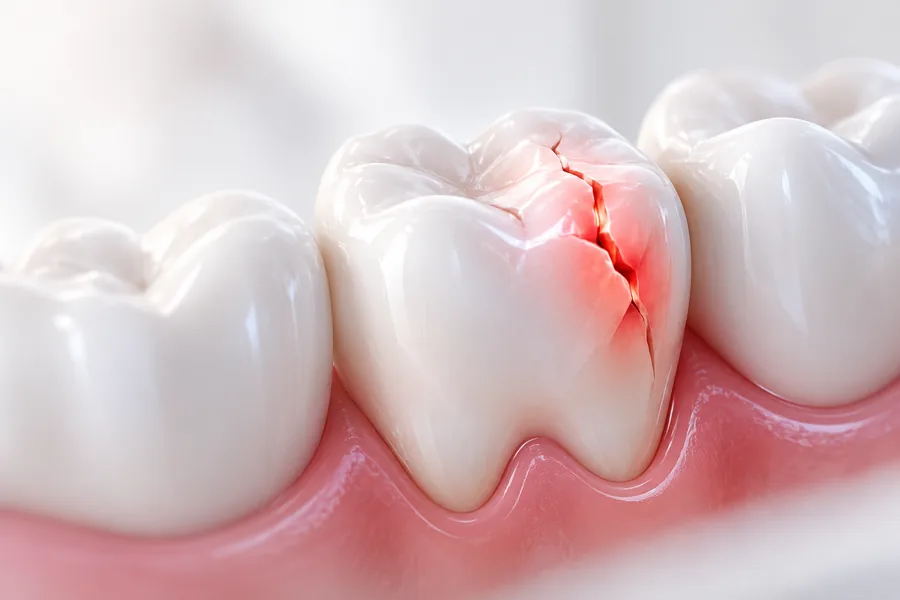
Relief from toothache and repair for decayed, cracked or broken teeth, from fillings and root canals to crowns.
- Root Canal Treatment
- Tooth Sensitivity Treatment
- Cavity Treatment
- Tooth Fillings
- Dental Crowns & Caps
- Wisdom Tooth Removal
- Emergency Dental Care
 learn more
Missing Teeth
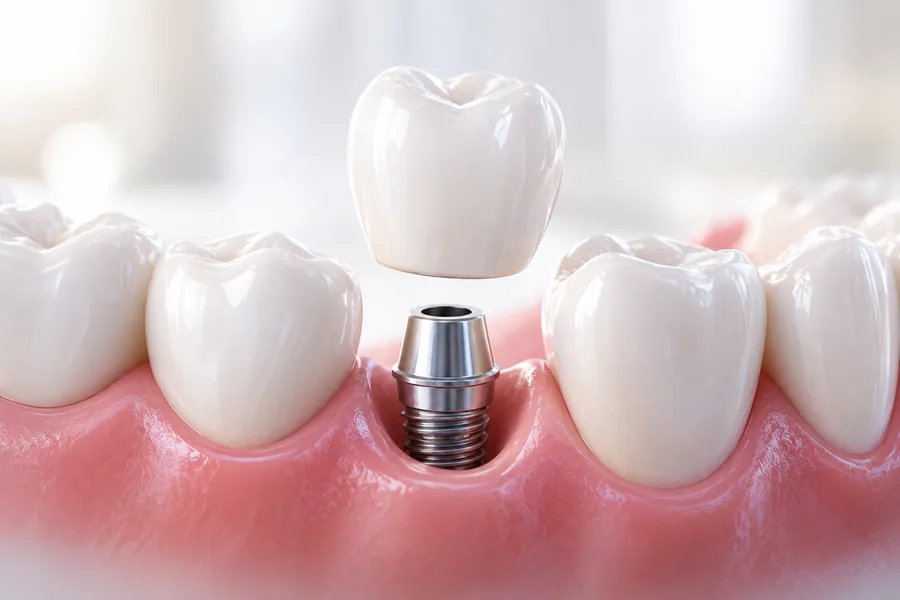
Implants, bridges and dentures to replace missing teeth, planned by our implantologist and prosthodontist.
 learn more
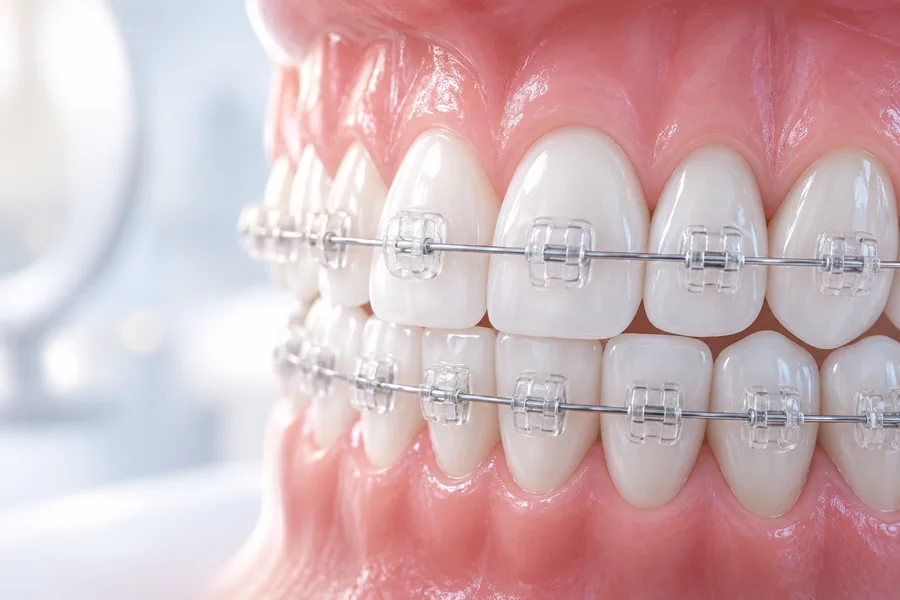
Straightening
Braces and Illusion clear aligners for crooked or gapped teeth, planned by our orthodontist for children and adults.
 learn more
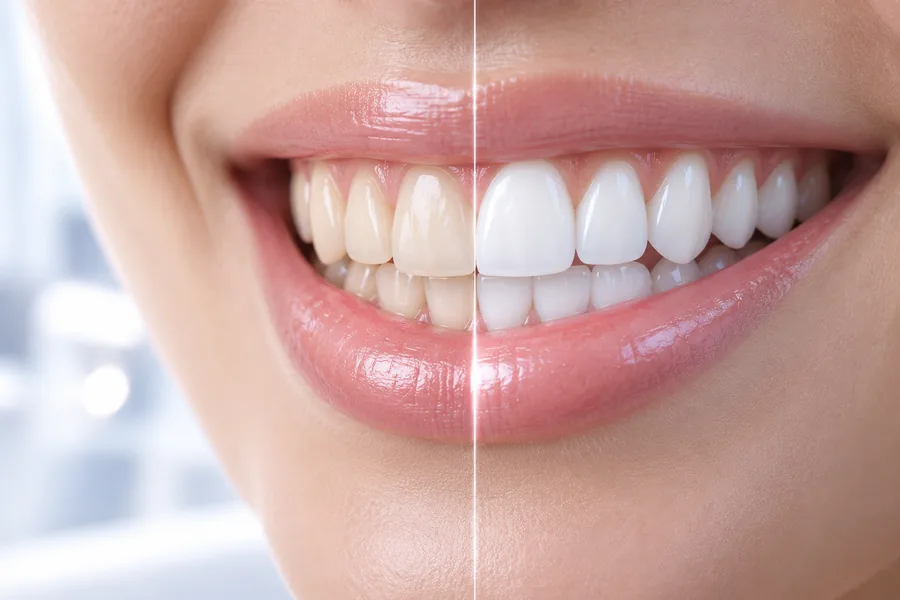
Cosmetic
Whitening, veneers, bonding and smile makeovers to improve the colour and shape of your smile, led by our cosmetic dentist.
 learn more
Gums & Cleaning
Cleaning, gum treatment and laser care for bleeding gums and bad breath, from our periodontist.
 learn more
Kids & Family
Gentle check-ups, fluoride and sealants for children with our pedodontist, and routine check-ups for the whole family.






Verified Google Reviews
Excellent
Based on 238 reviews
Harsha Vardhini
2026 · Google
I highly recommend Dr. Roja! She is incredibly kind, patient, and caring. I’ve had a root canal and multiple fillings done by her, and every procedure was completely painless. She explains everything clearly, makes you feel comfortable, and ensures you’re at ease throughout the treatment. Her gentle approach and professionalism make every visit a great experience. If you’re looking for a skilled dentist who truly cares about her patients, Dr. Roja is an excellent choice!
akk reddy
2026 · Google
I had a great experience with Dr. Roja madam. She is a very good doctor and extremely patient-friendly. I was suffering from a tooth cavity, and she suggested a root canal treatment. After starting the treatment, my tooth pain completely disappeared. The cap fitting was also very comfortable and flexible. Overall, I am very satisfied with the treatment and care provided. Thank you so much
Mamidisetti Siva
2026 · Google
I had a very good experience at this dental clinic. The treatment was excellent, and the staff were very friendly and supportive. Even after the treatment, they took great care by calling me, checking on my recovery, and asking me to come for follow-up visits. I really appreciate their concern and professionalism. Highly recommended.
BHARATH GUNDEBOINA
2026 · Google
Had a great experience with teeth replacement treatment. Dr. Roja mom explained everything clearly and the procedure was smooth and painless. The results look very natural and I’m extremely happy with my new smile. Highly recommended..thank you….
venkannababuk venki
2026 · Google
Madam provides very good dental treatment. She explains everything clearly and patiently whenever I have any doubts. I am very satisfied with the treatment and the way she cares for patients. Thank you, SR Dental.
Near you
Teeth Cleaning & Polishing Near You in Gajularamaram
If you have been searching for teeth cleaning near you, the appointment worth booking is the one where somebody measures your gums rather than simply scaling what can be seen. The measurements take five minutes and they are the difference between a cleaning that is enough and one that quietly is not.
It is also worth saying plainly that a long gap is not a reason to stay away. Nobody in a dental chair is surprised by tartar, and the appointment after a few years away is the one that changes the most.
77020 95262Gajularamaram
Contact
Reach out to schedule your next dental visit
Whether you have a question, need expert advice, or are ready to book your next appointment, our team is here to help.
Reach out to us on
- Phone Number 77020 95262
- Email address srdentalcare48@gmail.com
- Location Hospital Phase 2, Plot No:100/N, behind UMCC Road, Chandragiri Nagar, Ushodaya Colony, Indira Nagar, Gajularamaram, Hyderabad, Telangana, 500055
Working Hours
- Mon – Sun:
- 9:30 AM – 9:00 PM
FAQs
Frequently asked questions about teeth cleaning & polishing
Still have a dental question?
Send us a message and our dental team will help.
Does scaling damage the enamel or loosen the teeth?
No. An ultrasonic scaler vibrates tartar loose rather than cutting, and tartar is far weaker than enamel, so it gives way first. The feeling that teeth have loosened comes from something else: severely inflamed gums are swollen and firm against the teeth, and once that inflammation settles, gums shrink back to their proper level. What you are feeling is the tooth without the swelling around it, and that is the healthier state, not the damaged one. Teeth that are genuinely loose were loose because of bone lost to gum disease, which is precisely what cleaning is meant to stop.
Will there be gaps between my teeth afterwards?
Any gap you notice was already there, filled with tartar. Removing the deposit does not create space — it uncovers it. It can feel strange for a week or two, and it is a strong argument for not leaving cleanings for years at a time, because the longer the gap has been packed, the more obvious it is when it is finally clear.
Does teeth cleaning hurt?
Above the gum it usually does not — most people describe it as cold water, vibration and a good deal of noise. It is more uncomfortable where gums are already inflamed, and where deposit sits below the gum line. Anaesthetic is available for either and there is no reason to sit through something unpleasant; say so early rather than halfway through.
Will my teeth look whiter afterwards?
They will look cleaner, and often noticeably lighter, because stain and deposit come away. But cleaning does not change the natural colour of the tooth underneath — it only removes what has settled on top. If the teeth are still darker than you would like once everything is clean, that is a whitening question rather than a cleaning one.
How often should I have a cleaning?
Six months suits most people, but it is a starting point rather than a rule. Smokers, people with diabetes, anyone with a history of gum disease, and those who simply build tartar quickly often do better at three or four months. Others with healthy gums and good habits genuinely need it less often. The interval should be set from what your gums are doing, and revisited when that changes.
Can I just brush harder instead?
Tartar is calcified and bonded to the tooth — brushing cannot shift it at any pressure, and trying does real harm. Hard brushing with a stiff brush wears notches into the necks of the teeth and pushes the gums back, and both of those are permanent. Soft brush, gentle pressure, twice a day, and something between the teeth daily will keep new plaque from hardening. Once it has hardened, it is an instrument or nothing.