

Dental Check-up & X-ray in Gajularamaram
- 14+Years of experience
- 50,000+Patients treated
- 4.9Google rating
- 20–30 minutes
- usually every six months
- Mon – Sun: 9:30 AM – 9:00 PM
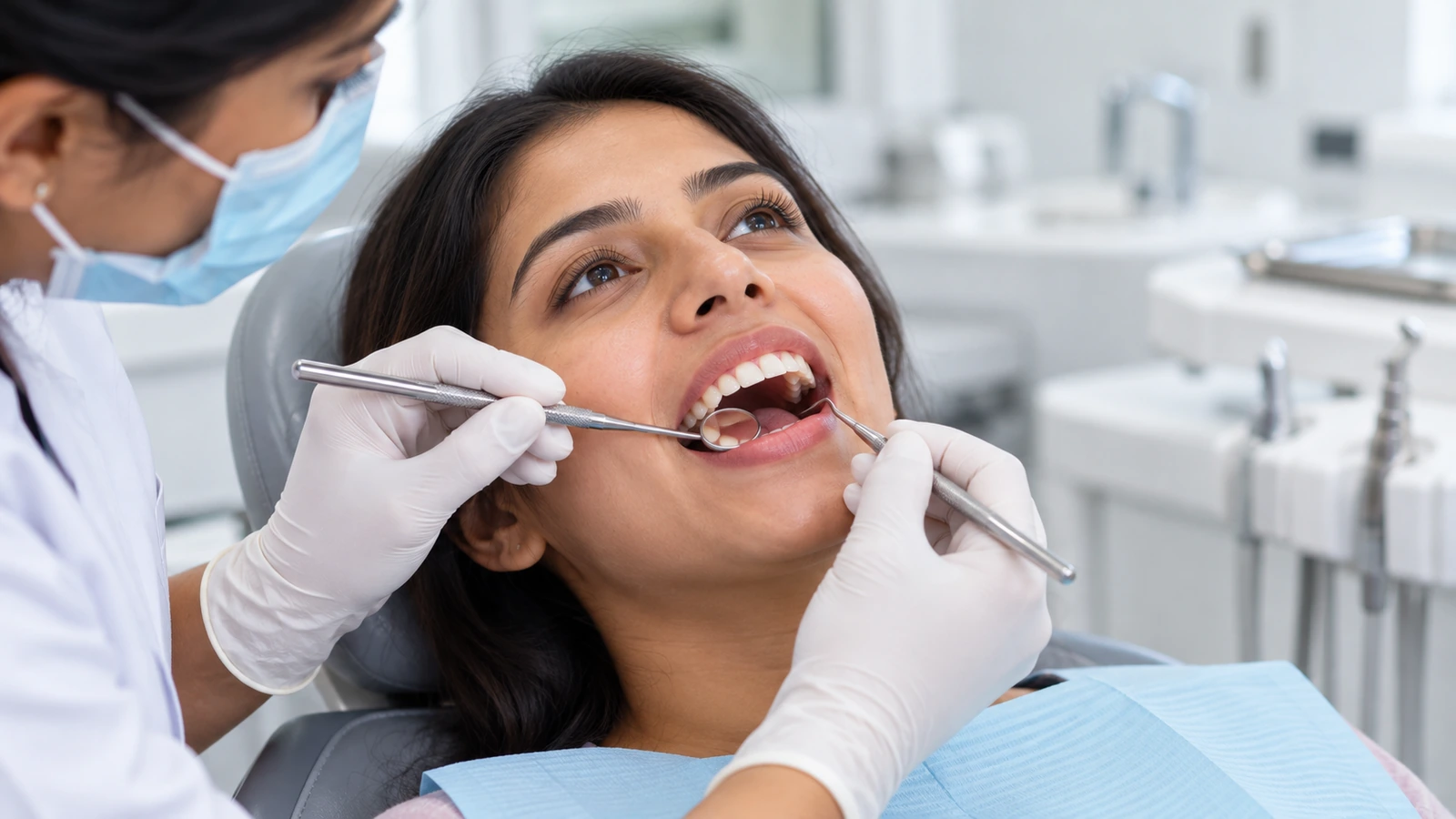
What Happens at a Dental Check-up?
A dental check-up is an examination of the whole mouth, not a look at the teeth. In twenty minutes or so, four separate things are being checked: every tooth surface and the edges of every filling and crown already there, the gums and how firmly they sit against each tooth, the soft tissues — tongue, cheeks, palate, the floor of the mouth and the glands in the neck — and the bite, including what is wearing against what.
The soft-tissue part is the one almost nobody knows about. It takes about two minutes, involves no equipment, and has nothing to do with teeth at all: it is a check of the lining of the mouth for anything that has changed. It matters especially for anyone who uses tobacco, paan or gutkha, and it is the reason a check-up remains worth having even for someone who has no natural teeth left.
The rest of the appointment is mostly a search for things that do not hurt yet. Decay is painless until it reaches the nerve; gum disease is painless until teeth move. Pain is a late symptom of both, which is why waiting for one is how small problems become large ones — and why the most useful check-up is usually the one where nothing is found.
The Examination, and the X-rays
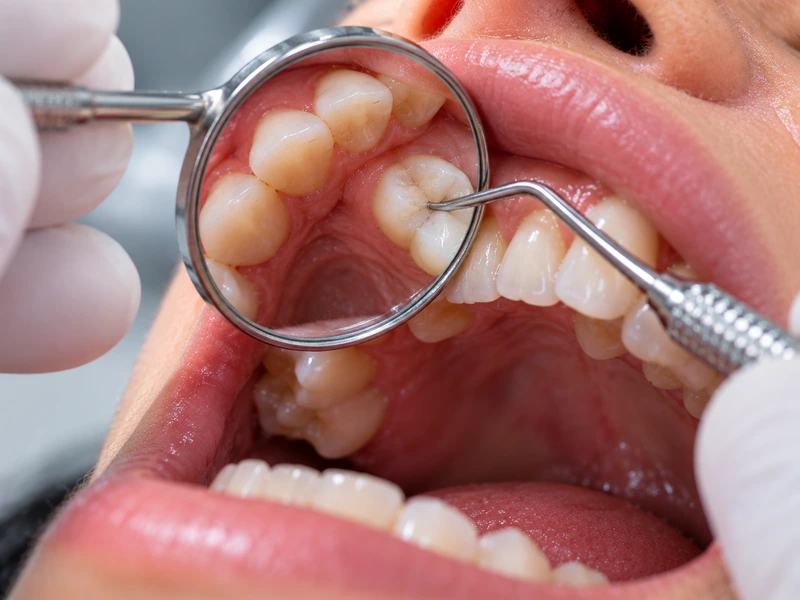
The Examination
Twenty minutes, and considerably more than a look at the teeth. Every tooth surface that can be seen, the gums and how they sit against each tooth, every existing filling and crown, how the teeth meet and what they are wearing against — and the soft tissues, which is the part of the appointment with nothing to do with teeth at all. Most of a check-up is looking for things that do not hurt yet.
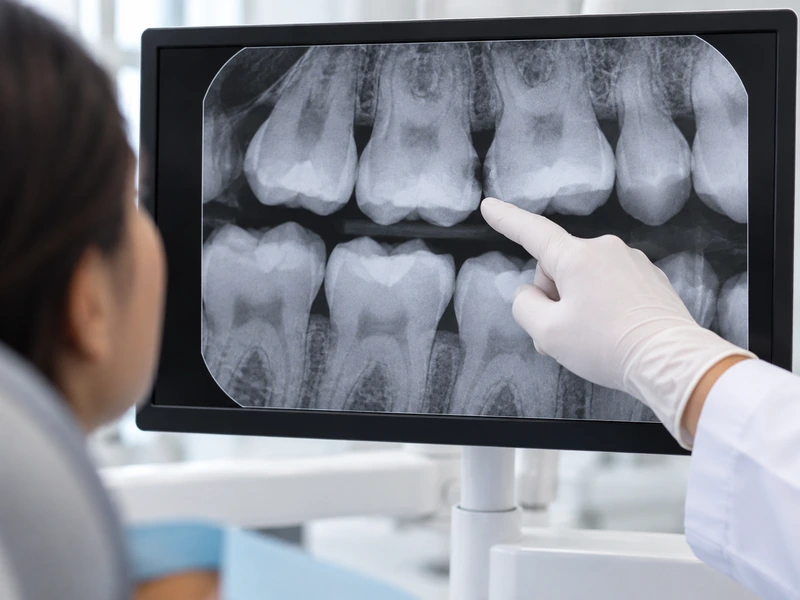
The X-rays, Where There Is a Reason
Not automatic, and not at every visit. X-rays are taken to see what an examination cannot — between the back teeth where they touch, the bone level around the roots, under existing fillings, and the tips of the roots themselves. The interval is set by your own risk rather than by the calendar, which for some people is a year and for others three.
When to Book One
The useful answer is before anything is wrong, which is the hardest version of this advice to act on.
- It has been more than a yearThe commonest reason people come, and a perfectly good one. A long gap changes nothing about how you will be treated.
- Nothing hurts at allWhich is exactly when a check-up is worth most. Decay and gum disease are both painless until they are not small any more.
- Something catches when you flossFloss that shreds or snags in the same place usually means a broken edge, an overhanging filling, or decay between the teeth.
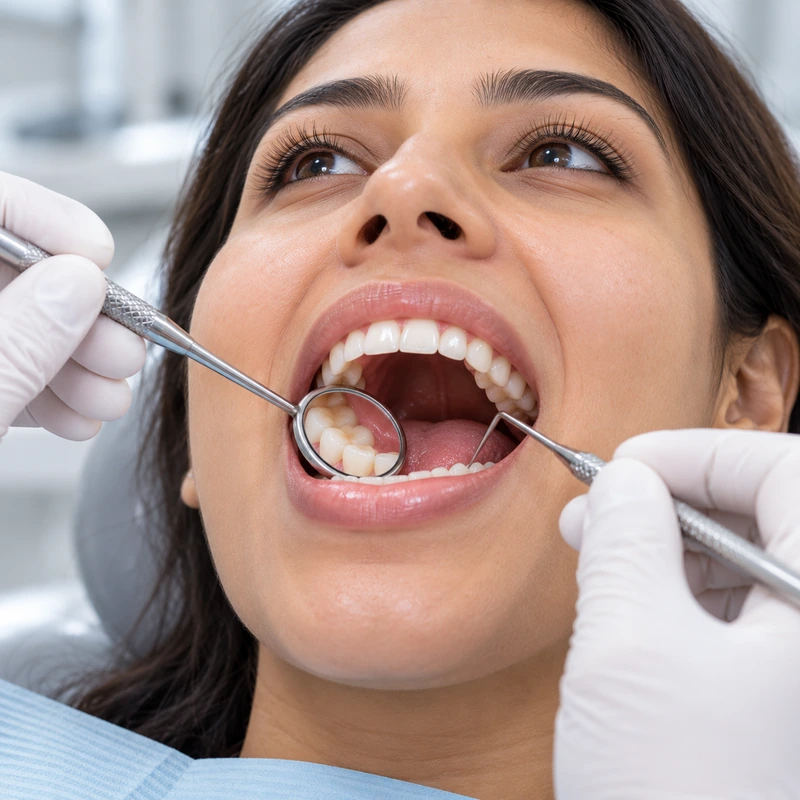
- Gums that bleed sometimesEven occasionally, even only in one place. Bleeding is inflammation, and at this stage it is completely reversible.
- You use tobacco, paan or gutkhaThe soft-tissue examination matters far more in this case, and it is the part of the appointment worth coming for on its own.
- A sore or patch that has not healedAny ulcer, white patch or red patch still there after three weeks should be looked at, whether or not it hurts.
Options
What a Check-up Covers
Four separate examinations that happen inside the same twenty minutes. Most people know about the first one.
 1
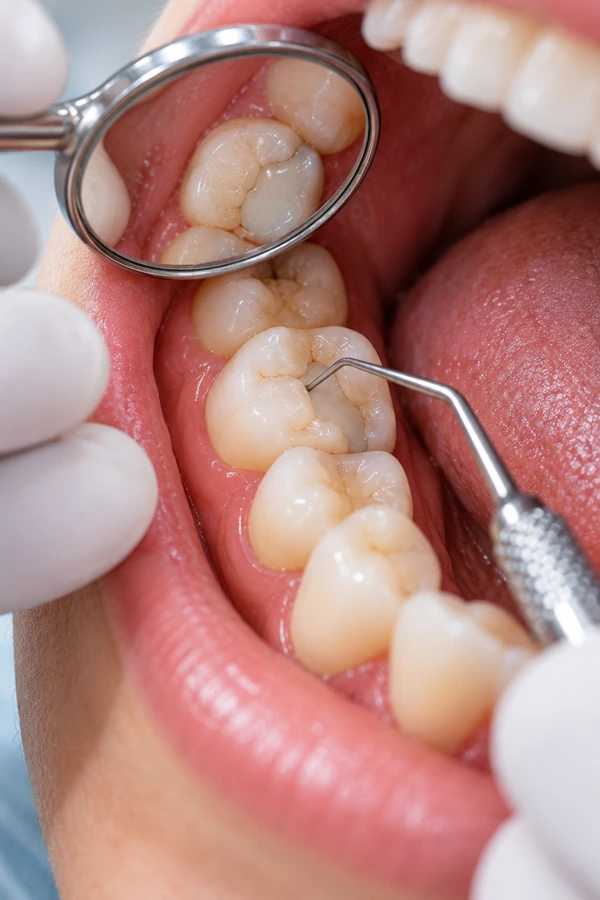
1The teeth
Every visible surface checked for decay, cracks and wear, and every existing filling and crown checked at its margins — because a failing edge on old work is where decay restarts, quietly, underneath something that looks fine.
 2
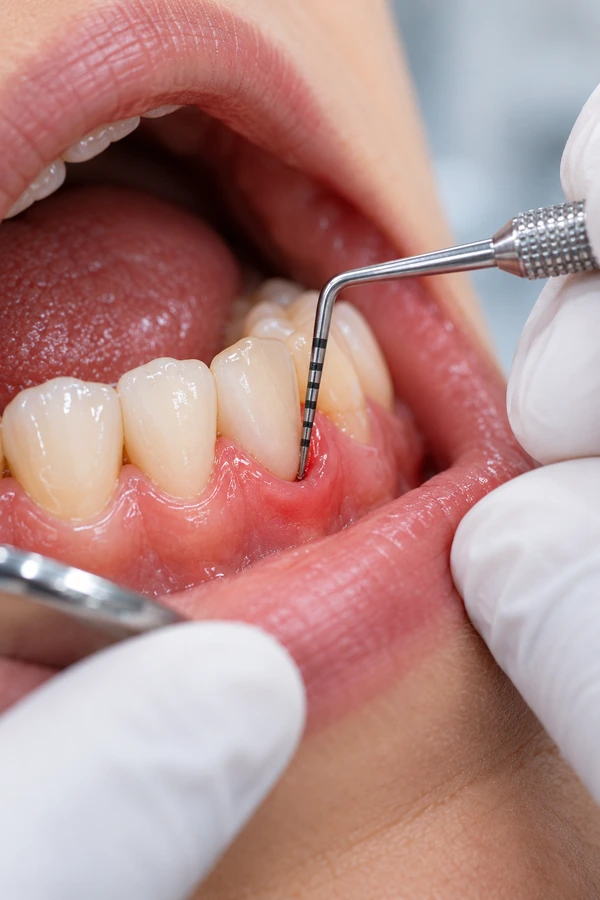
2The gums
Bleeding, swelling, recession, and the depth of the cuff between gum and tooth. A screening measurement at a check-up decides whether a full chart is needed, and it is how gum disease gets caught while it is still only bleeding.
 3
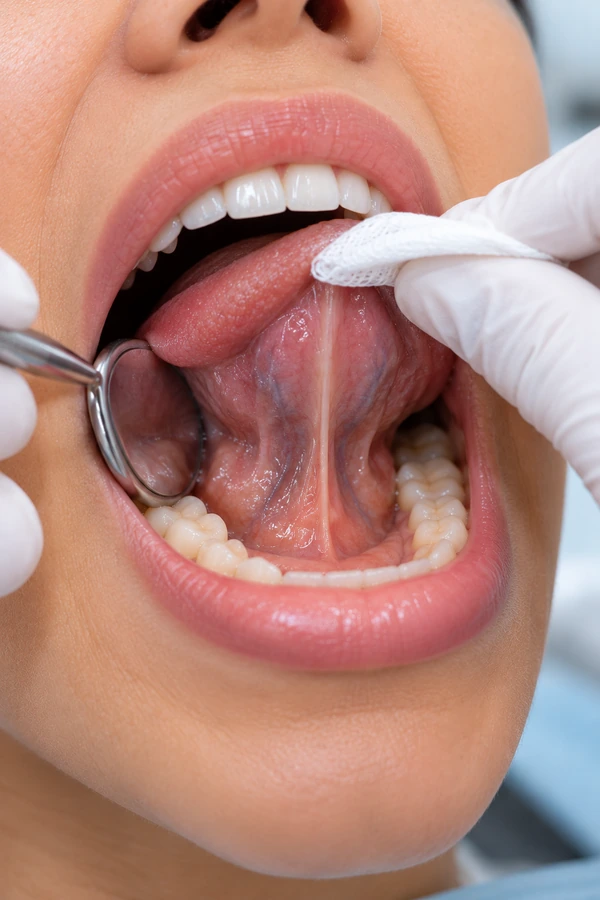
3The soft tissues
The tongue and underneath it, the floor of the mouth, the cheeks, the palate, the lips and the glands in the neck. This takes about two minutes, uses no equipment and has nothing to do with teeth: it is a check for changes in the lining of the mouth, and it is the reason a check-up is worth having even for somebody with no teeth left.
 4
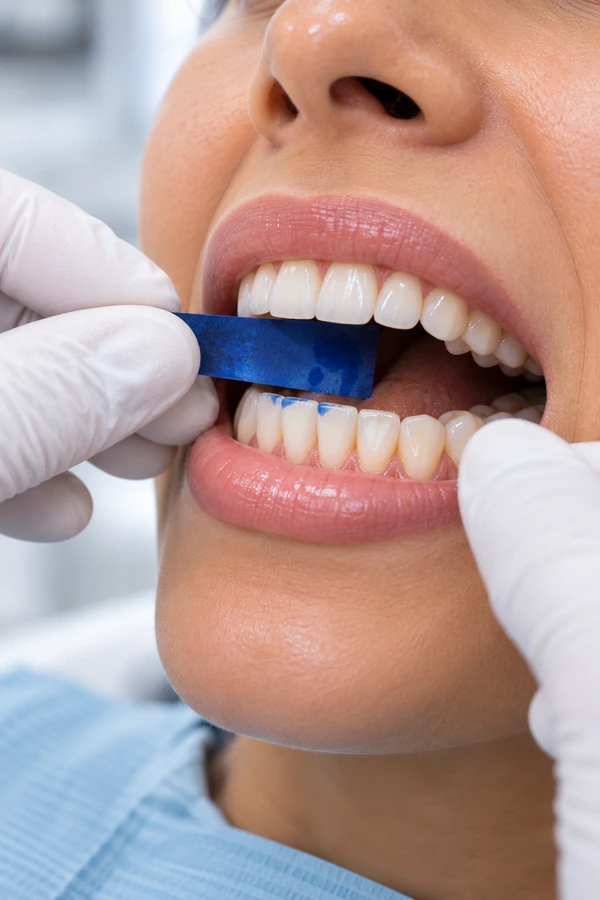
4The bite and the jaw
How the teeth meet, which surfaces are wearing flat, whether you are grinding, and whether the jaw joint clicks or is tender. Wear is slow enough that nobody notices it happening, and easiest to do something about long before a tooth splits.
How Does a Dental Check-up Work?
What has changed since last time
A few minutes of questions that shape everything after them: anything that has been hurting or feels different, any new medicines — a great many cause a dry mouth, which changes decay risk substantially — and anything medical that is new, including diabetes, pregnancy or a change in smoking. This is also where you say if you have had a bad experience somewhere, or if you dislike a particular part of it. It is far easier to work around something that is known at the start than discovered halfway through.

Teeth, gums, soft tissues, bite
Usually in that order, with findings called out as they go — the shorthand you hear being read to the nurse is a surface-by-surface record of what is there, which is what makes next year's comparison meaningful. The soft-tissue check comes with it: tongue lifted and looked under, cheeks and palate, and the glands in the neck felt from behind. If a gum screening shows anything, a full chart follows at that appointment or the next one.

What is needed now, and what is watched
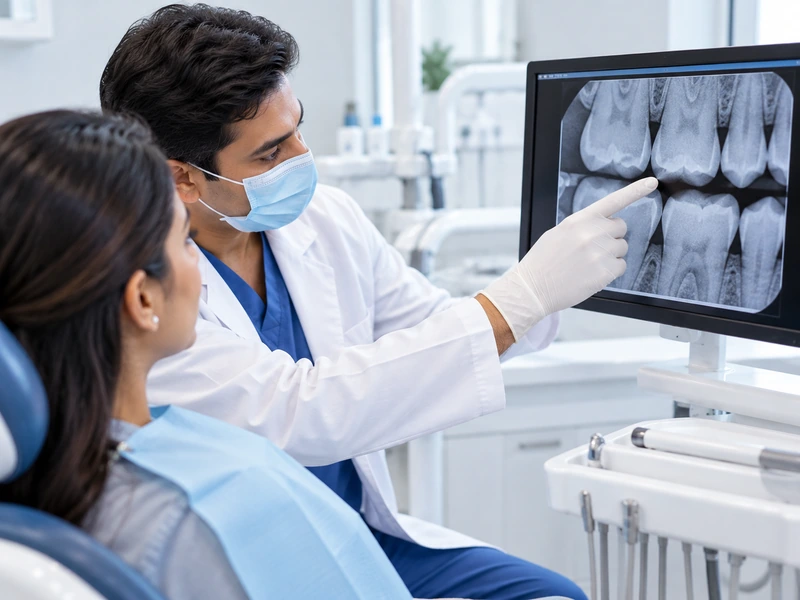
X-rays are taken if there is a reason to look where the eye cannot, and are explained on the screen rather than described. Then the plan, in order of urgency: what needs treating now, what is early enough to watch and re-check, and what is simply a feature of your mouth to keep an eye on. You should leave knowing all three, along with when to come back — an interval set from your own risk rather than a default six months applied to everybody.
Recovery
Between Check-ups
What happens in the chair takes twenty minutes twice a year. Everything else happens in the other three hundred and sixty-four days.
- 1
Pain is a late sign, not an early one
Decay is painless until it reaches the nerve, and gum disease is painless until teeth loosen. Waiting for a symptom means waiting past the point where the simplest treatment would have worked.
- 2
Two minutes, twice, and something between the teeth
Brushing covers three of the five surfaces on every tooth. Floss or interdental brushes cover the other two, and those two are where most of what gets found at a check-up begins.
- 3
Say what has changed
New medicines, a new diagnosis, a pregnancy, more or less smoking. All of them change what your mouth is likely to do next, and all of them change how often you should be seen.
- 4
Keep the interval you were given
Six months is a default rather than a rule. If you were told three months, that number came from something specific; if you were told a year, that is equally deliberate.
Why both
What an X-ray Shows vs What a Look Can Show
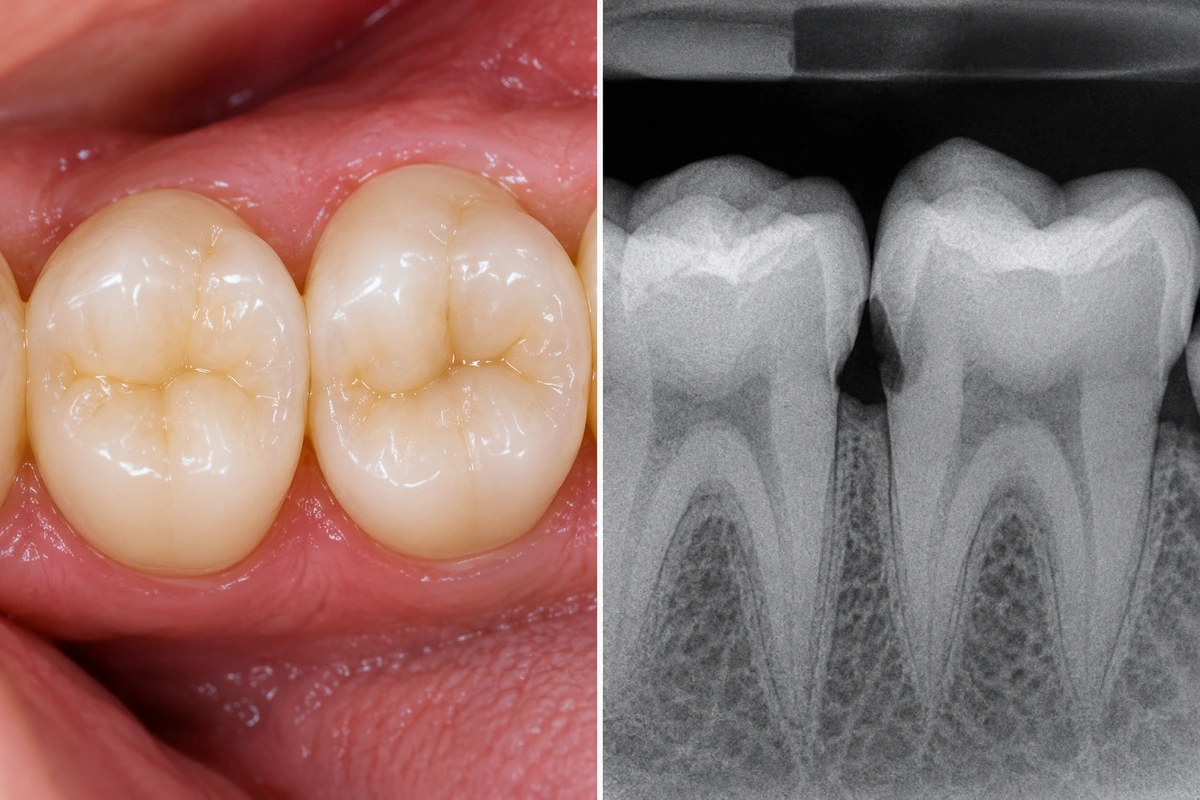
An examination without X-rays sees a good deal of each tooth, but not all of it — and the parts it cannot see are where a fair share of the trouble starts.
What the eye can see is more than people assume: every biting surface, the outer and inner faces of every tooth, the edges of every existing filling and crown, cracks, wear, the state of the gums, and the whole lining of the mouth. Nothing replaces it, and the soft-tissue part of it cannot be done by any machine.
What only an X-ray shows is the rest. Decay between two back teeth where they touch is invisible from any angle until it has grown large enough to undermine the surface, by which point it is usually well into the dentine. Bone level around the roots — the thing that says whether gum disease has cost you support — cannot be seen at all. Nor can infection at the tip of a root, decay starting underneath an existing filling, an unerupted or impacted tooth, or a cyst forming quietly in the bone.
None of which is an argument for taking X-rays at every visit. They are taken when there is a reason, at an interval set by your own risk, and a modern digital dental X-ray is a very small dose — comparable with a day or two of ordinary background radiation. The most useful thing about them is often not the picture itself but the comparison: today's film beside one from three years ago shows change that neither shows alone. That is a good argument for staying with one clinic, or for taking your records with you when you move.
What Happens at Your First Visit
- 1HistoryWhat has changed, what has been hurting, and every medicine you are taking.
- 2The teethSurface by surface, including the margins of fillings and crowns already there.
- 3Gums and soft tissuesA gum screening, then the tongue, cheeks, palate, floor of the mouth and neck.
- 4X-rays if indicatedOnly where there is something an examination cannot see, and shown to you on screen.
- 5Plan and intervalWhat is needed now, what is watched, and when you should come back.
Why us
Why Choose Us for Your Check-up
- Check-ups by our dentists, led by Dr. Sangoju Roja Rani, with specialists on the same team if anything needs more.
- An X-ray only when it is needed, with the findings explained to you.
- Instruments sterilised and sealed for every patient, under a strict protocol.
- Open every day, 9:30 AM to 9 PM, at two branches in Gajularamaram: Ushodaya Colony and Mallareddy Nagar.

Tooth Pain & Repair
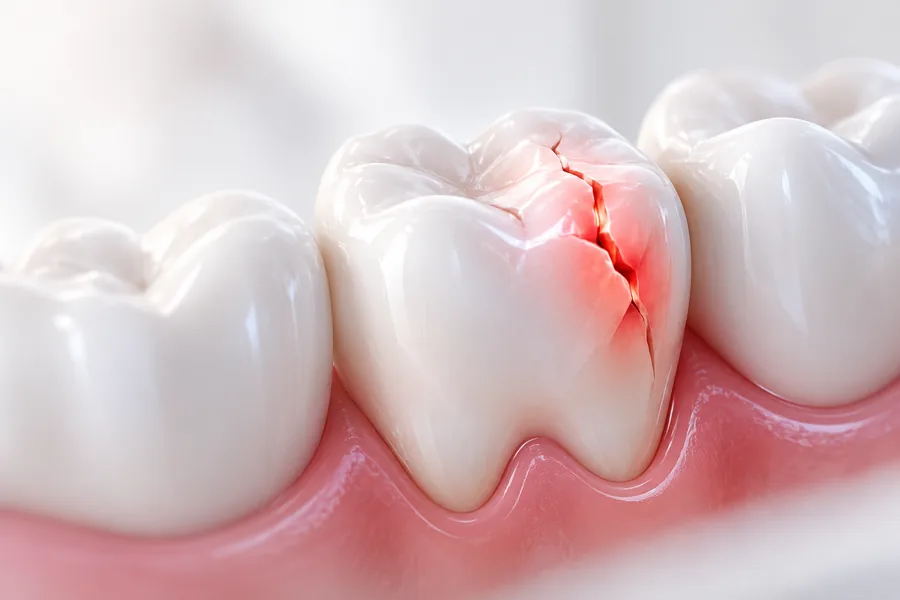
Relief from toothache and repair for decayed, cracked or broken teeth, from fillings and root canals to crowns.
- Root Canal Treatment
- Tooth Sensitivity Treatment
- Cavity Treatment
- Tooth Fillings
- Dental Crowns & Caps
- Wisdom Tooth Removal
- Emergency Dental Care
 learn more
Missing Teeth
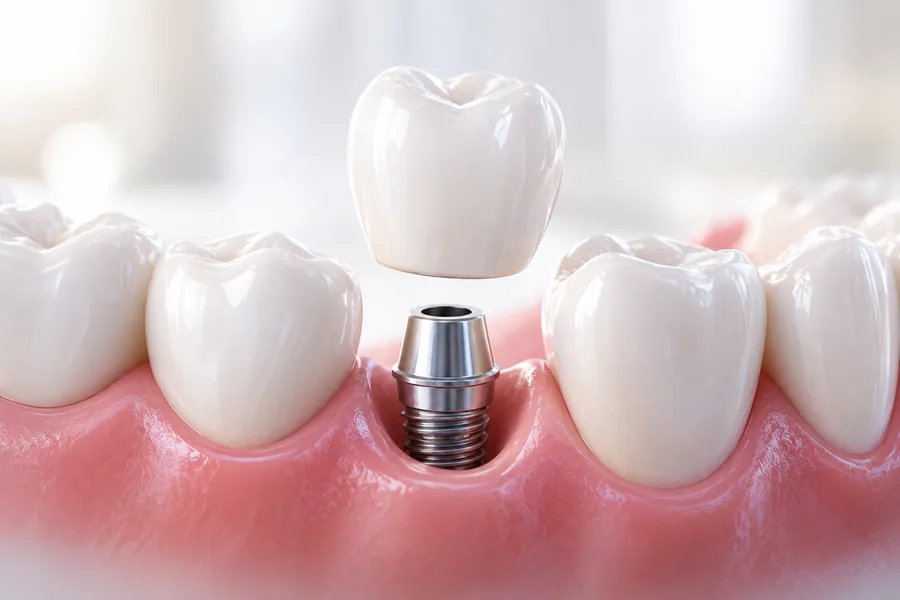
Implants, bridges and dentures to replace missing teeth, planned by our implantologist and prosthodontist.
 learn more
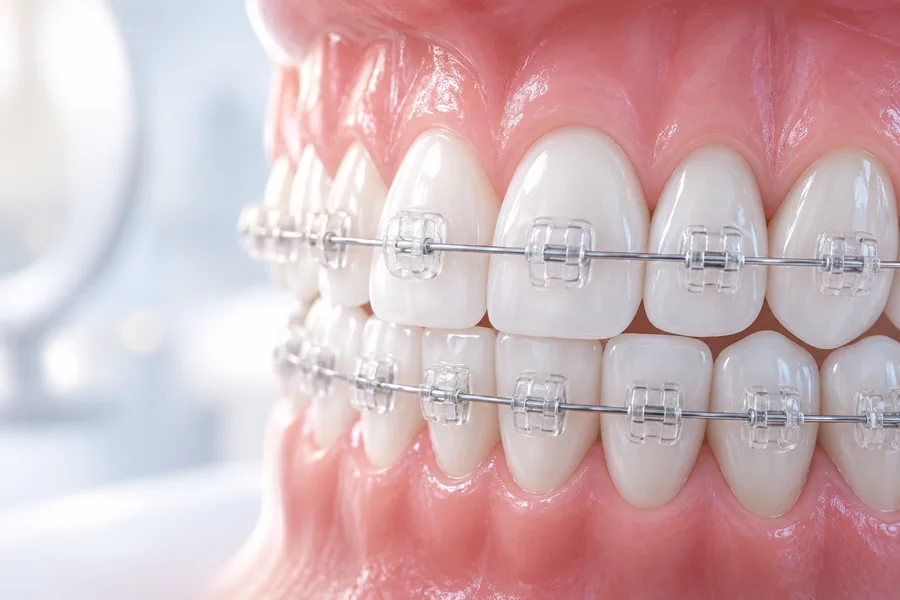
Straightening
Braces and Illusion clear aligners for crooked or gapped teeth, planned by our orthodontist for children and adults.
 learn more
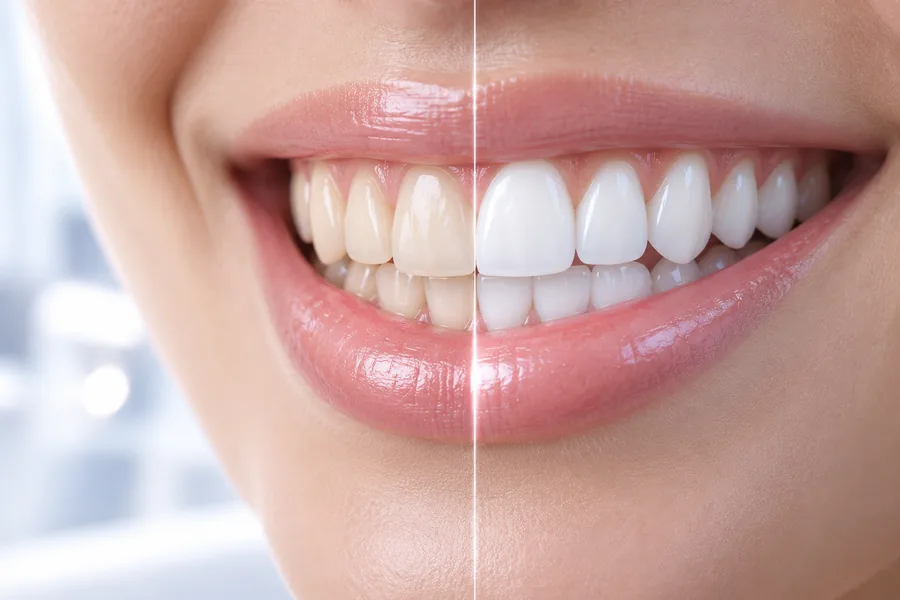
Cosmetic
Whitening, veneers, bonding and smile makeovers to improve the colour and shape of your smile, led by our cosmetic dentist.
 learn more
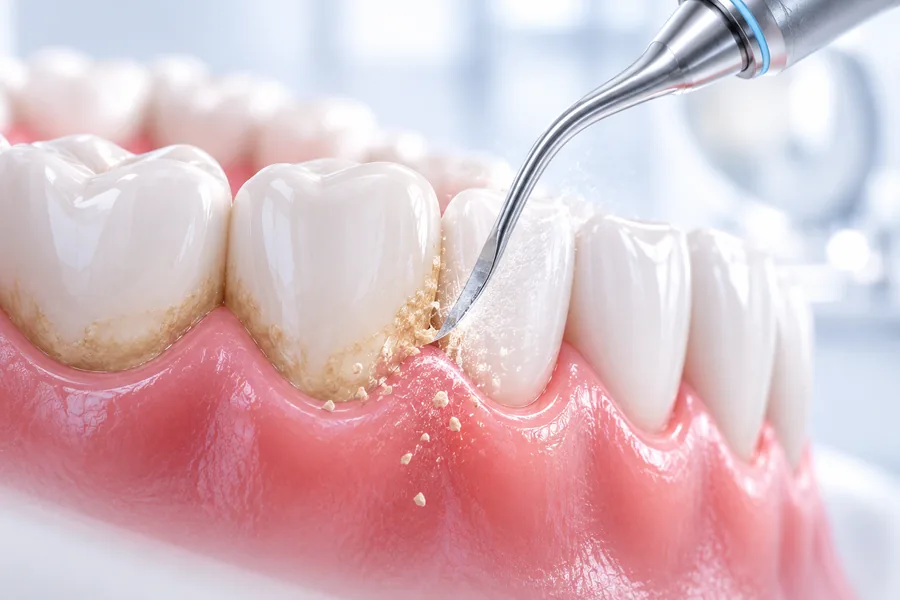
Gums & Cleaning
Cleaning, gum treatment and laser care for bleeding gums and bad breath, from our periodontist.
 learn more
Kids & Family
Gentle check-ups, fluoride and sealants for children with our pedodontist, and routine check-ups for the whole family.






Verified Google Reviews
Excellent
Based on 238 reviews
Harsha Vardhini
2026 · Google
I highly recommend Dr. Roja! She is incredibly kind, patient, and caring. I’ve had a root canal and multiple fillings done by her, and every procedure was completely painless. She explains everything clearly, makes you feel comfortable, and ensures you’re at ease throughout the treatment. Her gentle approach and professionalism make every visit a great experience. If you’re looking for a skilled dentist who truly cares about her patients, Dr. Roja is an excellent choice!
akk reddy
2026 · Google
I had a great experience with Dr. Roja madam. She is a very good doctor and extremely patient-friendly. I was suffering from a tooth cavity, and she suggested a root canal treatment. After starting the treatment, my tooth pain completely disappeared. The cap fitting was also very comfortable and flexible. Overall, I am very satisfied with the treatment and care provided. Thank you so much
Mamidisetti Siva
2026 · Google
I had a very good experience at this dental clinic. The treatment was excellent, and the staff were very friendly and supportive. Even after the treatment, they took great care by calling me, checking on my recovery, and asking me to come for follow-up visits. I really appreciate their concern and professionalism. Highly recommended.
BHARATH GUNDEBOINA
2026 · Google
Had a great experience with teeth replacement treatment. Dr. Roja mom explained everything clearly and the procedure was smooth and painless. The results look very natural and I’m extremely happy with my new smile. Highly recommended..thank you….
venkannababuk venki
2026 · Google
Madam provides very good dental treatment. She explains everything clearly and patiently whenever I have any doubts. I am very satisfied with the treatment and the way she cares for patients. Thank you, SR Dental.
Near you
Routine Check-up & X-ray Near You in Gajularamaram
If you have been searching for a dentist near you for a routine check-up, the thing worth asking is how long the appointment is and whether a soft-tissue examination is included. A check-up booked into ten minutes is a look at the teeth; the rest of it — gums, bite, tongue, neck — needs time that has to have been allowed for.
And if it has been years rather than months, that is an ordinary way to arrive and not a reason to put it off further. Nobody is lectured, the first visit is usually an examination and a conversation rather than treatment, and what is found is almost always less than what has been imagined.
77020 95262Gajularamaram
Contact
Reach out to schedule your next dental visit
Whether you have a question, need expert advice, or are ready to book your next appointment, our team is here to help.
Reach out to us on
- Phone Number 77020 95262
- Email address srdentalcare48@gmail.com
- Location Hospital Phase 2, Plot No:100/N, behind UMCC Road, Chandragiri Nagar, Ushodaya Colony, Indira Nagar, Gajularamaram, Hyderabad, Telangana, 500055
Working Hours
- Mon – Sun:
- 9:30 AM – 9:00 PM
FAQs
Frequently asked questions about routine check-up & x-ray
Still have a dental question?
Send us a message and our dental team will help.
How often do I need a dental check-up?
Six months suits most people, but it is a starting point rather than a rule. Someone with healthy gums, no recent decay and good habits may genuinely be fine at a year or more. Someone who smokes, has diabetes, has a history of gum disease, has a dry mouth from medication or has had recent decay is better seen every three or four months. The interval should be a decision made about you, and it should change when your circumstances do.
Nothing hurts. Do I really need to come?
That is the best time to come, because both of the things most likely to cost you a tooth are painless in their early stages. Decay does not hurt until it approaches the nerve, and gum disease does not hurt at all until teeth begin to loosen. By the time there is a symptom, the small version of the treatment has usually been missed. A check-up that finds nothing is not a wasted appointment — it is the baseline that makes the next one meaningful.
Are dental X-rays safe, and how often should I have them?
A modern digital dental X-ray is a very small dose, comparable with a day or two of ordinary background radiation, and they are taken only where there is something an examination cannot see. How often depends on risk rather than on a schedule: someone with a run of recent decay may need them every year, someone stable may go two or three. You are entitled to be told why one is being taken, and to see it and have it explained.
What is the dentist looking for in my tongue and neck?
Changes in the lining of the mouth — an ulcer that has not healed, a white or red patch, a lump, or a firm gland in the neck. It takes about two minutes and it is looking for something unrelated to teeth. It matters more for anyone who uses tobacco, paan, gutkha or areca nut in any form, or who drinks heavily, and mouth cancer is far more common in this country than most people realise. The rule worth remembering is three weeks: anything in the mouth that has not healed in three weeks should be looked at, whether or not it is sore.
I wear dentures and have no natural teeth. Is a check-up still worth it?
Yes, and this is the group most likely to stop coming. The soft-tissue examination applies exactly as it does to anyone else, and it is the main reason to be seen. Beyond that, the jaw bone continues to change shape underneath a denture for years, so fit and comfort drift slowly, and sore spots, fungal infection under the plate and a denture that has quietly stopped fitting are all found at a check-up rather than noticed at home.
I have not been to a dentist in years. What will happen?
An examination and a conversation, most likely, rather than treatment on the day. Nobody will comment on the gap, and what is found is usually less than people expect after building it up for years — quite often it is a cleaning and one or two small things. If more is needed, it is set out in order of urgency so that it can be done in stages rather than all at once. Saying on the phone that it has been a long time is worth doing: the appointment is simply given more room.