
Fluoride & Dental Sealants in Gajularamaram
- 14+Years of experience
- 50,000+Patients treated
- 4.9Google rating
- 5–10 minutes per tooth
- one, then checked at every visit
- Mon – Sun: 9:30 AM – 9:00 PM
What Are Dental Sealants?
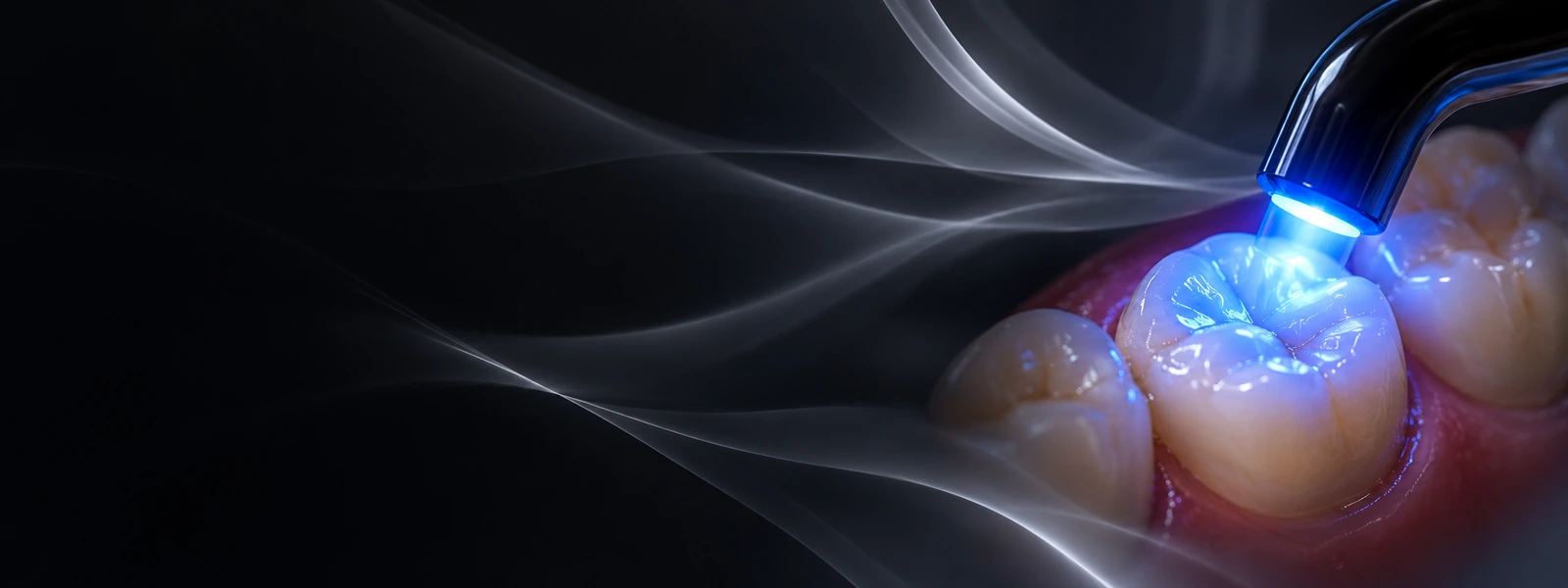
Dental sealants are a thin resin coating run into the grooves on the biting surfaces of the back teeth, where nearly all childhood decay begins. Those grooves are narrower than a toothbrush bristle in most people, so they have never been cleaned by brushing and never can be. Sealing turns that trap into a smooth surface, in about ten minutes, with nothing drilled and nothing injected.
Fluoride does the other half of the job, chemically rather than physically. Enamel loses minerals every time acid is produced in the mouth and takes them back from saliva in between, and fluoride tips that exchange in the tooth’s favour — rebuilding early damage and leaving the surface more resistant than it started. In the clinic it is a varnish painted on twice a year. At home it is toothpaste twice a day, which is the part that does most of the work.
Both are worth having and neither replaces the other. A sealant protects one surface of one tooth; fluoride helps every surface a little. Together they are the reason a child’s back teeth can reach adulthood without ever needing a filling — which matters more than it sounds, because the first filling a tooth receives is the one that decides how the rest of its life goes.
A Barrier, and a Stronger Surface
Sealing the Grooves
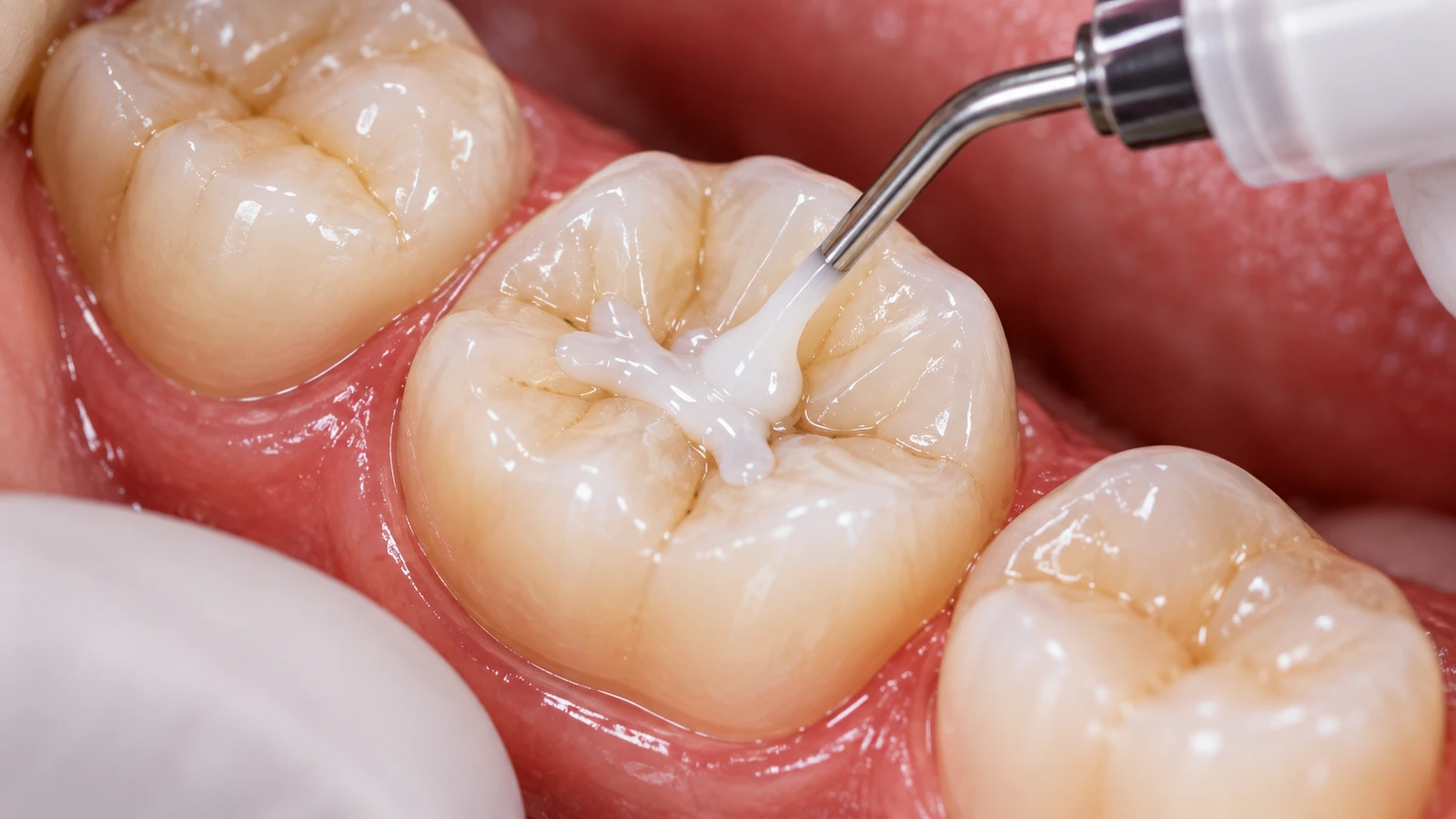
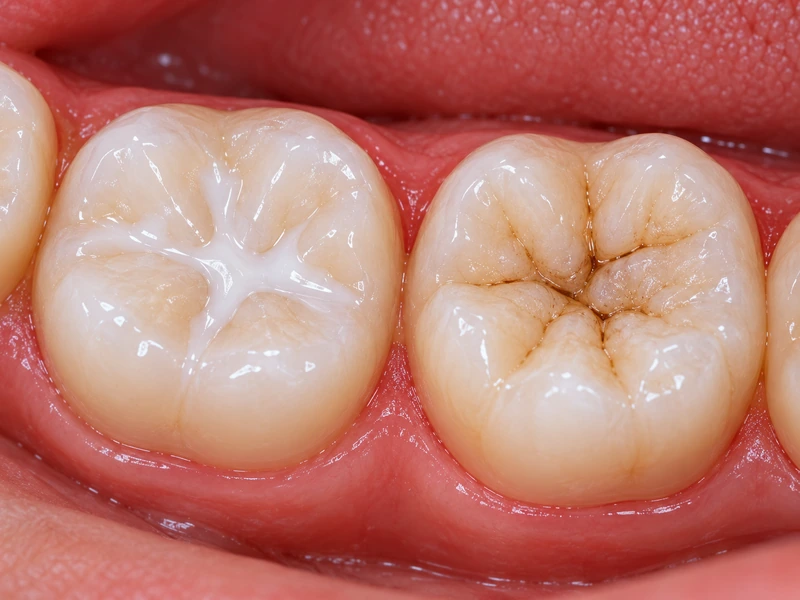
The biting surface of a back tooth is not flat. It carries a pattern of grooves, and in many people those grooves are narrower than a single toothbrush bristle — which means they have never been cleaned and never will be. A sealant is a flowable resin run into them and set hard with a light, turning a trap into a smooth surface. Nothing is drilled, nothing is injected, and the tooth underneath is untouched.
Strengthening the Enamel
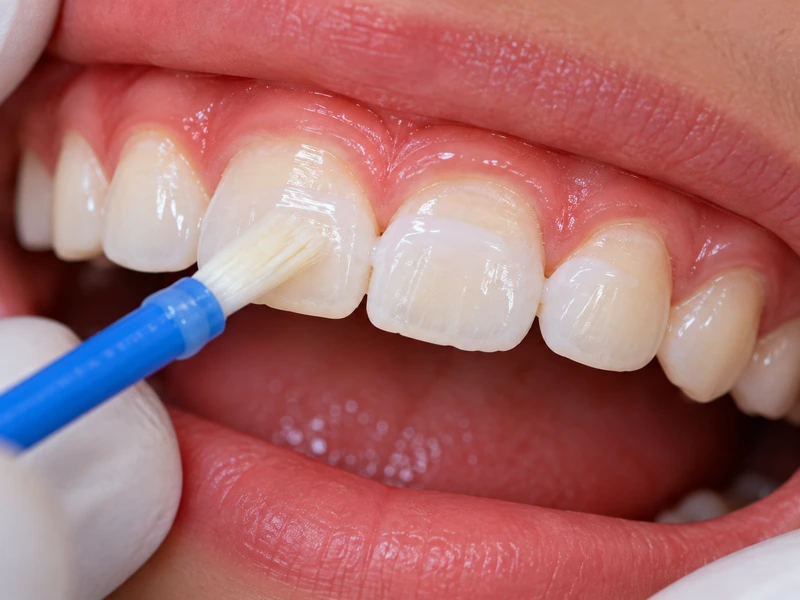
Fluoride works chemically rather than physically. It draws minerals back into enamel that acid has started to dissolve, leaves the rebuilt surface more resistant than it was before, and slows the bacteria producing the acid. Varnish in the clinic gives a short burst at high concentration; toothpaste twice a day gives the small, constant dose that actually does most of the work over a lifetime.
Who This Is For
Mostly children, at two specific ages — but the same reasoning applies to anyone whose risk of decay has gone up.
- The first permanent molars have arrivedAt around six, behind the last baby teeth, with no tooth falling out to announce them. They are the teeth most often sealed, and most often missed.
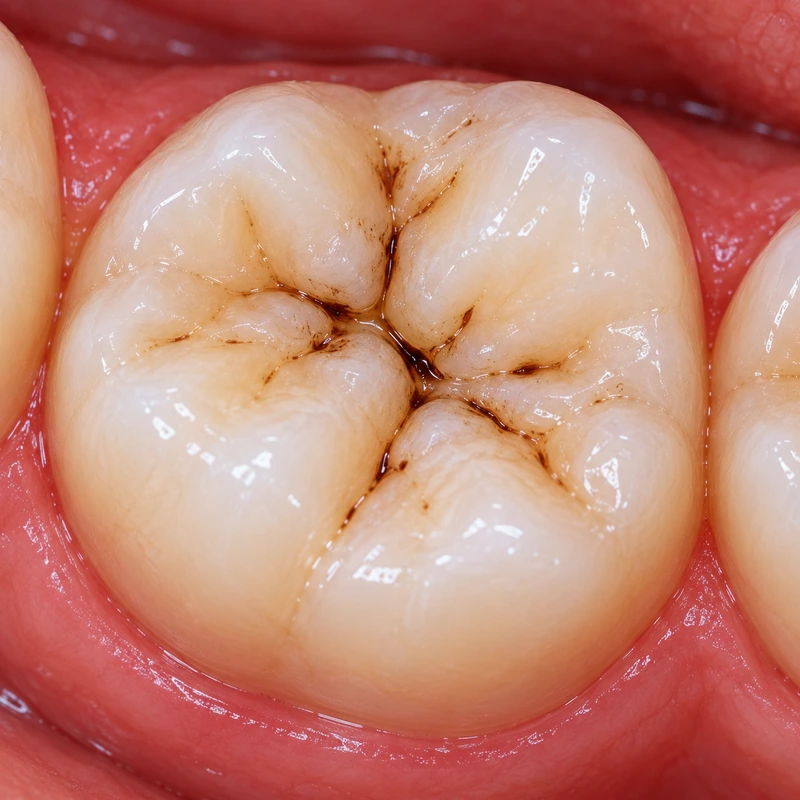
- Grooves you could catch a fingernail inDeep, narrow fissures that hold food and plaque, and that no brushing will ever reach into.
- A chalky white mark near the gumEnamel that has begun to lose minerals but has not yet cavitated. At that stage fluoride can still turn it around.
- Braces, and brushing that has got harderBrackets create dozens of new places to miss, and the white marks left around them are permanent.
- Decay has happened beforeThe strongest predictor of future decay is past decay — in a child or an adult. Prevention is set by risk, not by age.
- A dry mouth, or medicines that cause oneLess saliva means less natural protection. Adults on long-term medication are a large and often overlooked group here.
Options
What Prevention Involves
Two treatments in the clinic, one habit at home, and one question almost nobody is asked.
 1
1Fissure sealants
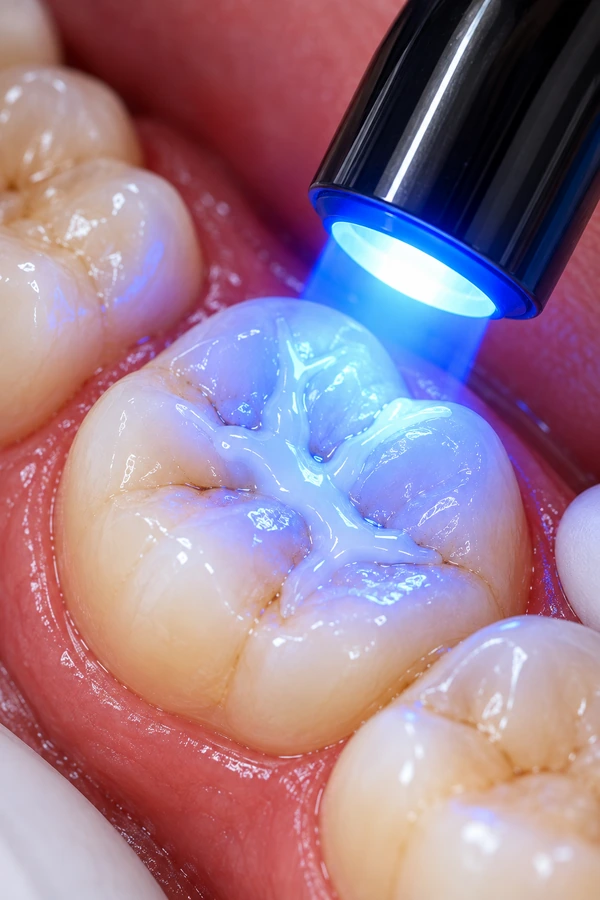
Resin flowed into the grooves of the permanent back teeth and set with a blue light. Placed as soon as the tooth is fully through — around six for the first molars and twelve for the second — and the single most effective preventive measure available for a child's teeth.
 2
2Fluoride varnish in the clinic
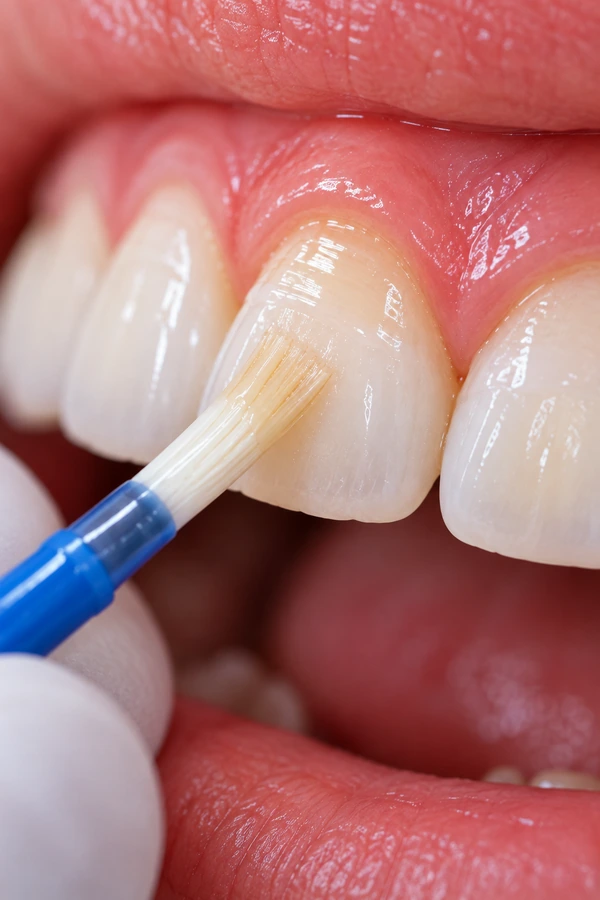
A sticky, high-concentration varnish painted on in under a minute, usually twice a year and up to four times where risk is high. It sets on contact with saliva and keeps releasing fluoride for hours afterwards. Most children barely notice it happening.
 3
3Fluoride at home
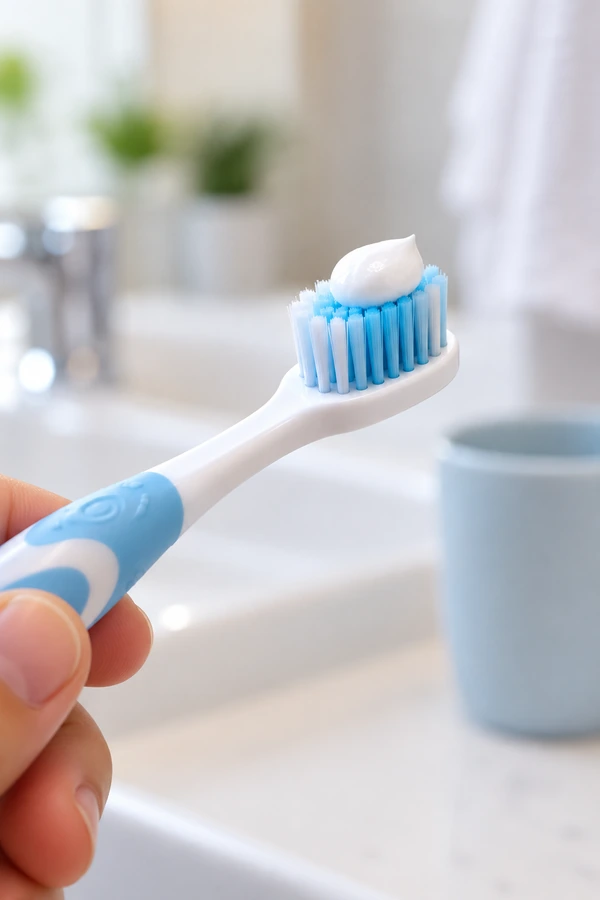
The part that matters most, because it happens twice a day rather than twice a year. A smear of family toothpaste under three, a pea-sized amount after that, and spit rather than rinse so it stays working. Higher-strength toothpaste is available for teenagers and adults at real risk.
 4
4Knowing when there is already enough
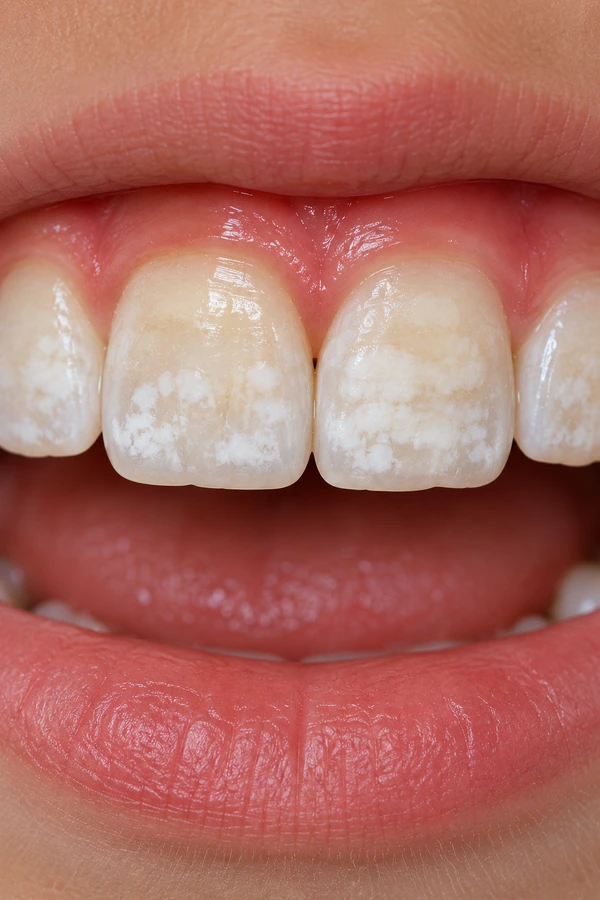
More fluoride is not automatically better. Too much while the permanent teeth are still forming — under about eight — leaves white flecks or mottling in the enamel that are permanent. In parts of this state the groundwater is naturally high in fluoride, so where your water comes from genuinely changes the advice. It is worth being asked, and worth saying if nobody does.
How Are Sealants Placed?
Not every tooth, and not every child
The teeth are checked to see which permanent molars are fully through — a sealant cannot be placed properly on a tooth still partly covered by gum. The grooves are looked at, since shallow ones on a low-risk child may reasonably be watched instead. Then the risk assessment that decides everything: past decay, how often sugar appears rather than how much, whether there are braces, whether the mouth is dry, and where the drinking water comes from. That conversation is what makes the plan yours rather than generic.
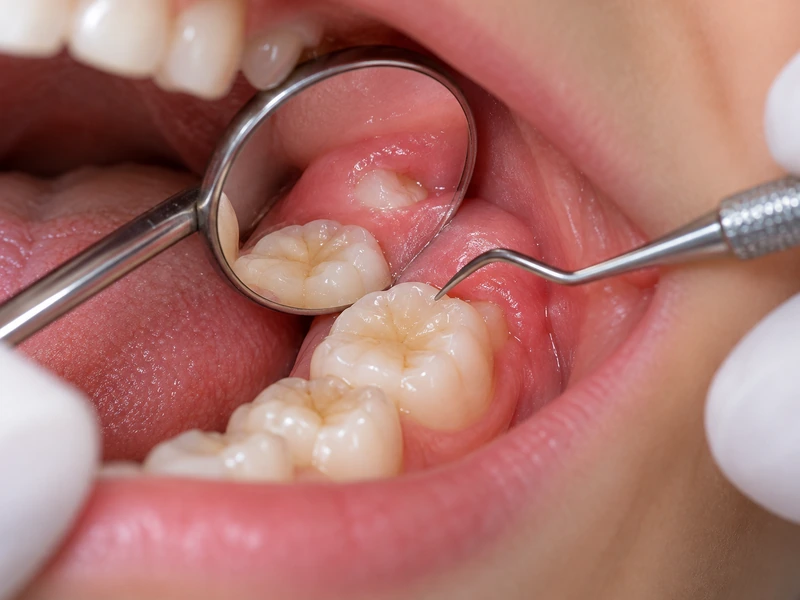
No drill, no injection, ten minutes
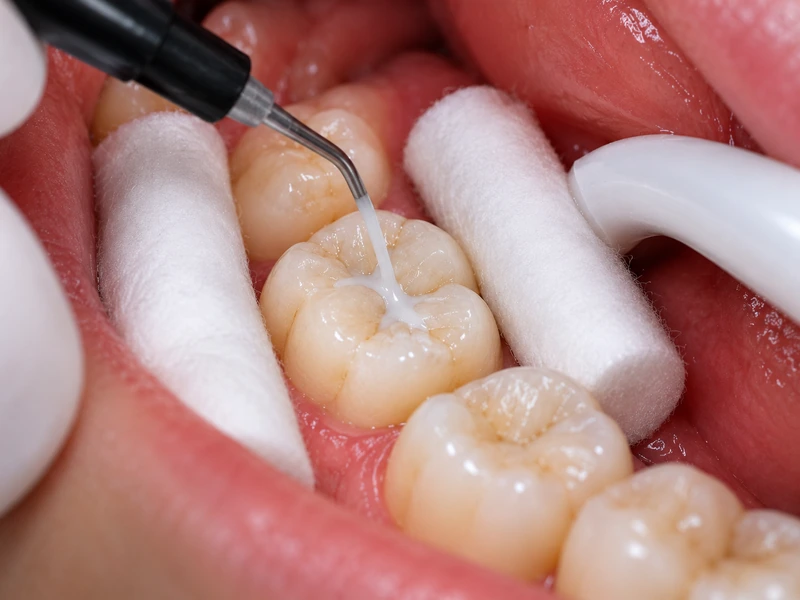
The tooth is cleaned and dried, a mild etching gel is put on the biting surface for a few seconds and rinsed away, and the surface is dried again. The resin is then run into the grooves and hardened with a blue light, and the bite is checked so nothing feels high. The whole thing takes five to ten minutes a tooth and there is nothing to feel. The one genuinely critical part is keeping the tooth dry while it is placed — a sealant put on a damp tooth will not hold, which is why this is done unhurriedly and why a child who cannot sit still is better sealed on a later visit than badly today.
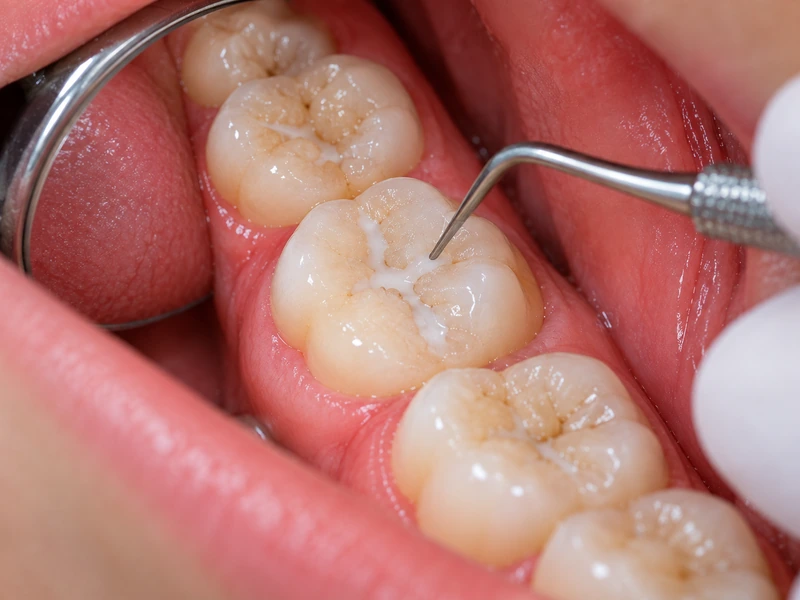
A sealant is maintained, not fitted and forgotten
Sealants wear at the edges and can chip or partly come away, particularly in the first couple of years. They are looked at every check-up and topped up or replaced when they need it, which takes minutes. This is the part most worth insisting on: a sealant nobody checks can lose a corner and let decay begin underneath it unseen, and the whole value of sealing depends on somebody looking.
Recovery
Keeping Them Working
There is no recovery to speak of. These four are what decide whether the prevention actually prevents anything.
- 1
Eat and drink straight away
A sealant is set hard before you leave the chair, so there is nothing to wait for. After fluoride varnish, avoid hot drinks and hard or crunchy food for the rest of the day and skip brushing that night so it stays on.
- 2
Sealed teeth still need brushing
A sealant protects the biting surface only. Decay between the teeth and at the gum line is untouched by it, and those are exactly the places a brush misses — so brushing and flossing matter just as much as before.
- 3
Expect them to be checked
Every visit, briefly. A worn or chipped sealant is topped up in a few minutes, and catching that early is the whole point of looking.
- 4
Twice a day beats twice a year
Two applications of varnish a year do less than a fluoride toothpaste used properly every morning and night. The clinic's part is the smaller part, and it always has been.
What it costs the tooth
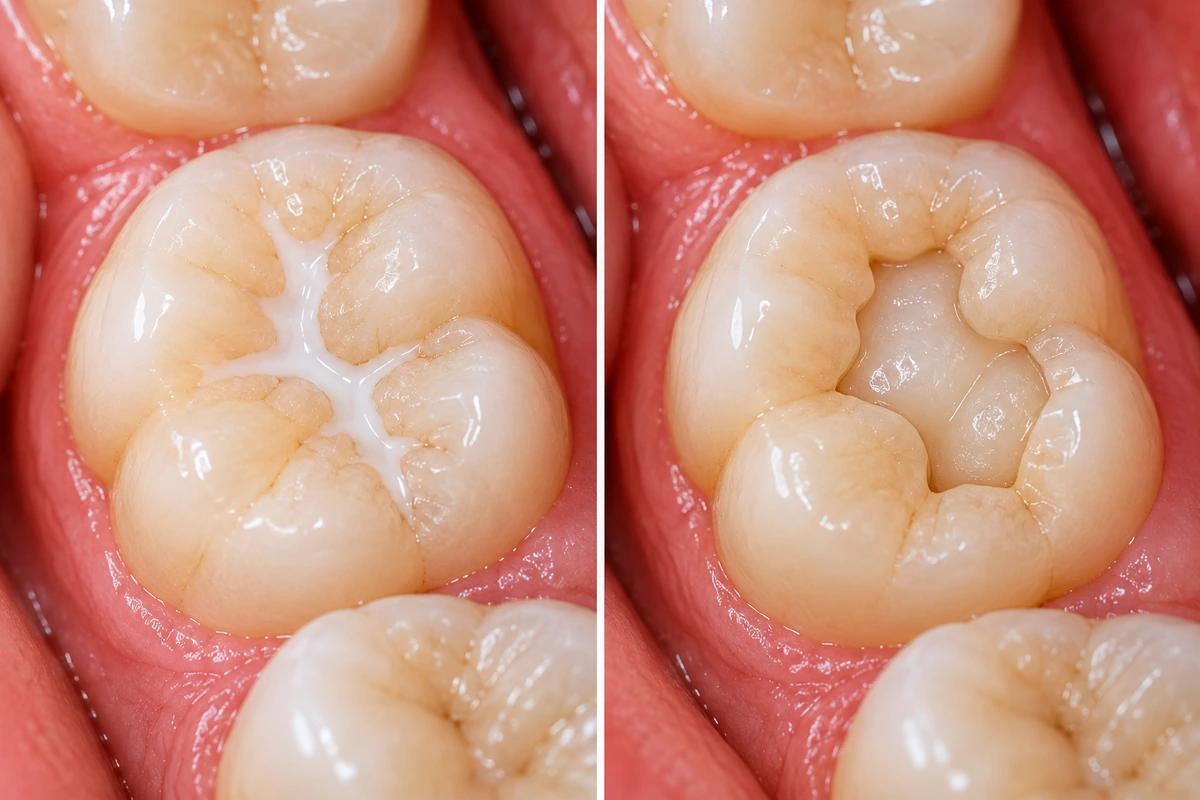
Sealing a Groove Now vs Filling It Later
The real comparison is not a sealant against doing nothing. It is a sealant now against a filling in the same groove in a few years' time, on a tooth that will then be restored for the rest of its life.
Sealing takes minutes. There is no drill, no injection and no anaesthetic, nothing is removed from the tooth, and the enamel underneath stays exactly as it was. If the sealant fails it is replaced; if it is no longer needed it wears away and the tooth is unharmed. Nothing about it is a decision the tooth has to live with.
A filling is a different kind of event. Once a groove has decayed, the decay and some sound tooth around it have to be removed before anything can be placed, and from that moment the tooth is a restored tooth. Fillings do not last forever, and every replacement is larger than the one before, because more tooth goes each time the old one is cut out. A tooth that gets its first filling at eight has a long series of appointments ahead of it — which is why the first filling is the most consequential one a tooth ever gets, and why avoiding it is worth more than it looks.
The honest qualification is that not every child needs every molar sealed. Shallow grooves, no history of decay and good habits are a reasonable case for watching rather than sealing, and a clinic should be willing to say so. A sealant is also not permission to stop brushing or to eat differently — it protects one surface of one tooth, and nothing else.
What Happens at the Appointment
- 1ExaminationWhich teeth are fully through, how deep the grooves are, and whether anything has already started.
- 2The teeth involvedUsually the first permanent molars at six and the second at twelve — the ones most often missed.
- 3Decay riskPast decay, snacking pattern, braces, dry mouth — and where your drinking water comes from.
- 4PlanWhich teeth are sealed today, what waits, and how often fluoride varnish is worth having.
- 5At homeHow much toothpaste, spitting rather than rinsing, and what to change about snacking.
Why us
Why Choose Us for Sealants & Fluoride
- A pedodontist, Dr. Himasree (MDS), a children's dentist, is part of our team.
- You are told honestly whether your child's teeth need sealants now.
- Instruments sterilised and sealed for every patient, under a strict protocol.
- Open every day until 9 PM, including Sundays, so visits fit around school.

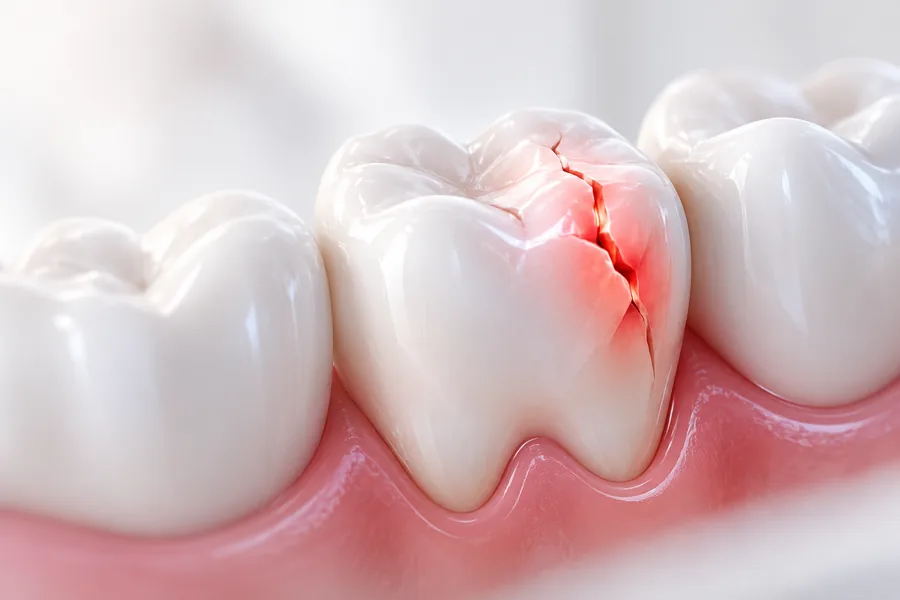
Tooth Pain & Repair
Relief from toothache and repair for decayed, cracked or broken teeth, from fillings and root canals to crowns.
- Root Canal Treatment
- Tooth Sensitivity Treatment
- Cavity Treatment
- Tooth Fillings
- Dental Crowns & Caps
- Wisdom Tooth Removal
- Emergency Dental Care
 learn more
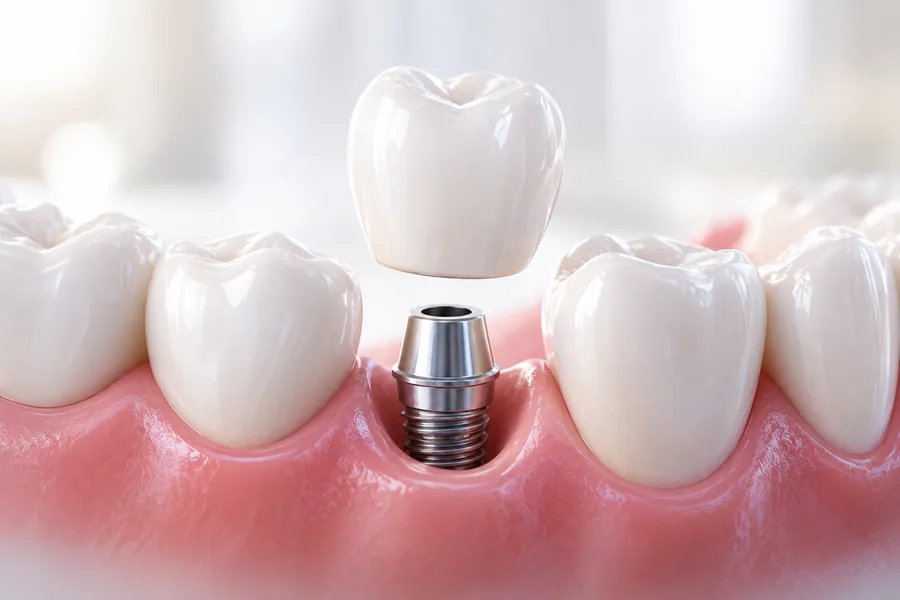
Missing Teeth
Implants, bridges and dentures to replace missing teeth, planned by our implantologist and prosthodontist.
 learn more
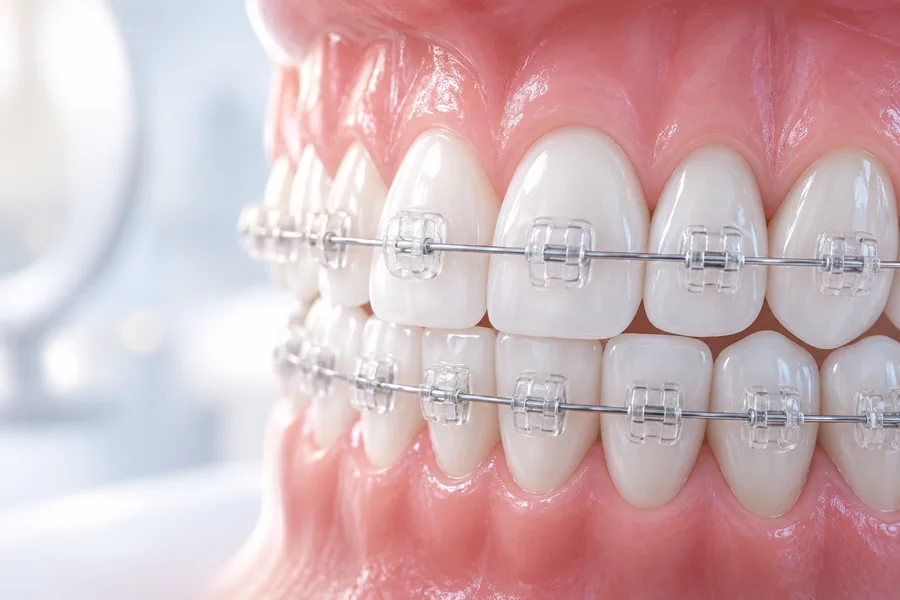
Straightening
Braces and Illusion clear aligners for crooked or gapped teeth, planned by our orthodontist for children and adults.
 learn more
Cosmetic
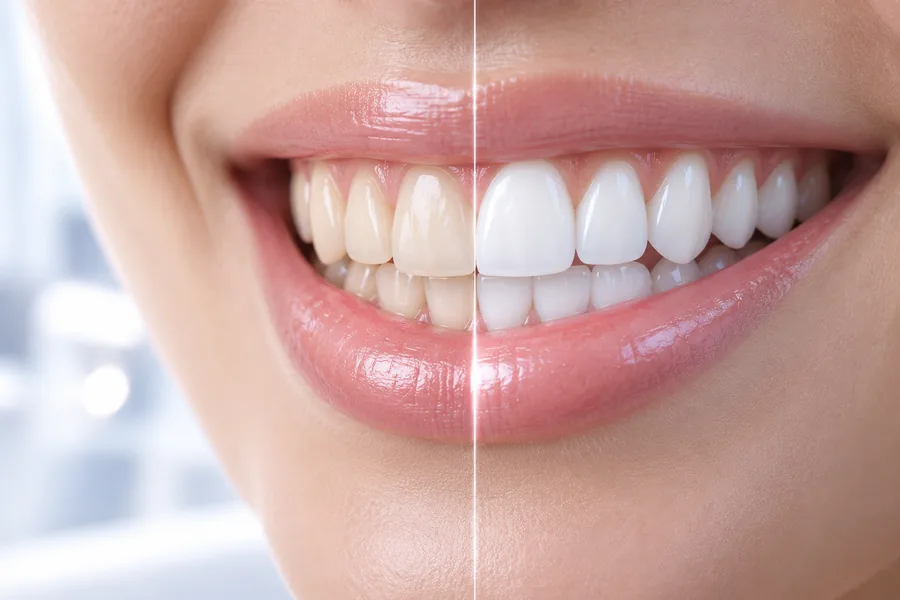
Whitening, veneers, bonding and smile makeovers to improve the colour and shape of your smile, led by our cosmetic dentist.
 learn more
Gums & Cleaning
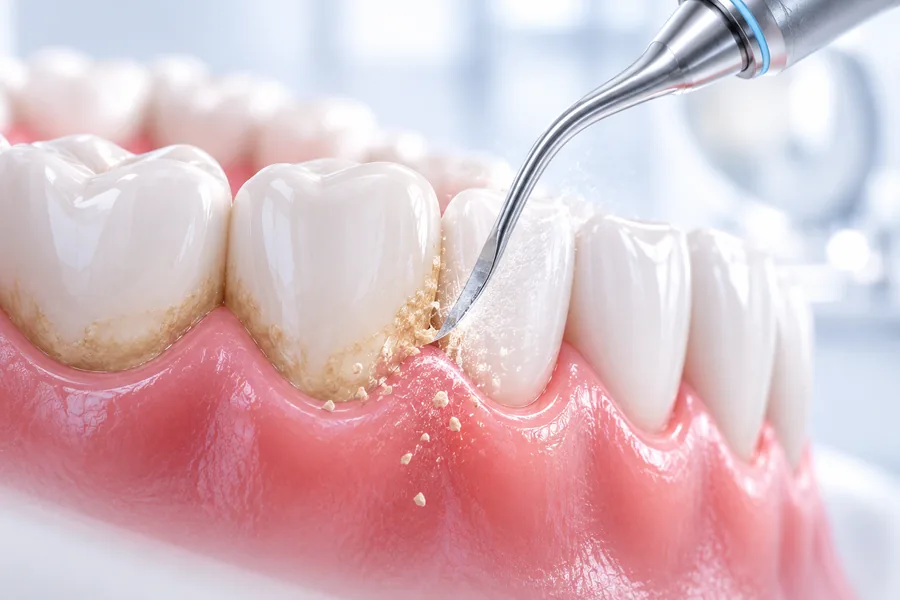
Cleaning, gum treatment and laser care for bleeding gums and bad breath, from our periodontist.
 learn more
Kids & Family
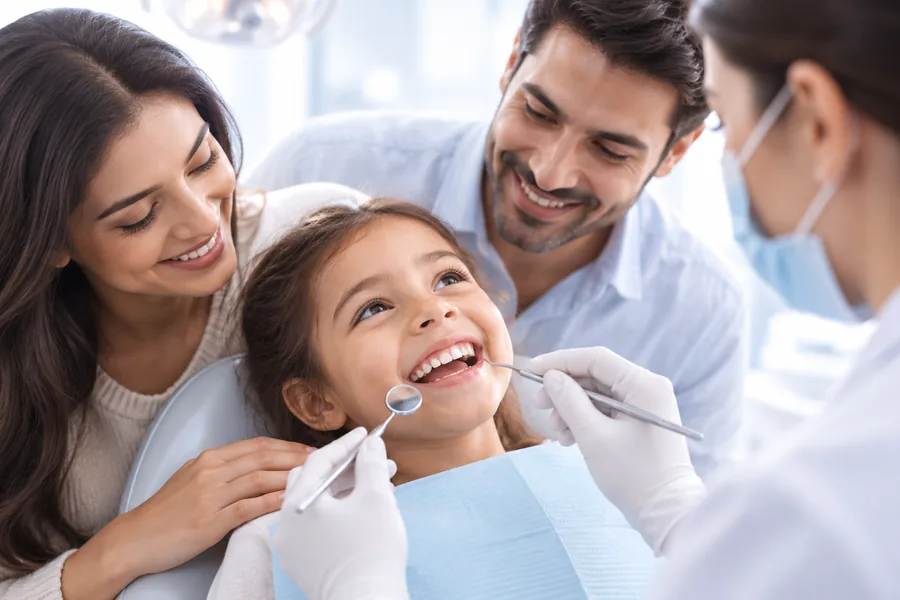
Gentle check-ups, fluoride and sealants for children with our pedodontist, and routine check-ups for the whole family.






Verified Google Reviews
Excellent
Based on 238 reviews
Harsha Vardhini
2026 · Google
I highly recommend Dr. Roja! She is incredibly kind, patient, and caring. I’ve had a root canal and multiple fillings done by her, and every procedure was completely painless. She explains everything clearly, makes you feel comfortable, and ensures you’re at ease throughout the treatment. Her gentle approach and professionalism make every visit a great experience. If you’re looking for a skilled dentist who truly cares about her patients, Dr. Roja is an excellent choice!
akk reddy
2026 · Google
I had a great experience with Dr. Roja madam. She is a very good doctor and extremely patient-friendly. I was suffering from a tooth cavity, and she suggested a root canal treatment. After starting the treatment, my tooth pain completely disappeared. The cap fitting was also very comfortable and flexible. Overall, I am very satisfied with the treatment and care provided. Thank you so much
Mamidisetti Siva
2026 · Google
I had a very good experience at this dental clinic. The treatment was excellent, and the staff were very friendly and supportive. Even after the treatment, they took great care by calling me, checking on my recovery, and asking me to come for follow-up visits. I really appreciate their concern and professionalism. Highly recommended.
BHARATH GUNDEBOINA
2026 · Google
Had a great experience with teeth replacement treatment. Dr. Roja mom explained everything clearly and the procedure was smooth and painless. The results look very natural and I’m extremely happy with my new smile. Highly recommended..thank you….
venkannababuk venki
2026 · Google
Madam provides very good dental treatment. She explains everything clearly and patiently whenever I have any doubts. I am very satisfied with the treatment and the way she cares for patients. Thank you, SR Dental.
Near you
Fluoride & Sealants Near You in Gajularamaram
If you have been searching for dental sealants near you, the question worth asking is when your child's first permanent molars came through. They arrive at around six, right at the back, without a baby tooth falling out to mark the occasion — which is why a great many parents do not know they are there, and why the teeth most worth protecting are the ones most often missed.
It is also worth mentioning where your water comes from, particularly if it is borewell water. Fluoride occurs naturally in groundwater across parts of this state, sometimes at levels well above what is wanted, and that changes what should be recommended rather than being a detail.
77020 95262Gajularamaram
Contact
Reach out to schedule your next dental visit
Whether you have a question, need expert advice, or are ready to book your next appointment, our team is here to help.
Reach out to us on
- Phone Number 77020 95262
- Email address srdentalcare48@gmail.com
- Location Hospital Phase 2, Plot No:100/N, behind UMCC Road, Chandragiri Nagar, Ushodaya Colony, Indira Nagar, Gajularamaram, Hyderabad, Telangana, 500055
Working Hours
- Mon – Sun:
- 9:30 AM – 9:00 PM
FAQs
Frequently asked questions about fluoride & sealants
Still have a dental question?
Send us a message and our dental team will help.
Does having a sealant hurt?
There is nothing to feel. No drilling, no injection and no anaesthetic — the tooth is cleaned, a gel is applied and rinsed off, the resin is flowed into the grooves and set with a light. Most children find the odd taste of the etching gel the most notable part of it. It takes five to ten minutes for a tooth.
How long do sealants last?
Several years commonly, though they wear and can chip at the edges, most often in the first year or two. They are looked at every check-up and repaired or replaced in minutes when needed. A sealed tooth that is reviewed regularly stays protected; a sealant nobody has checked in five years is the situation worth avoiding, because a lost corner can let decay start underneath unseen.
Are sealants safe? I have read about BPA.
It is a fair question to ask. Trace amounts of BPA-related compounds have been measured in saliva for a short time immediately after placement, at levels far below any established threshold of concern, and they are not detectable afterwards. Set against that is a decay risk that is neither theoretical nor small. If it worries you, say so — rinsing and wiping the tooth surface after curing reduces it further, and that is easily done.
Is fluoride safe for young children?
In the right amount, yes, and it is one of the best-evidenced preventive measures in medicine. The amount is the whole point: too much while the permanent teeth are still forming, under about eight, causes fluorosis — white flecks or mottling in the enamel that cannot be brushed out. That is why the advice is a smear under three and a pea after, why children should spit rather than swallow, and why toothpaste is best kept out of reach between brushings.
Our water is borewell water and people here have mottled teeth. Does that change anything?
It changes quite a lot, and it is worth raising rather than waiting to be asked. Groundwater in parts of this state carries naturally high fluoride, and where that is the case the sensible advice is the opposite of the usual one: the concern becomes total intake rather than getting enough. Supplements would be wrong, toothpaste amounts are watched carefully for young children, and the water source itself may be the thing to change. Bring it up at the appointment.
Are sealants only for children?
No. They are placed most often in children because that is when the permanent molars arrive and when the grooves are most vulnerable, but any adult with deep unfilled grooves and a reason for higher risk — a dry mouth, medication, a run of recent decay, or orthodontic treatment — can have them, and fluoride varnish is used in adults for exactly the same reasons. Prevention is decided by risk rather than by age.